Type a description of this image

Canyon Studies

May 9, 2025

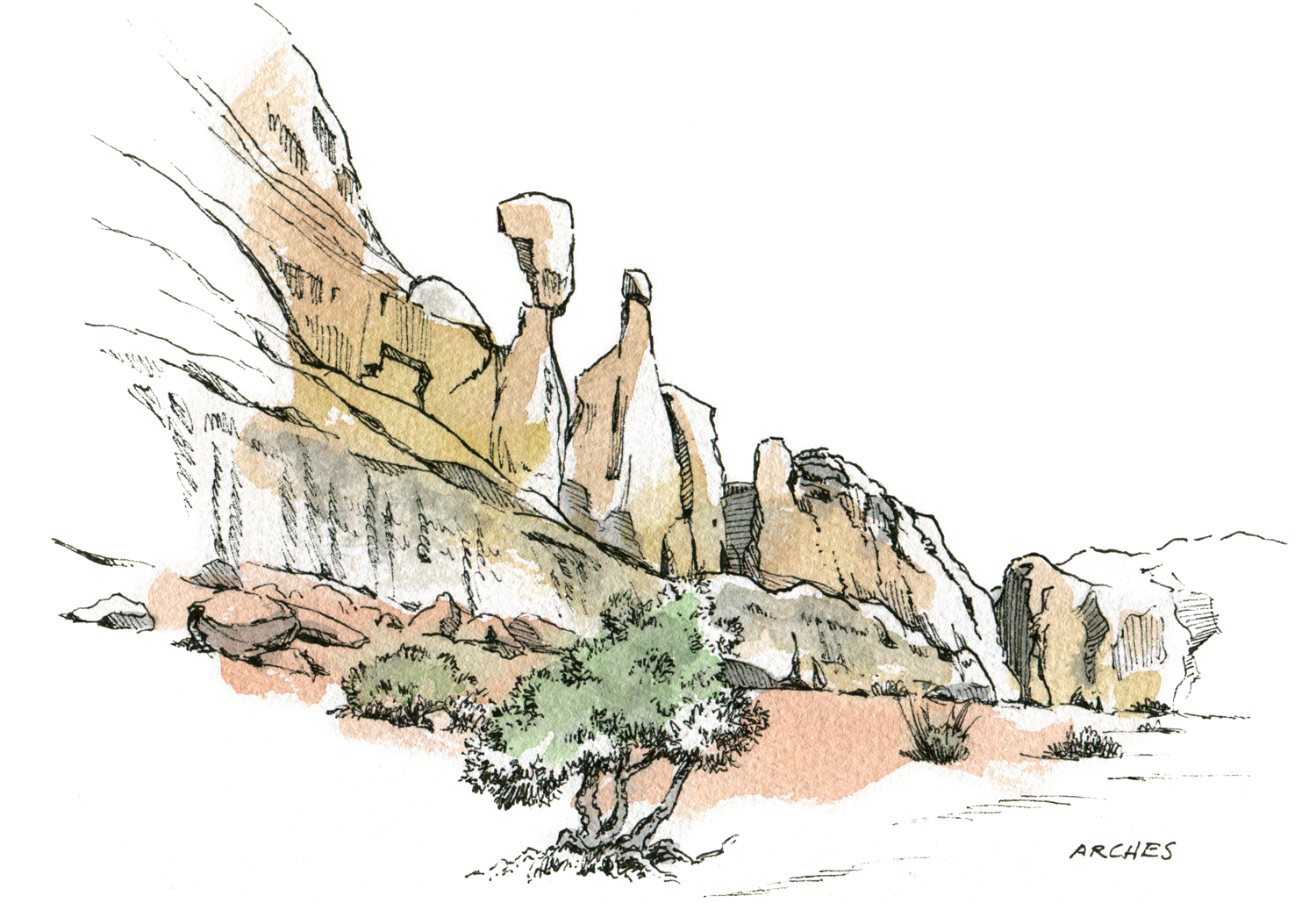
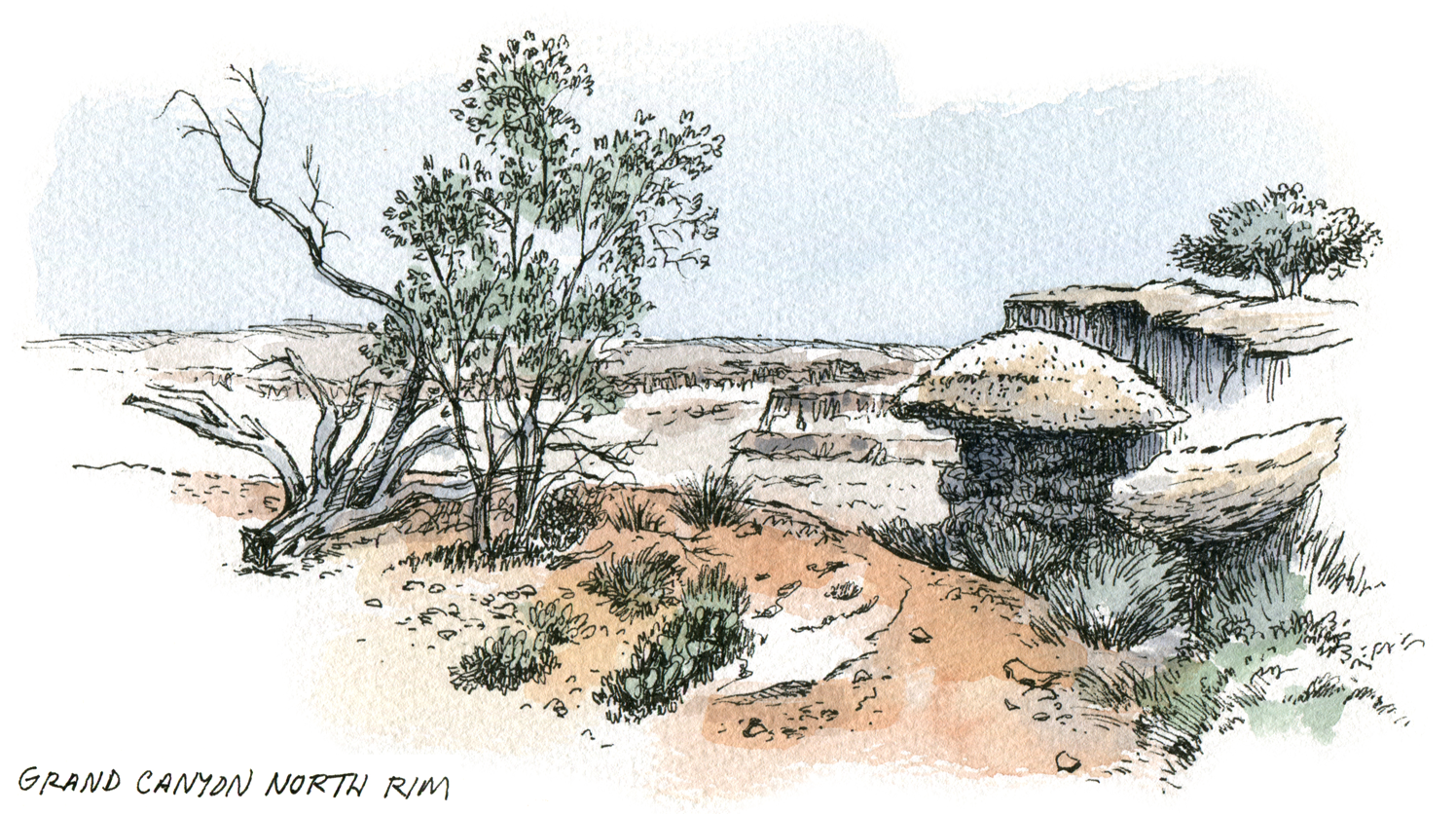
While the canyons in Utah and Arizona are awe-inspiring regardless of one's understanding of the forces that sculpted them, it can be informative to explore the geologic times involved and some of the terms used to describe the features.
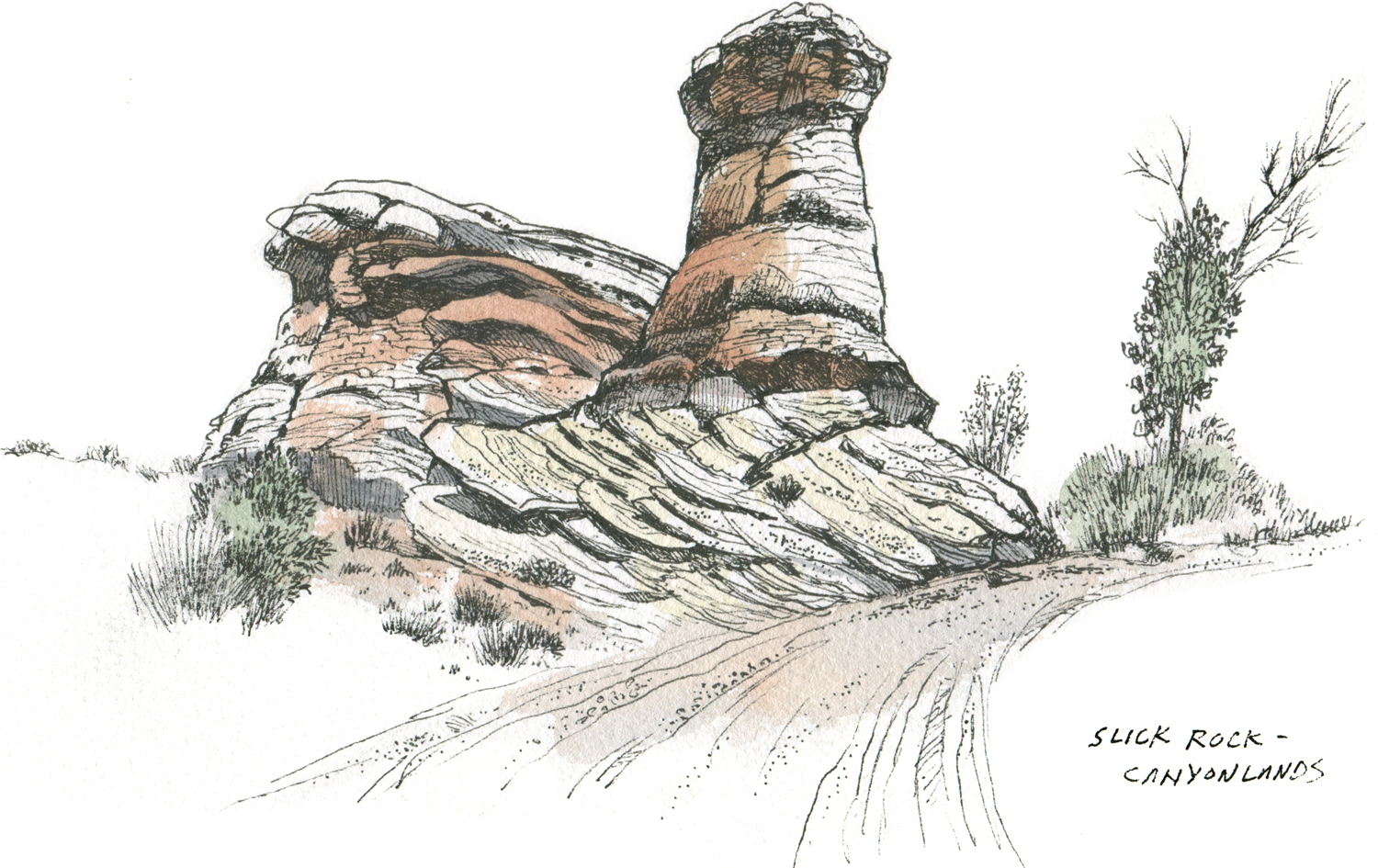
I picked up a book on the geology of southern Utah at a gift shop and enjoyed reading about the difference between a bridge and an arch, synclines, anticlines, compression, fins, hoodoos, mesas, buttes, and spires – basically reading the cycles of change.
Type a description of this image
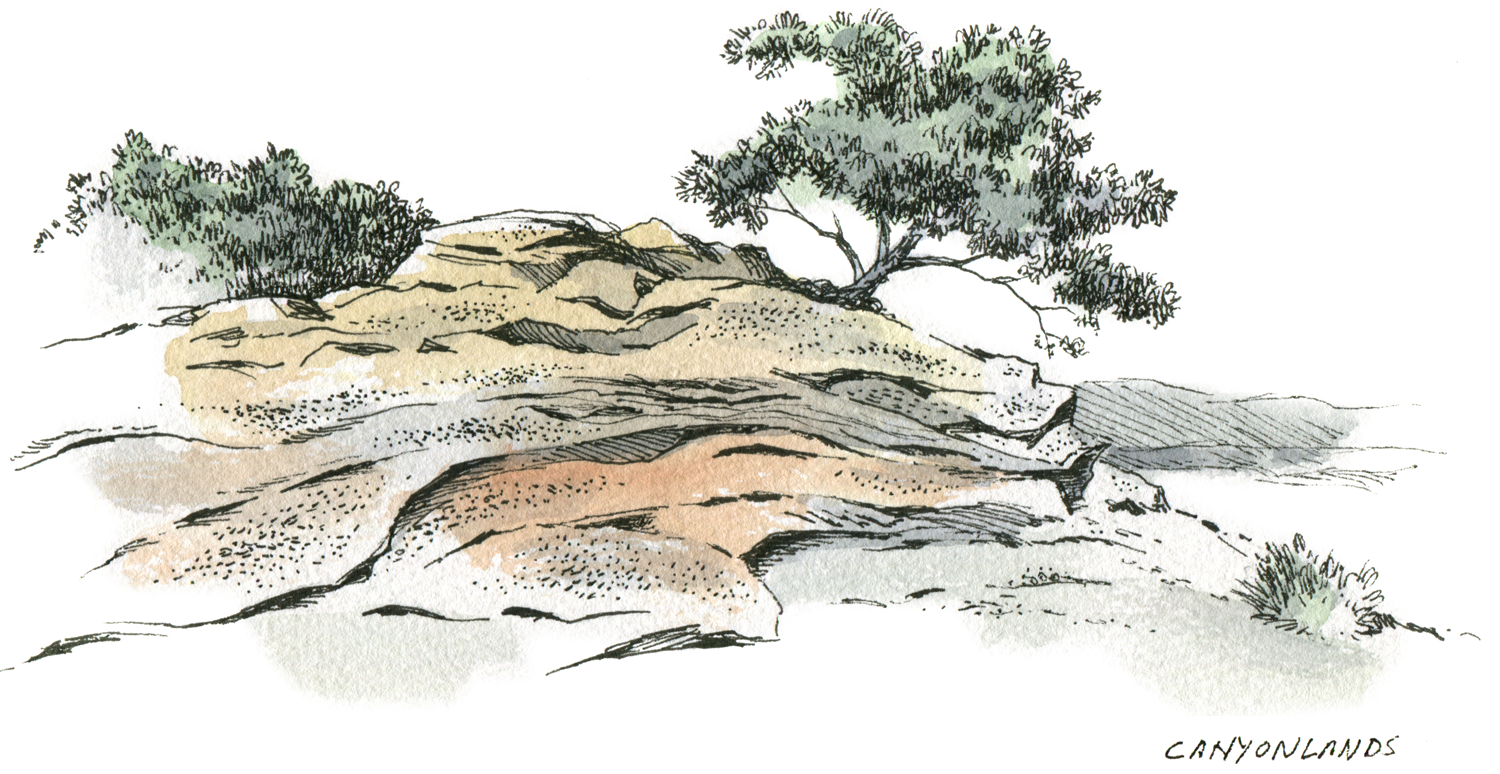
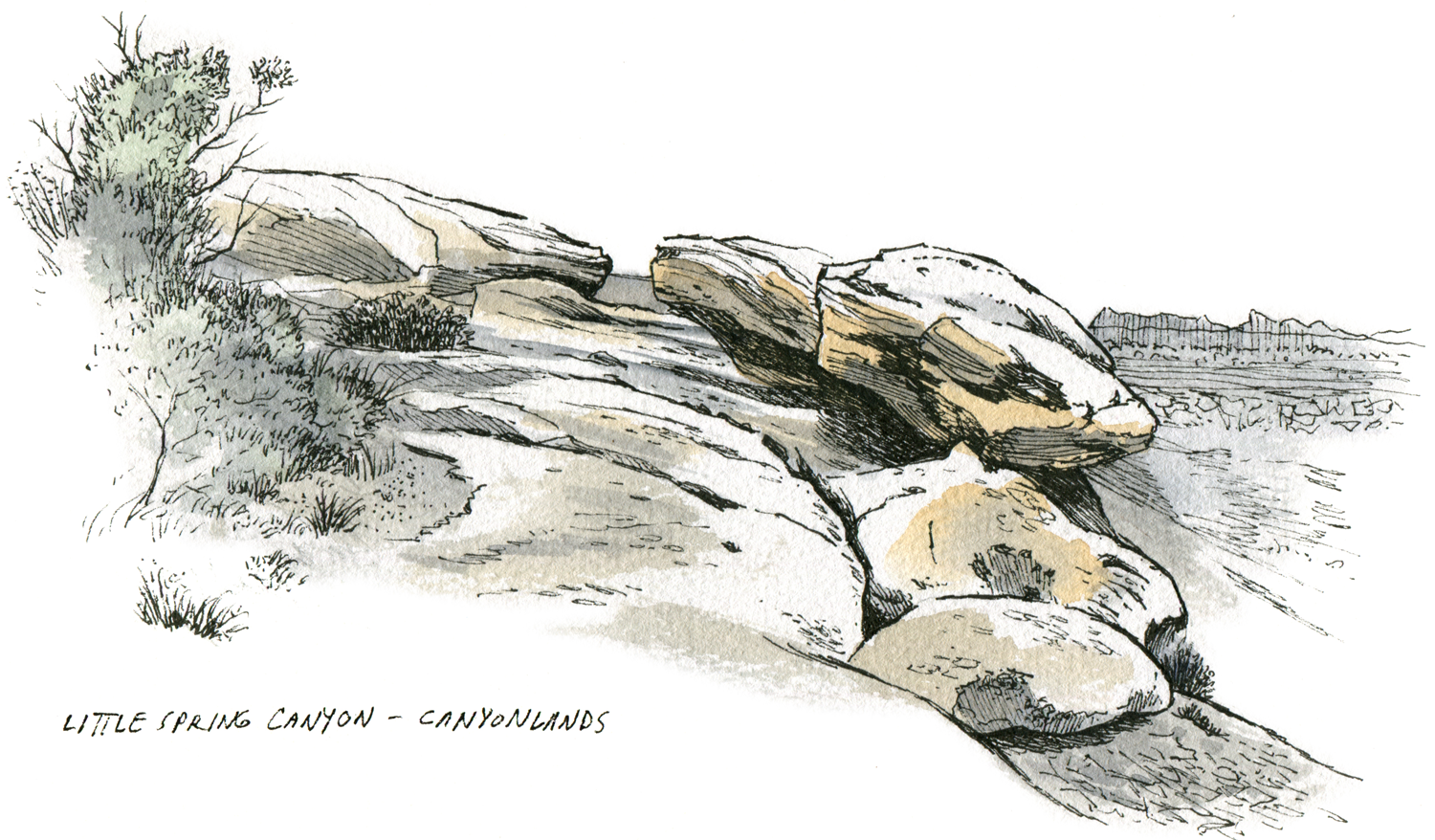
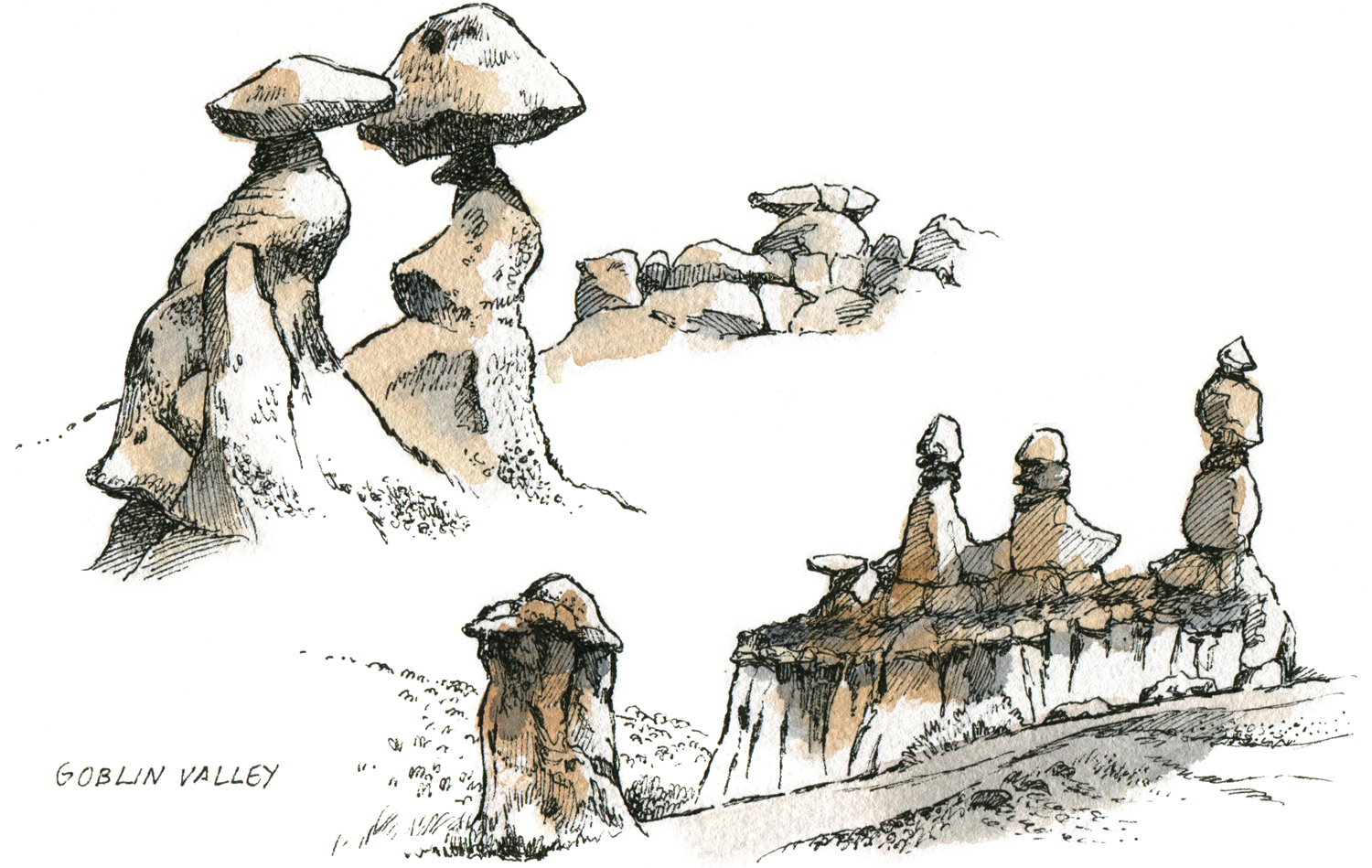
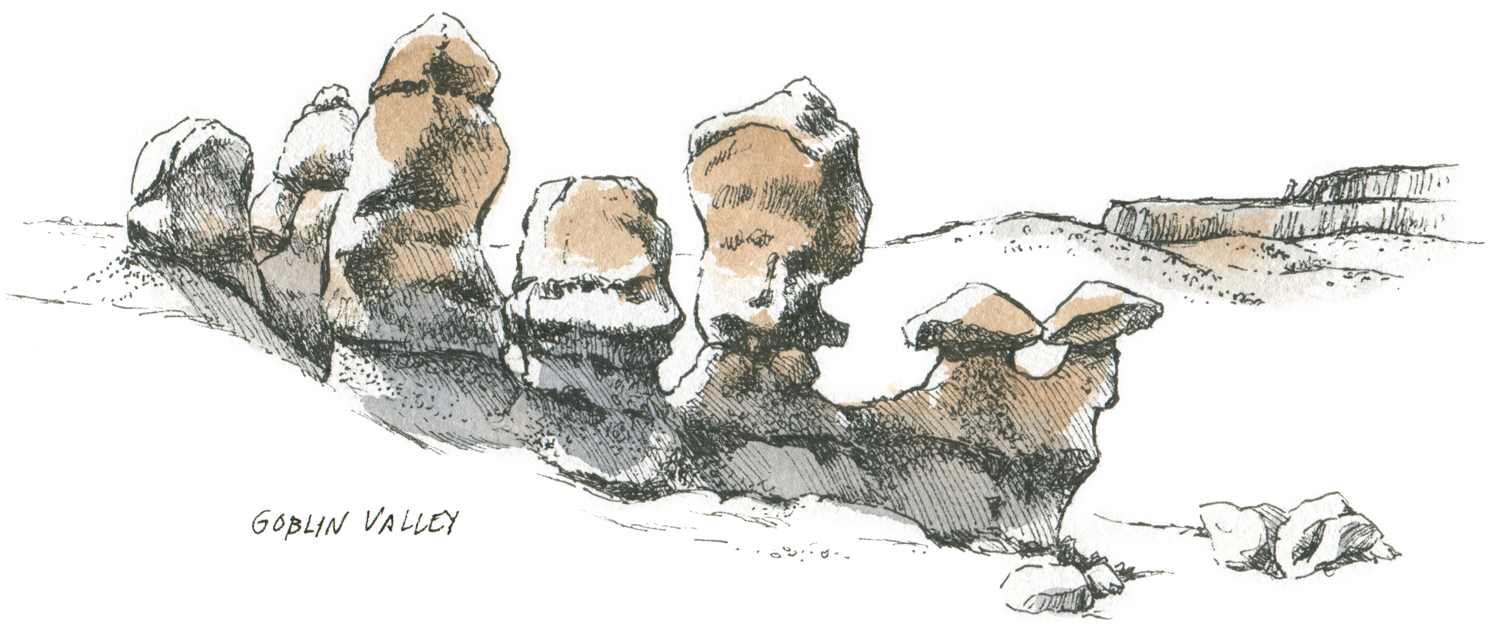
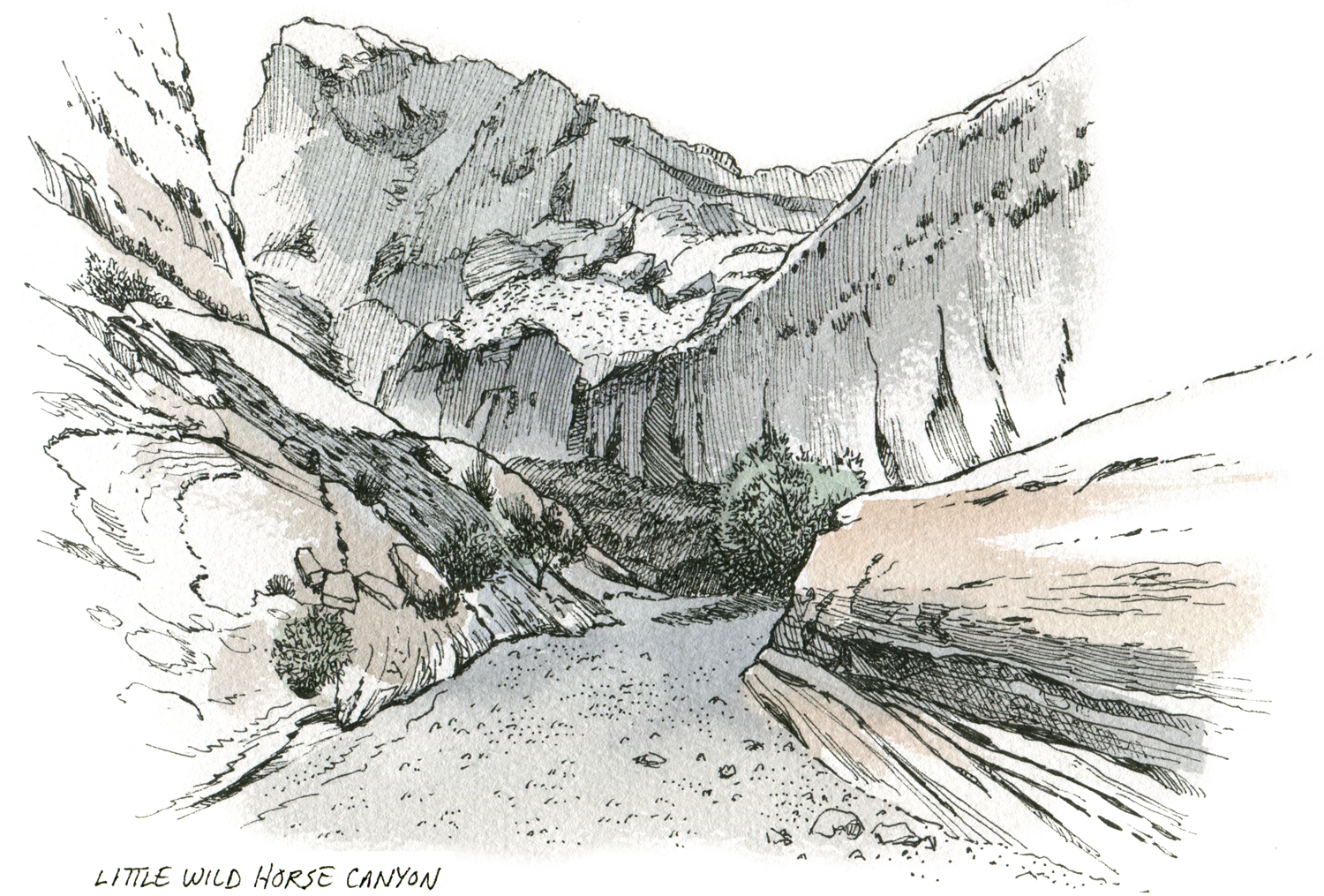
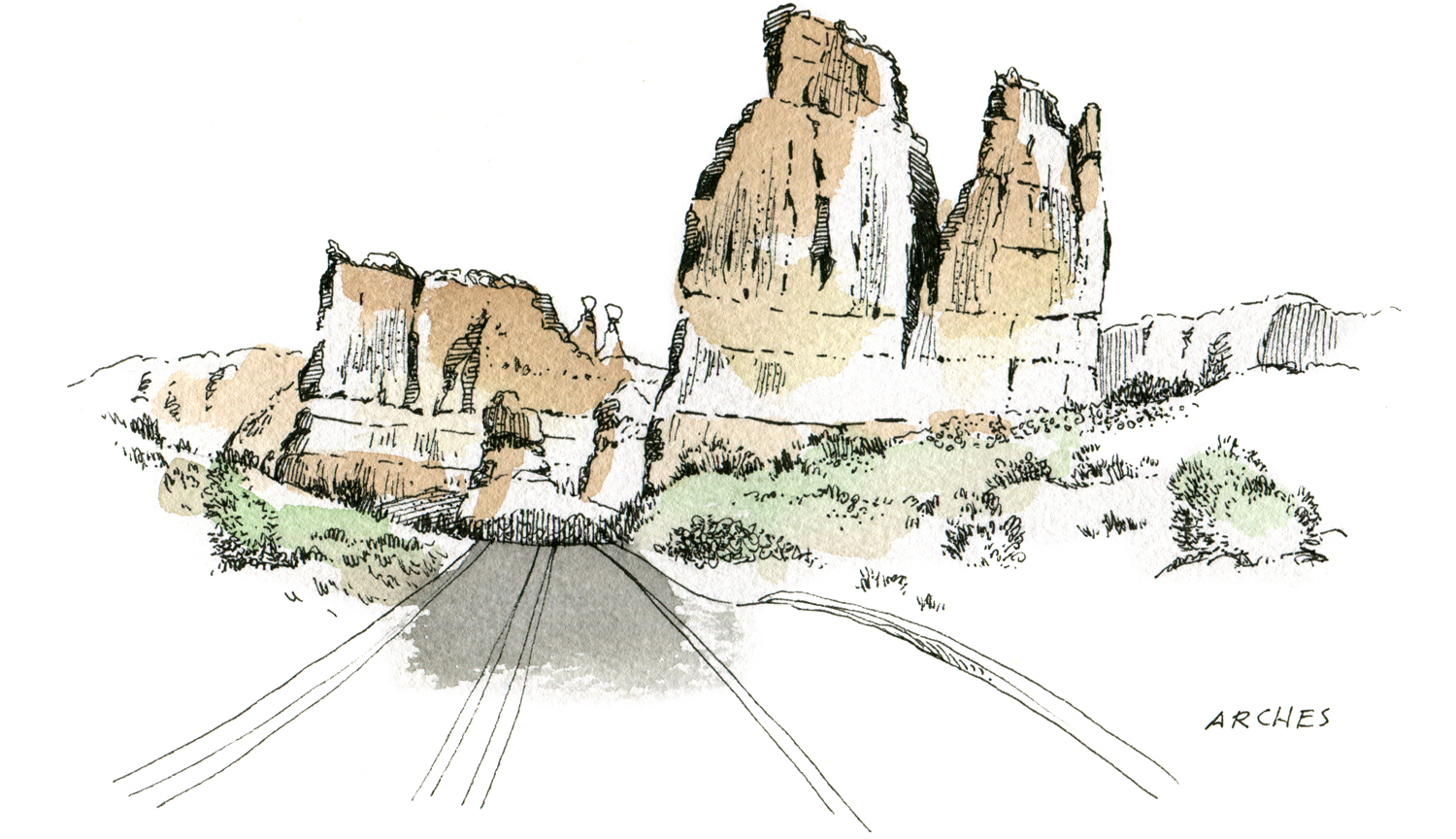
Moab gives us easy access to Arches, Canyonlands, Goblin Valley, and Little Wild Horse slot canyon.
Type a description of this image
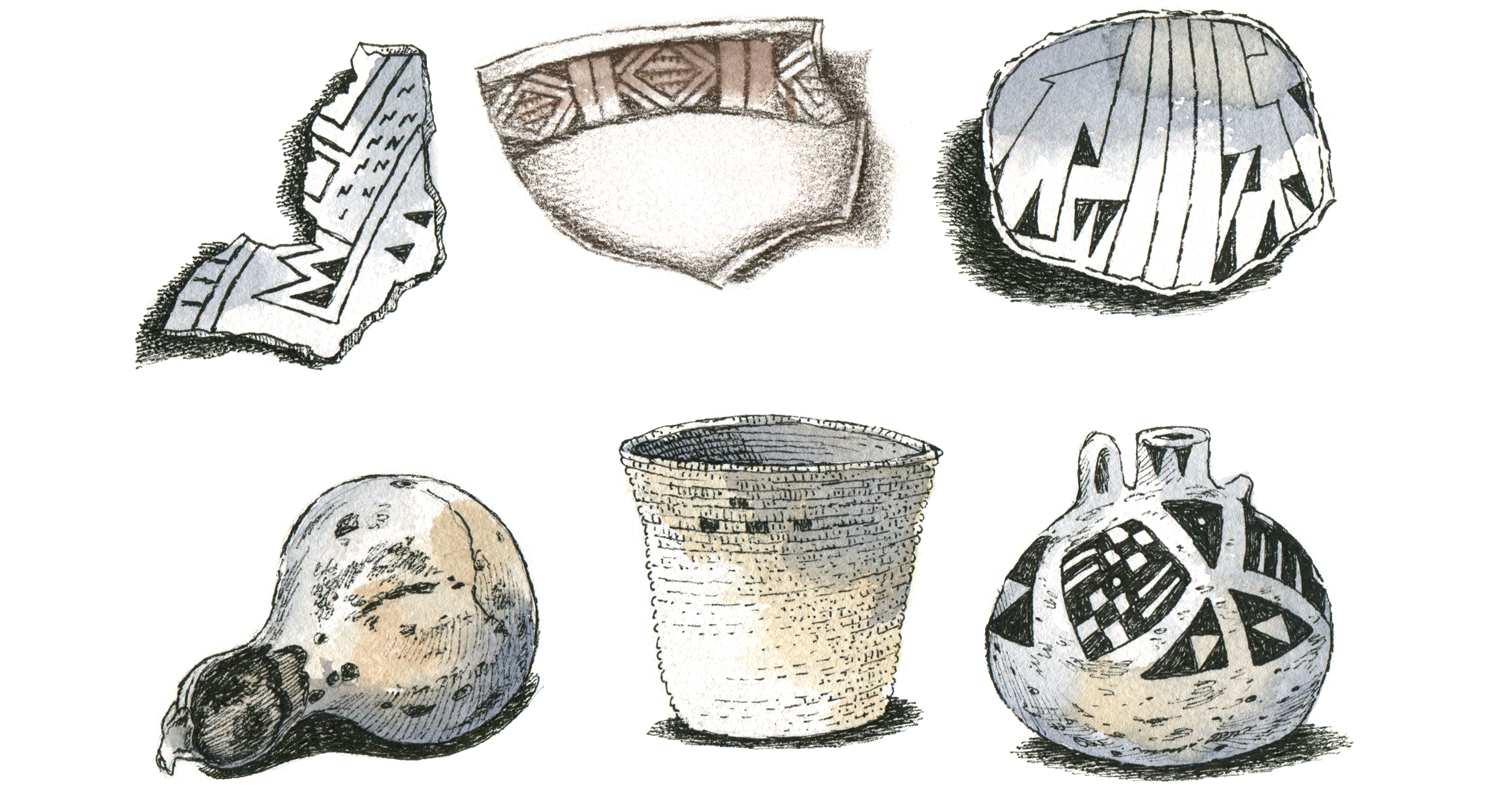
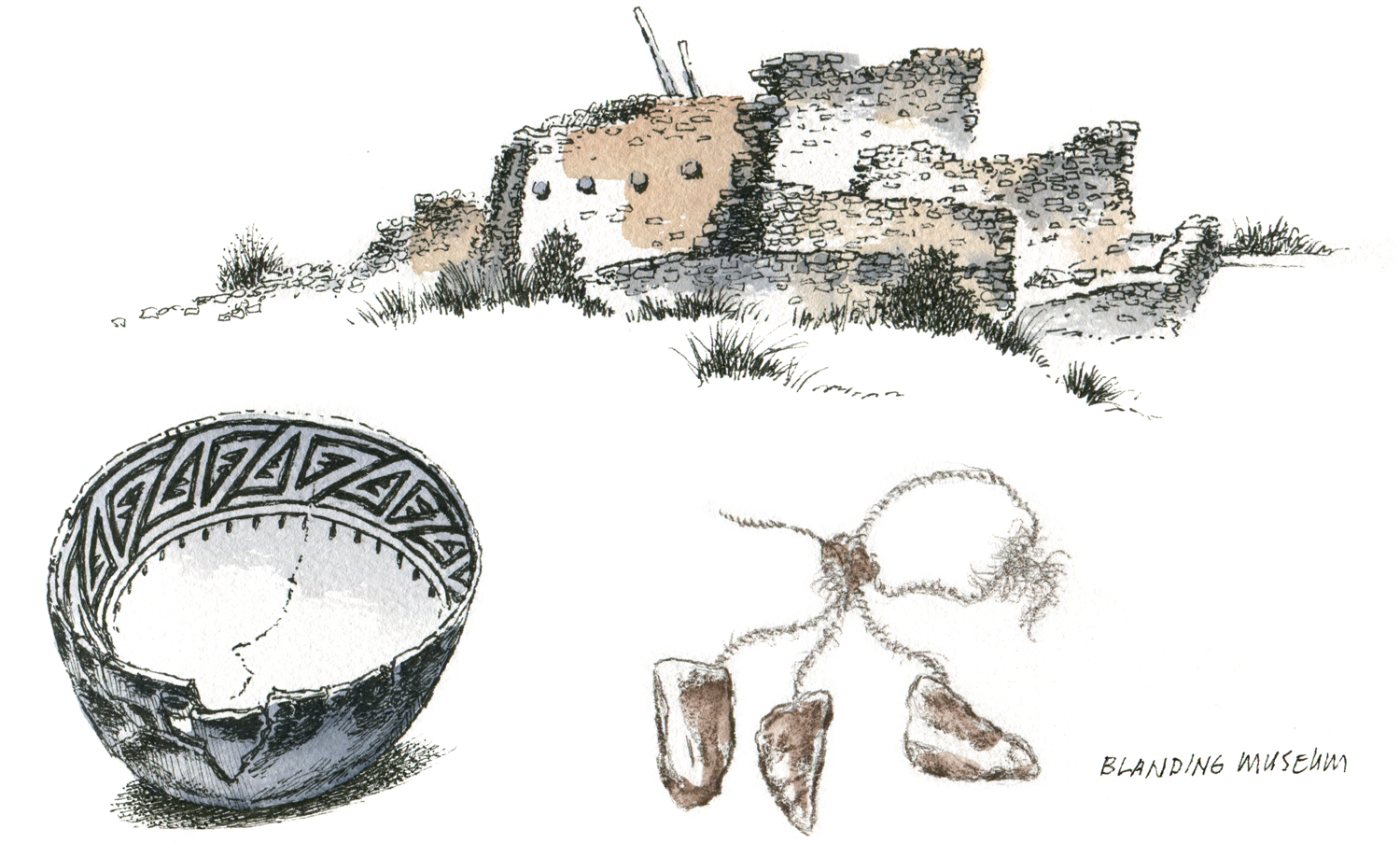
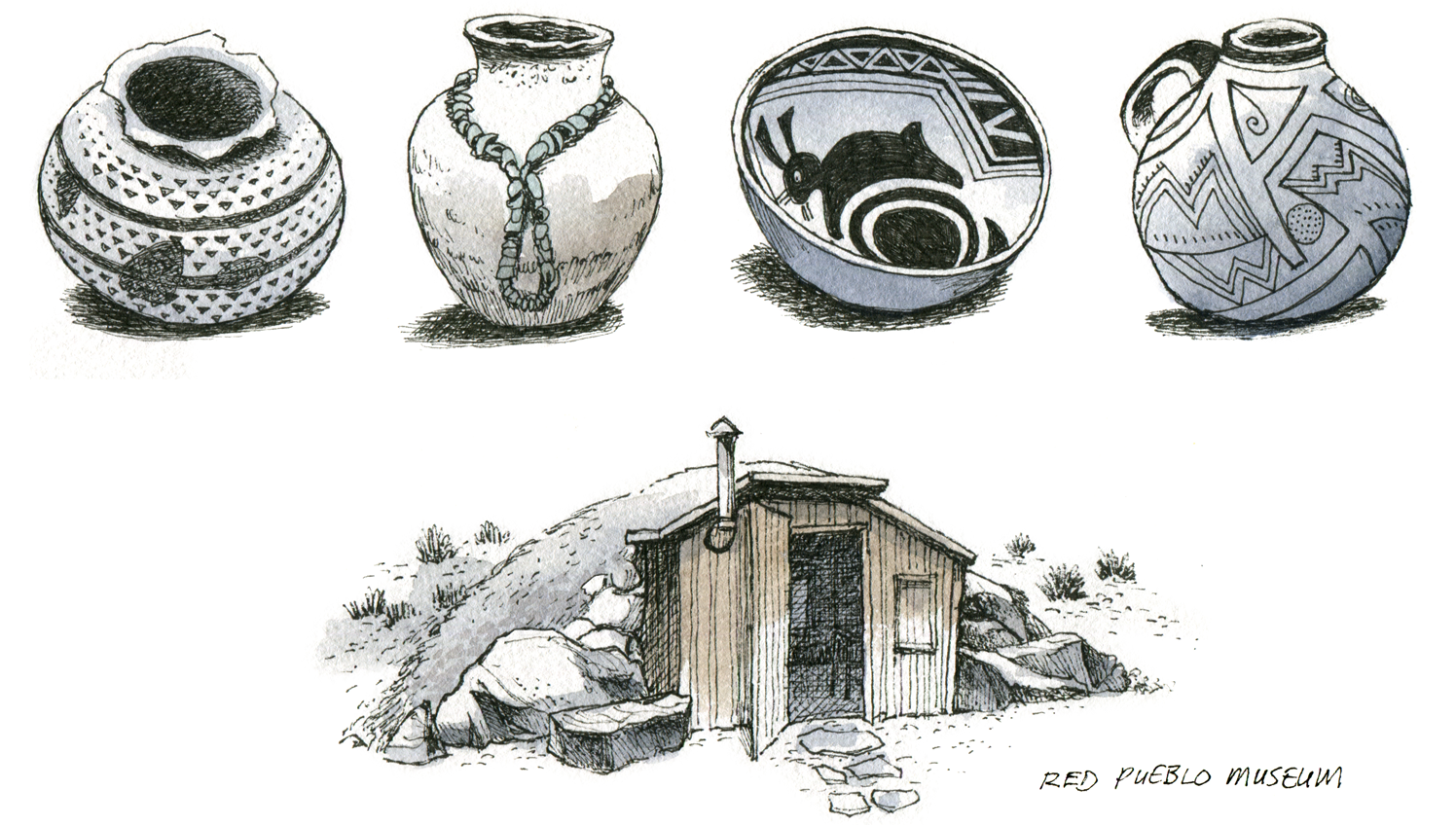
I love the museum in Blanding – Edge of the Cedars Museum. Their great pottery selection prompts me to sketch pottery shards and other items before visiting the ruins outside.
Type a description of this image
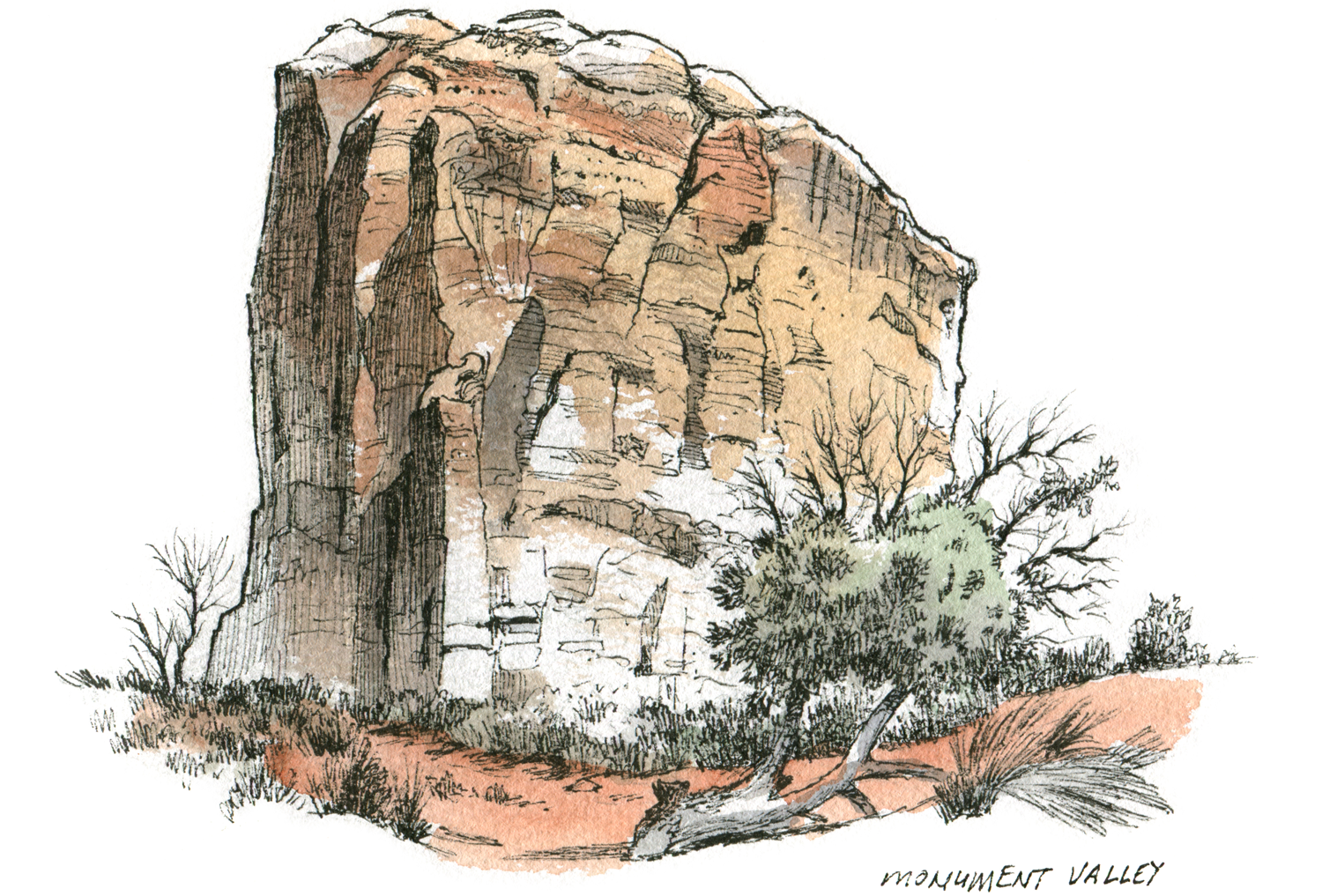
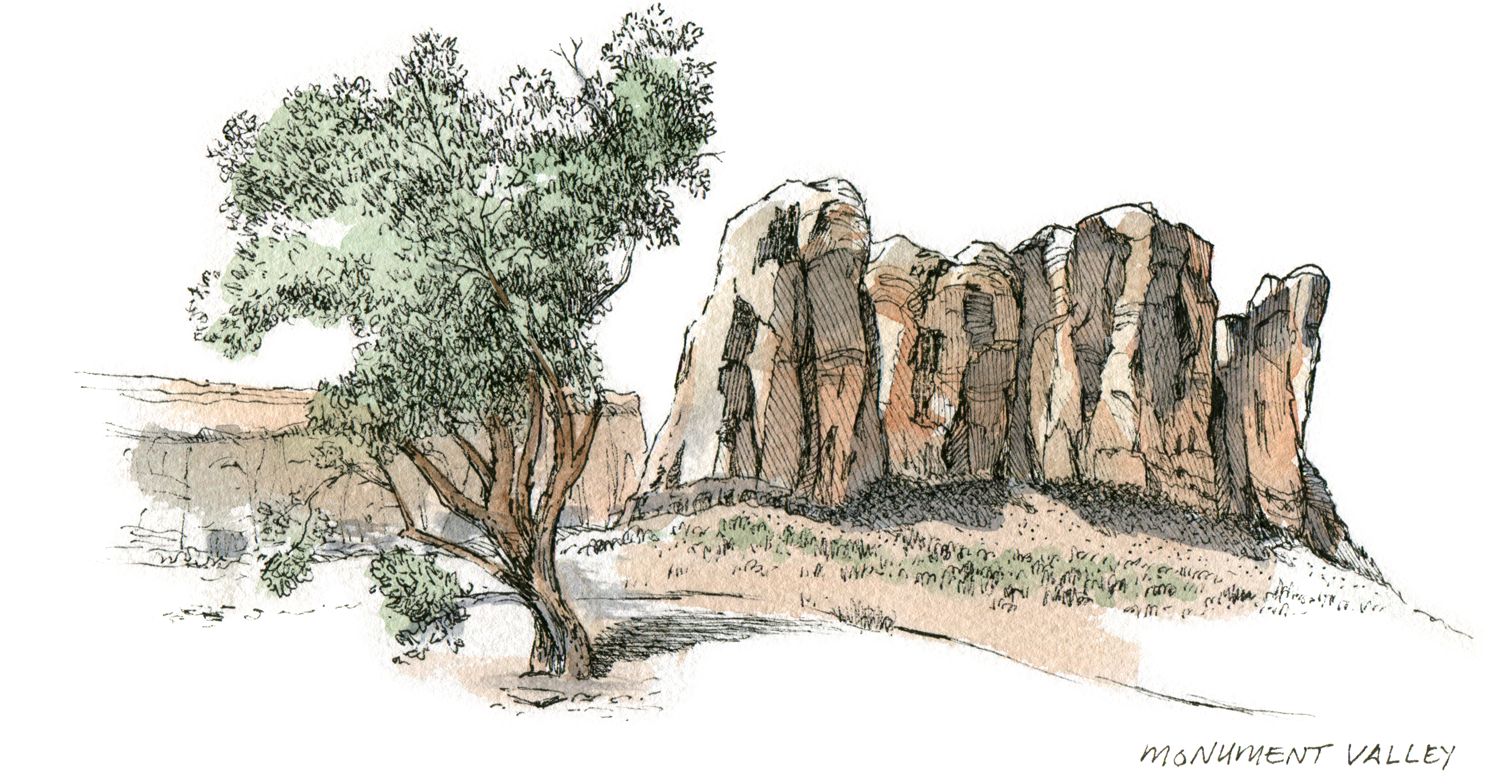
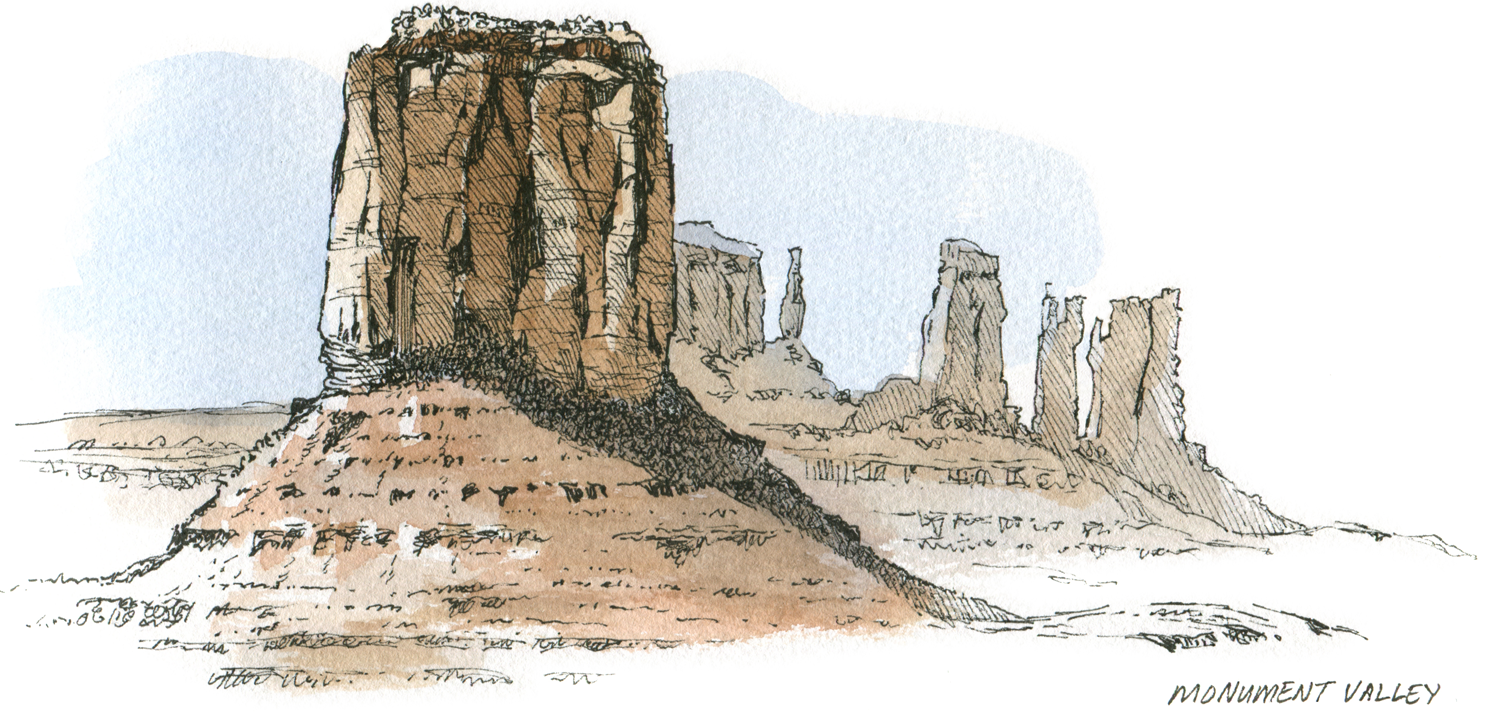
We took the rough, bumpy 17 mile loop drive through the mesas and buttes in Monument Valley in the morning and again in late afternoon to see the shadows change. The sunrise was most impressive. We were lucky to have a calm, clear day, as we left the next morning at the arrival of a dust storm.
Type a description of this image
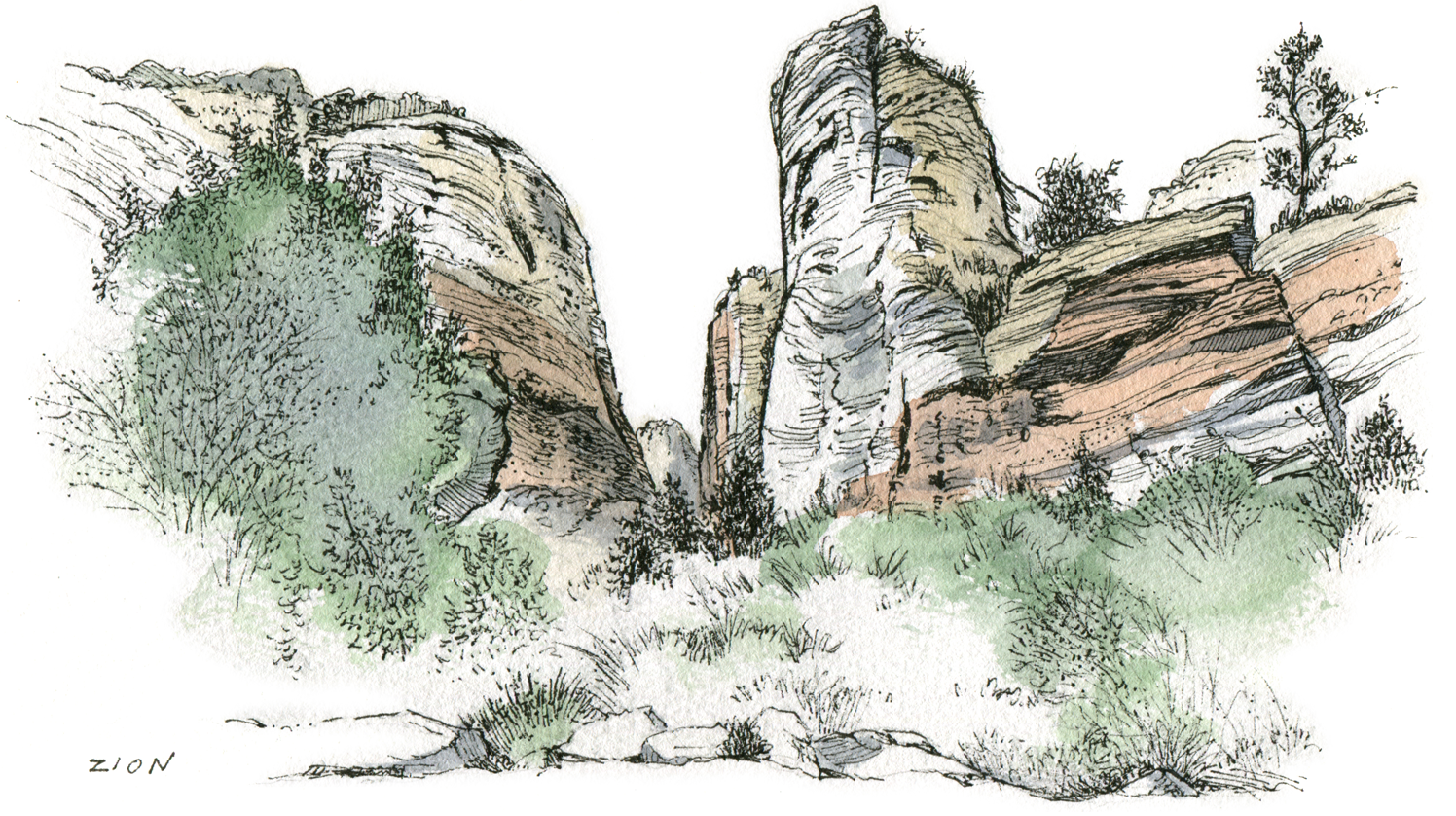
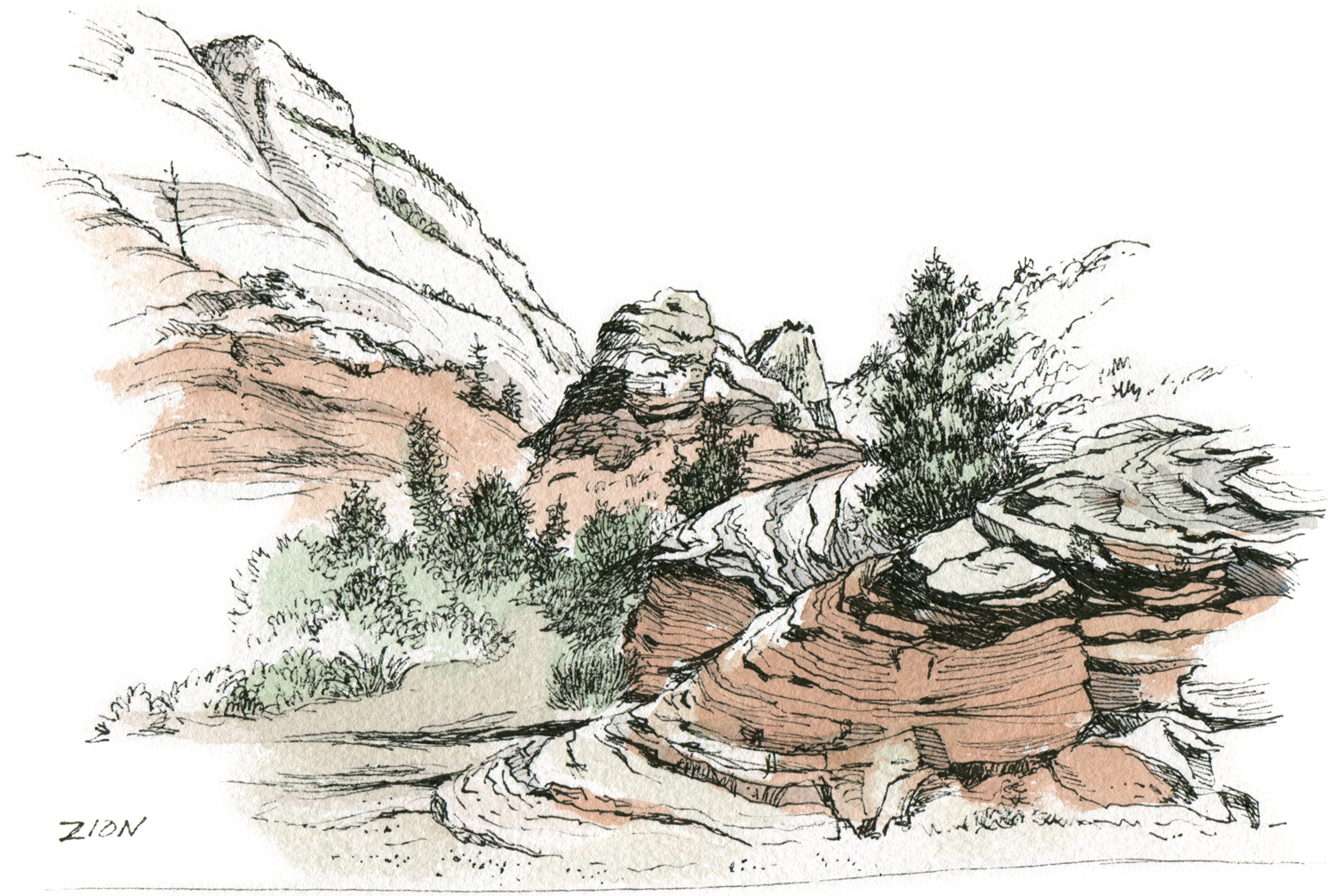
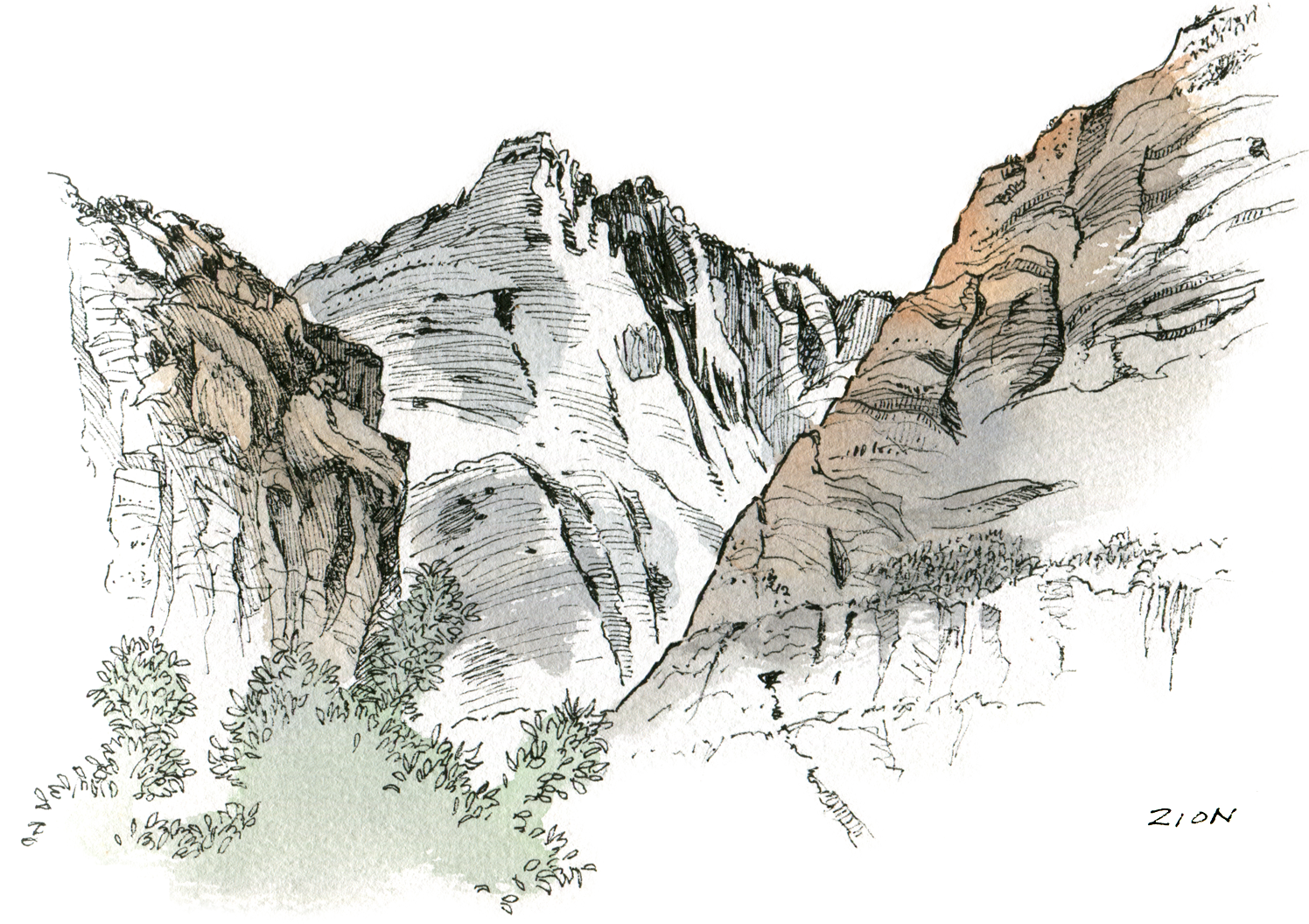
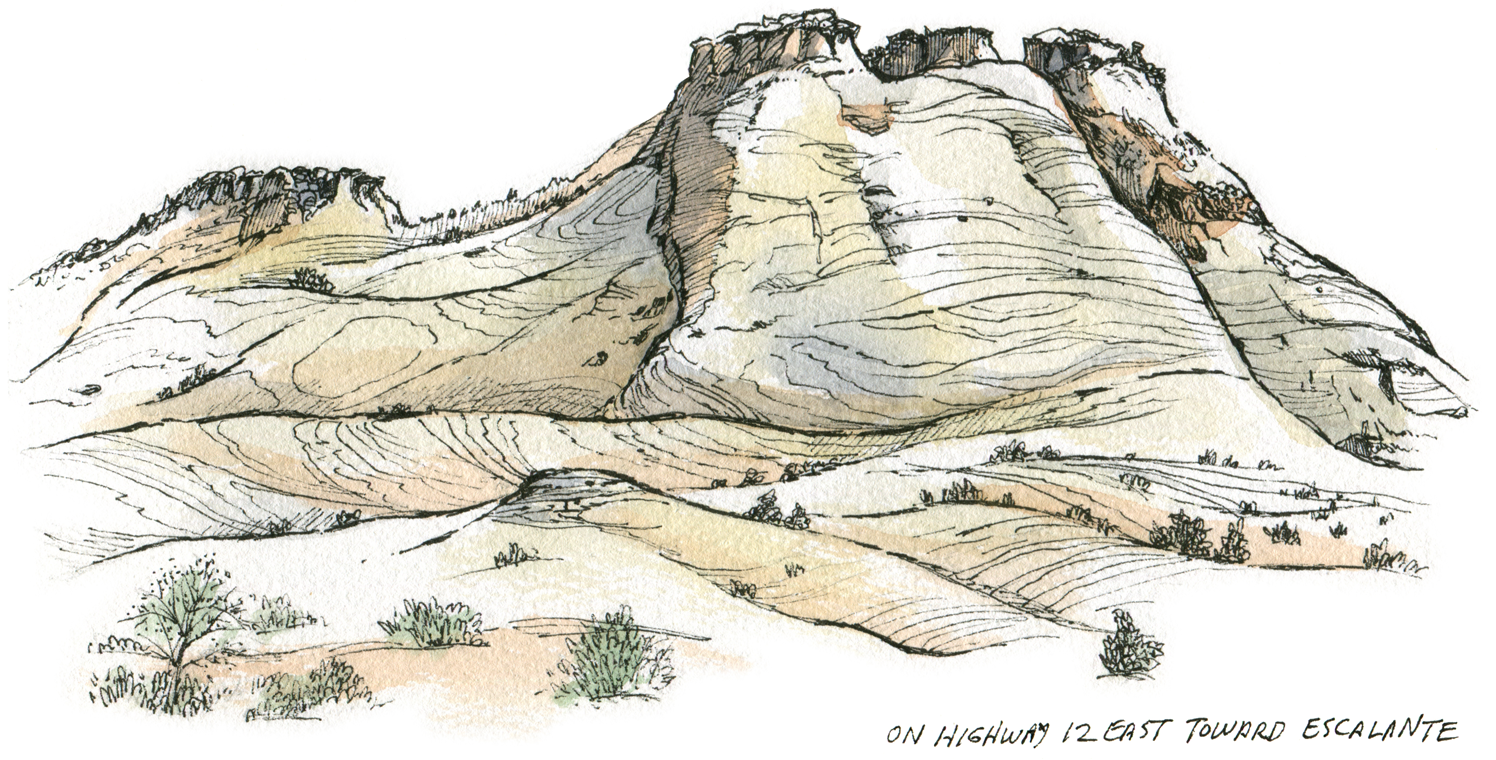
While we found Zion to be extremely busy – with parking nonexistent and the shuttle buses stuffed to over-capacity – we did enjoy a couple shorter hikes. Most impressive was seeing the dramatic mountain and plateau scenery on the Zion-Mt Carmel Highway leaving Zion to the east.
Type a description of this image
I am always amazed at the movement seen in the twisting pines and the crumbling rock formations. It feels as if nature is exploding with movement and expression, while appearing frozen due to our own short lives and passing observations.
Type a description of this image
The Red Pueblo Museum is on the highway just south of Kanab. Along with their collection of Navajo pottery, they have an old settler's cabin on the grounds. To entice Europeans to settle in this waterless land, the government offered 640 acres to anyone who could live on the land for ten years. They had to live in a house though, not in a tent or wagon. A house had to have a door and a window to qualify.
Type a description of this image
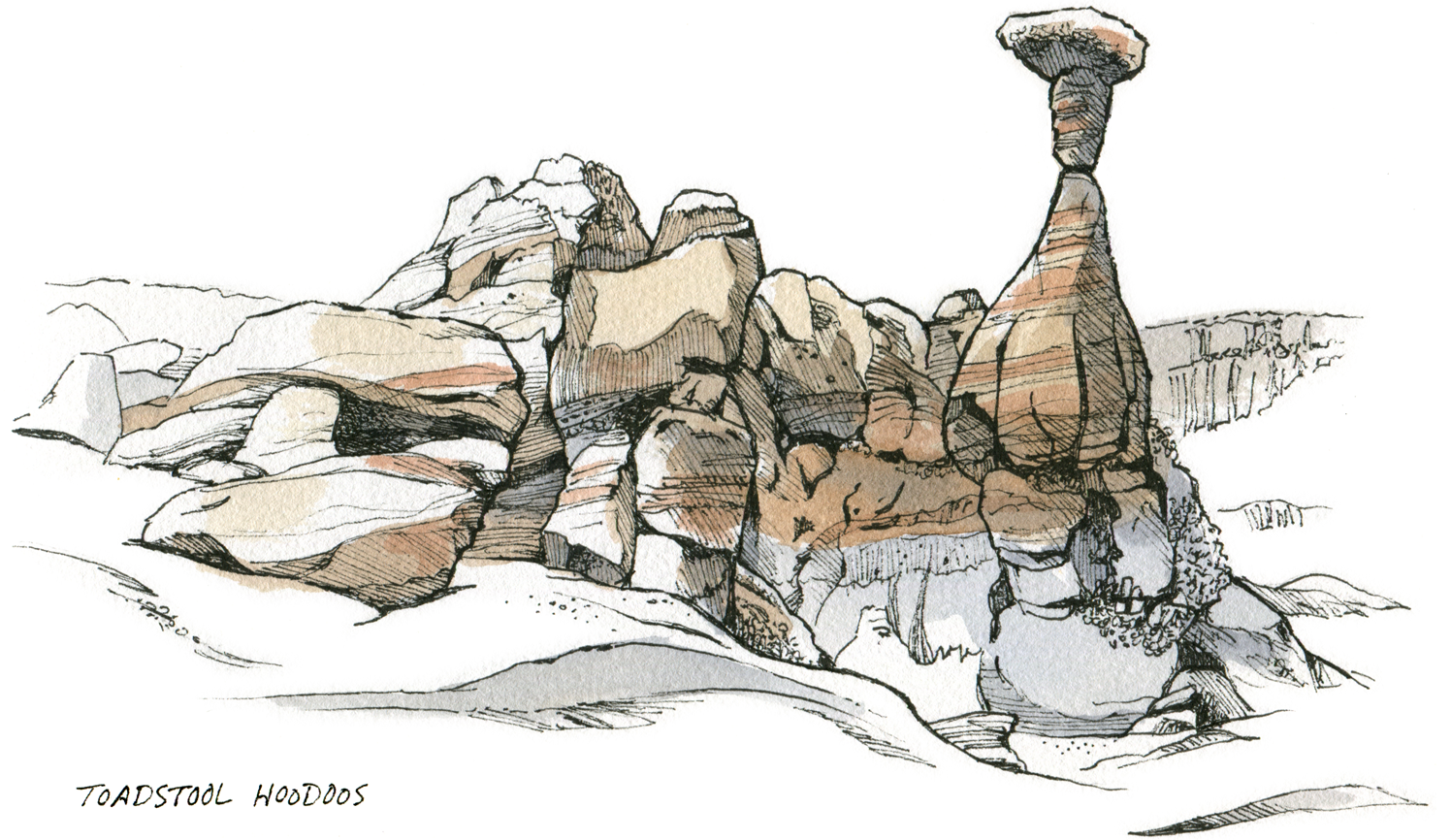
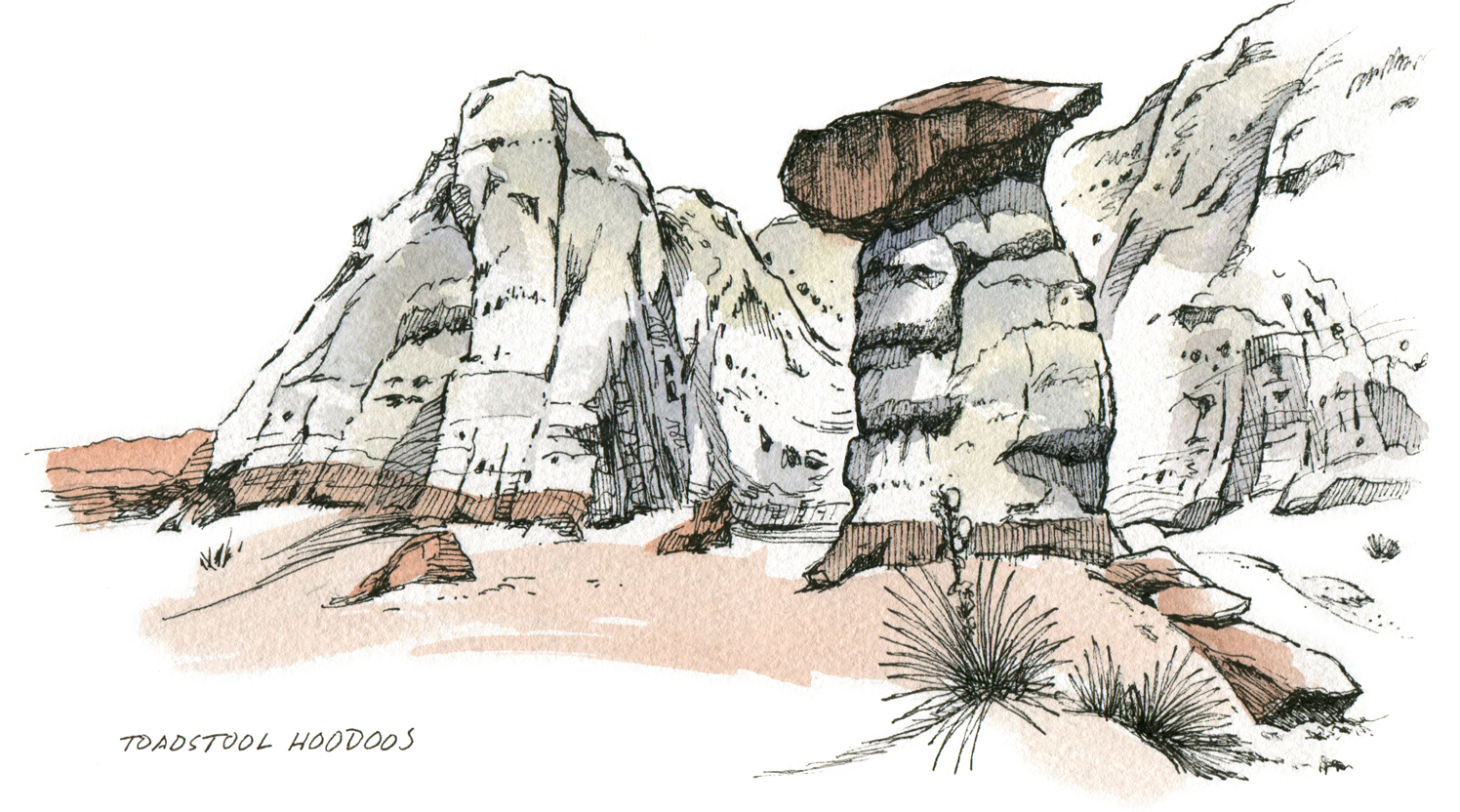
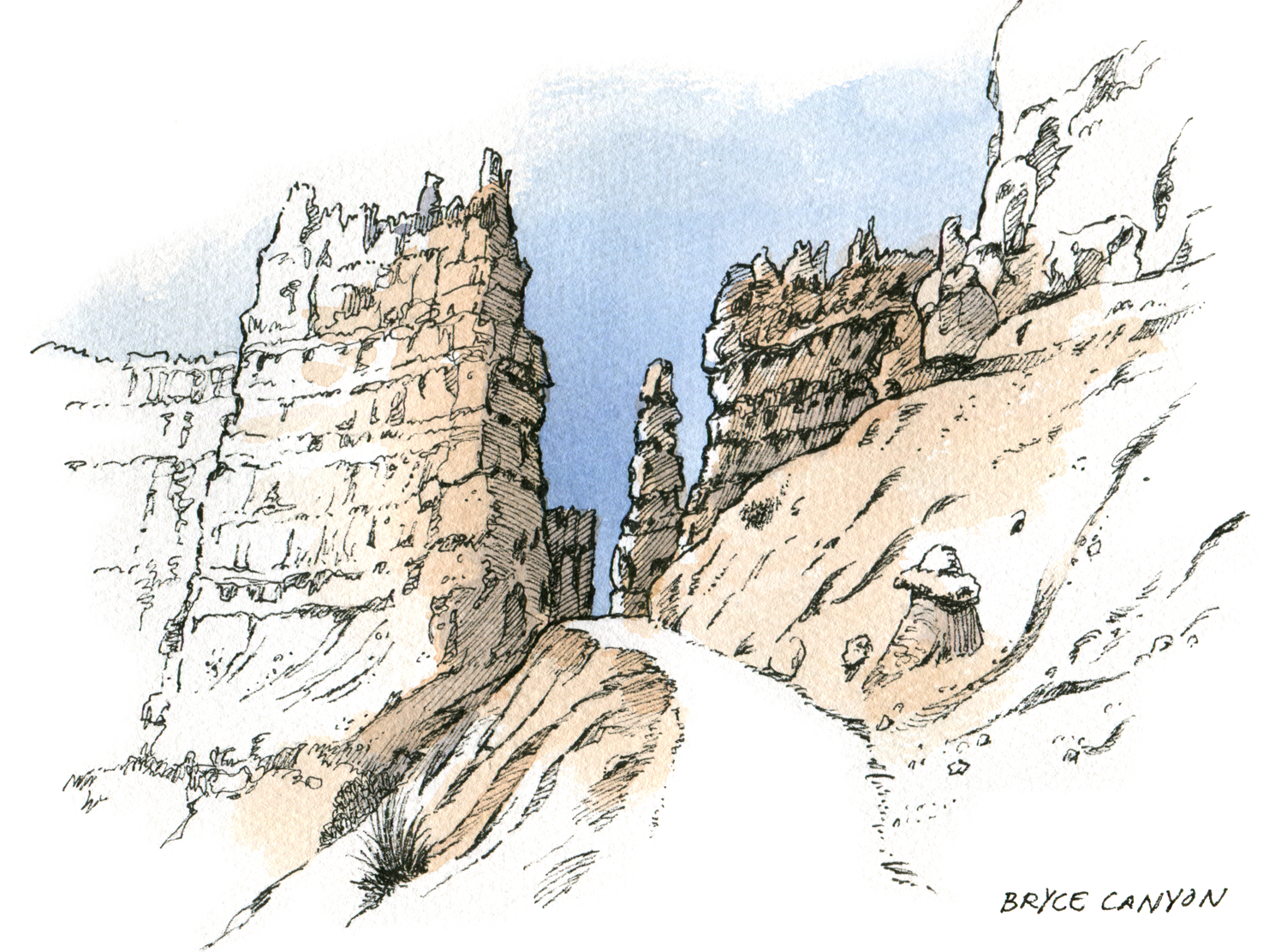
I find some of the less popular, smaller places to be often great sketching opportunities. Toadstool Hoodoos proved to be one such place. While parks like Bryce Canyon are practably indescribable in their grandeur and complexity, they can be a challenge to reduce something into a sketch.
Type a description of this image
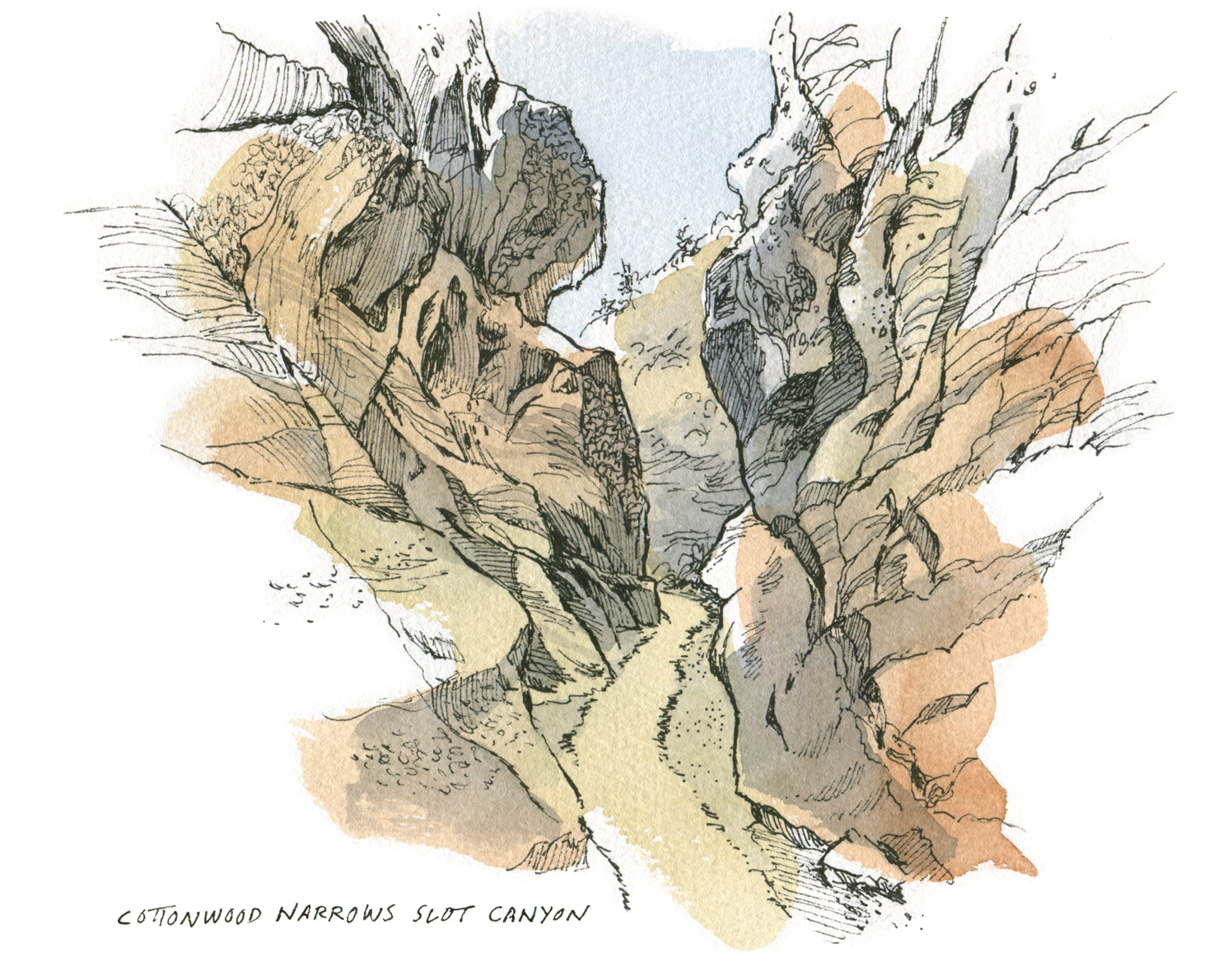
Leaving Toadstool Hoodoos, we drove the 70-some miles of dirt road called Cottonwood Canyon as it winds its way north through Escalante to the town of Tropic, near the entrance to Bryce. You see the most desolate landscapes of shattered rocks, canyons, arroyos and the occasional cow. We stopped to explore Cottonwood Narrows slot canyon.
Type a description of this image
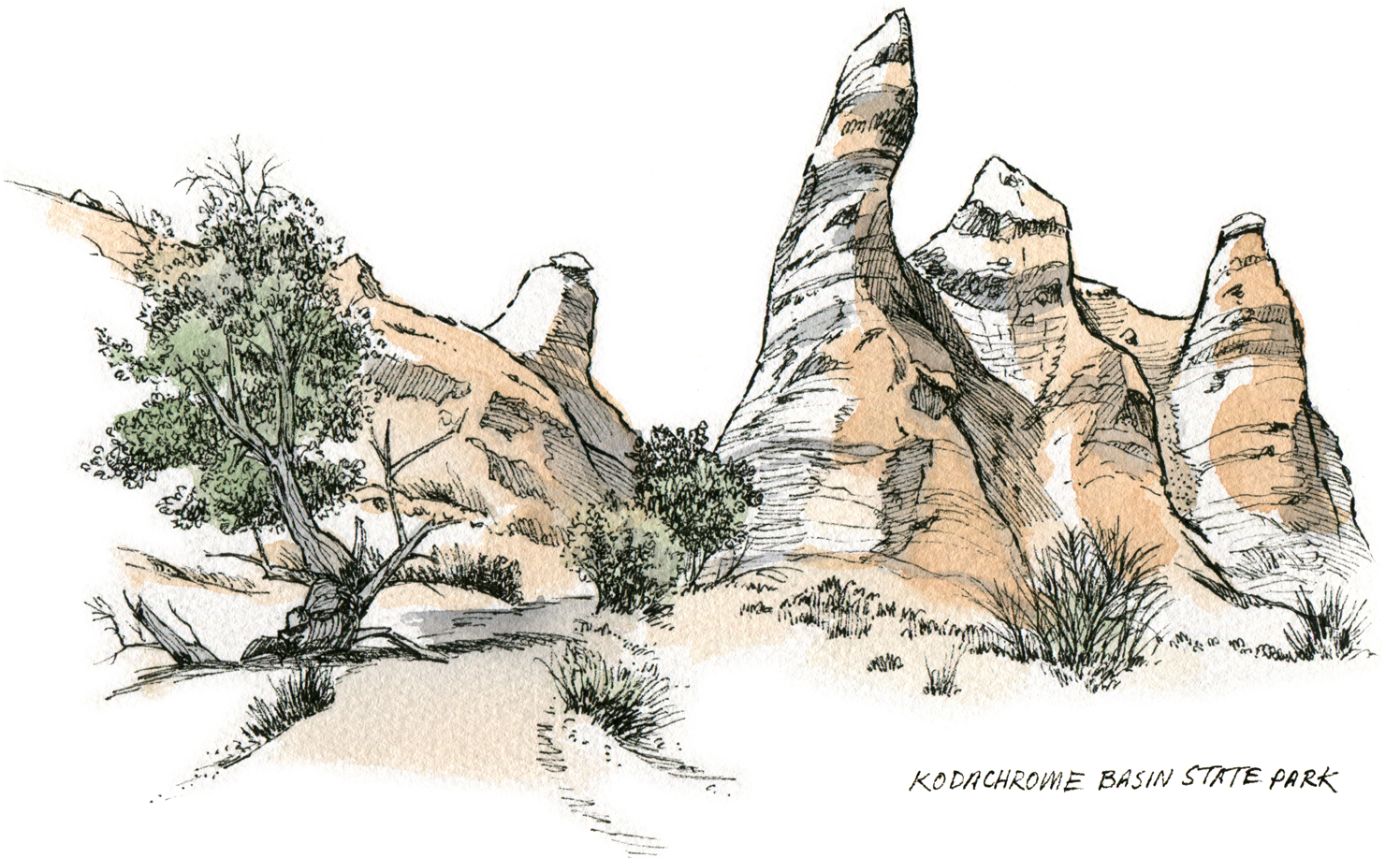
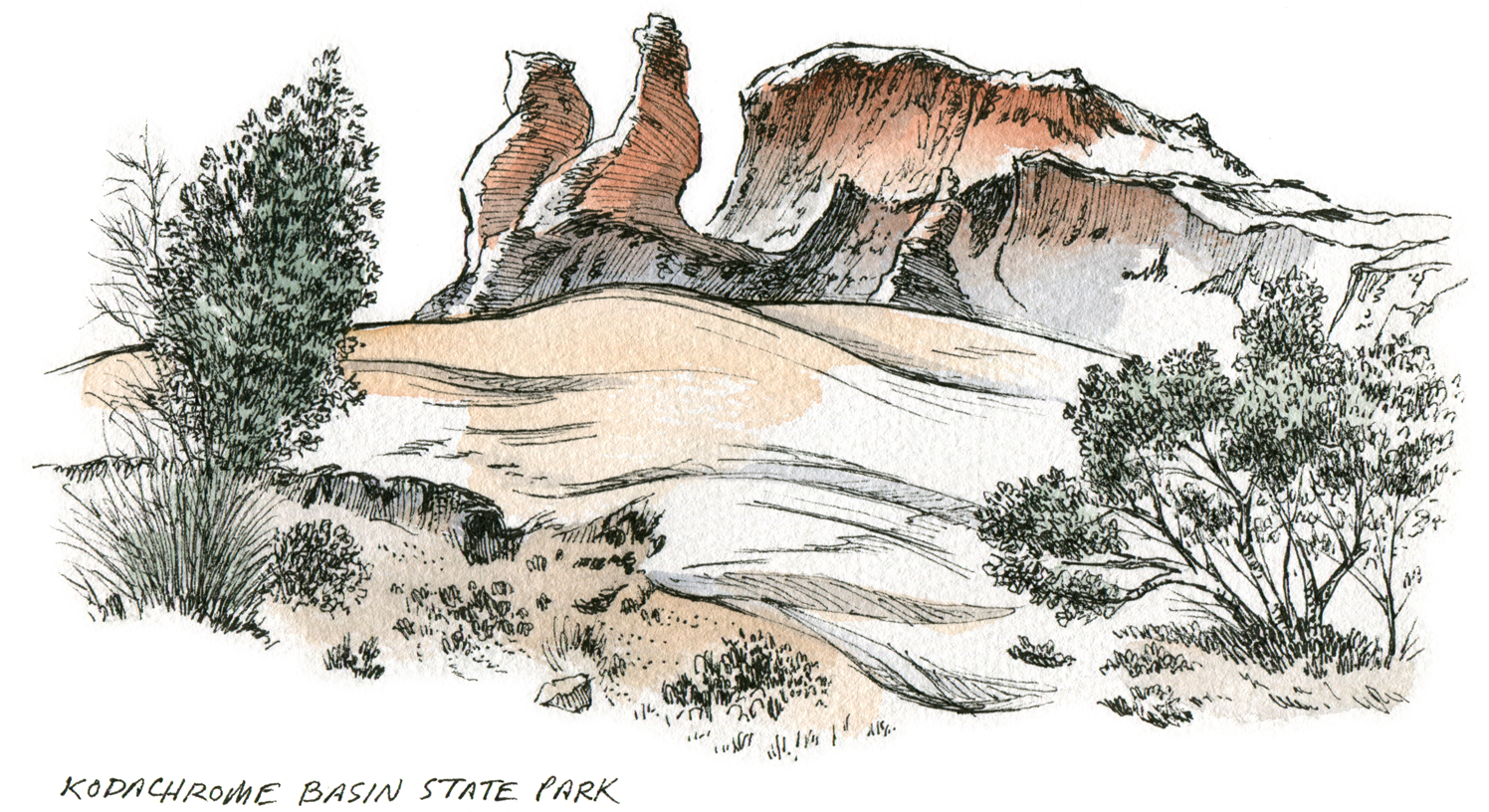
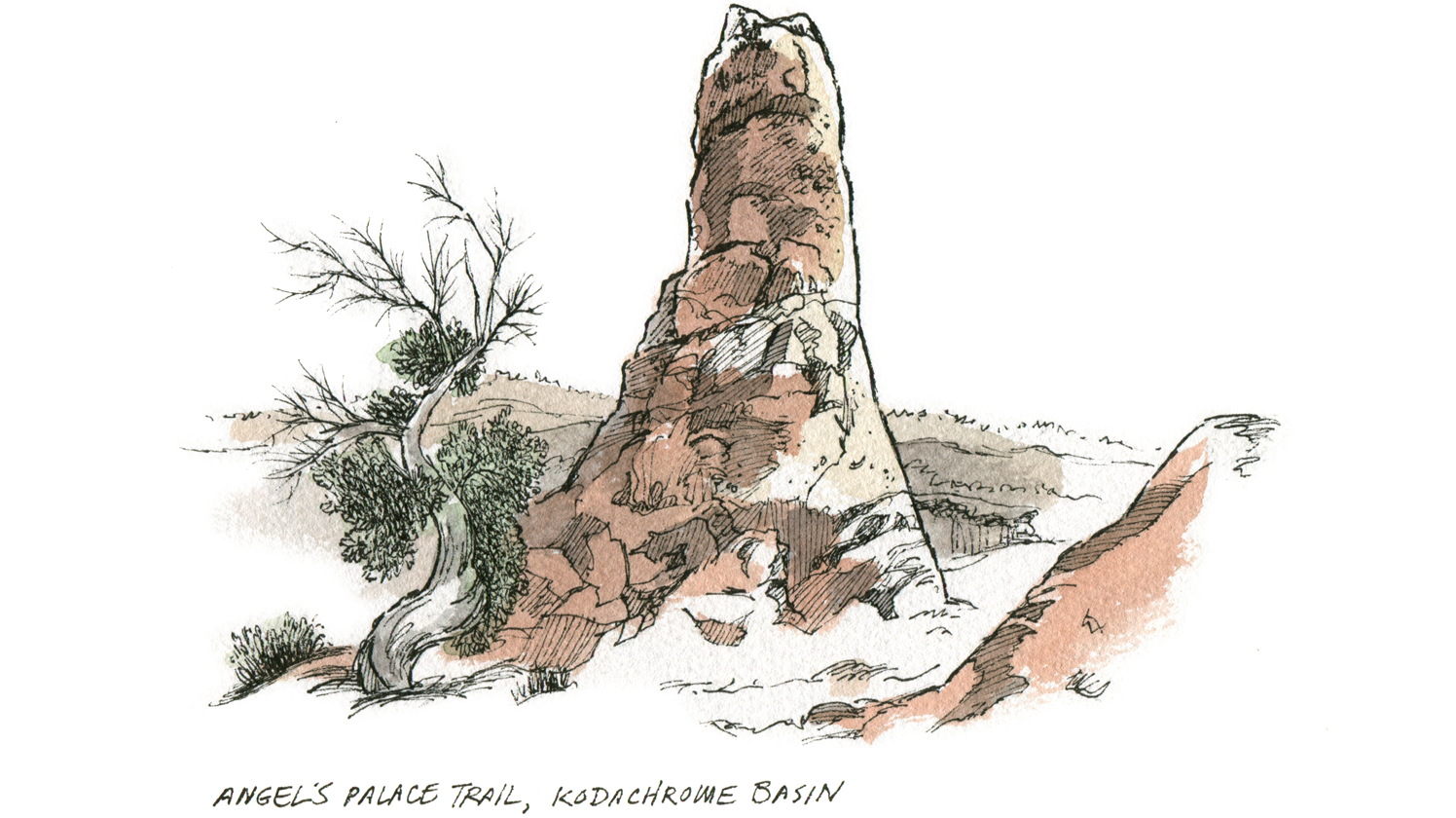
While everyone seems to beat their way to Bryce Canyon, we found Kodachrome Basin to be fantastic – beautifully colored spires, hoodoos, hikes, views, and relatively unvisited. A gem!
Type a description of this image
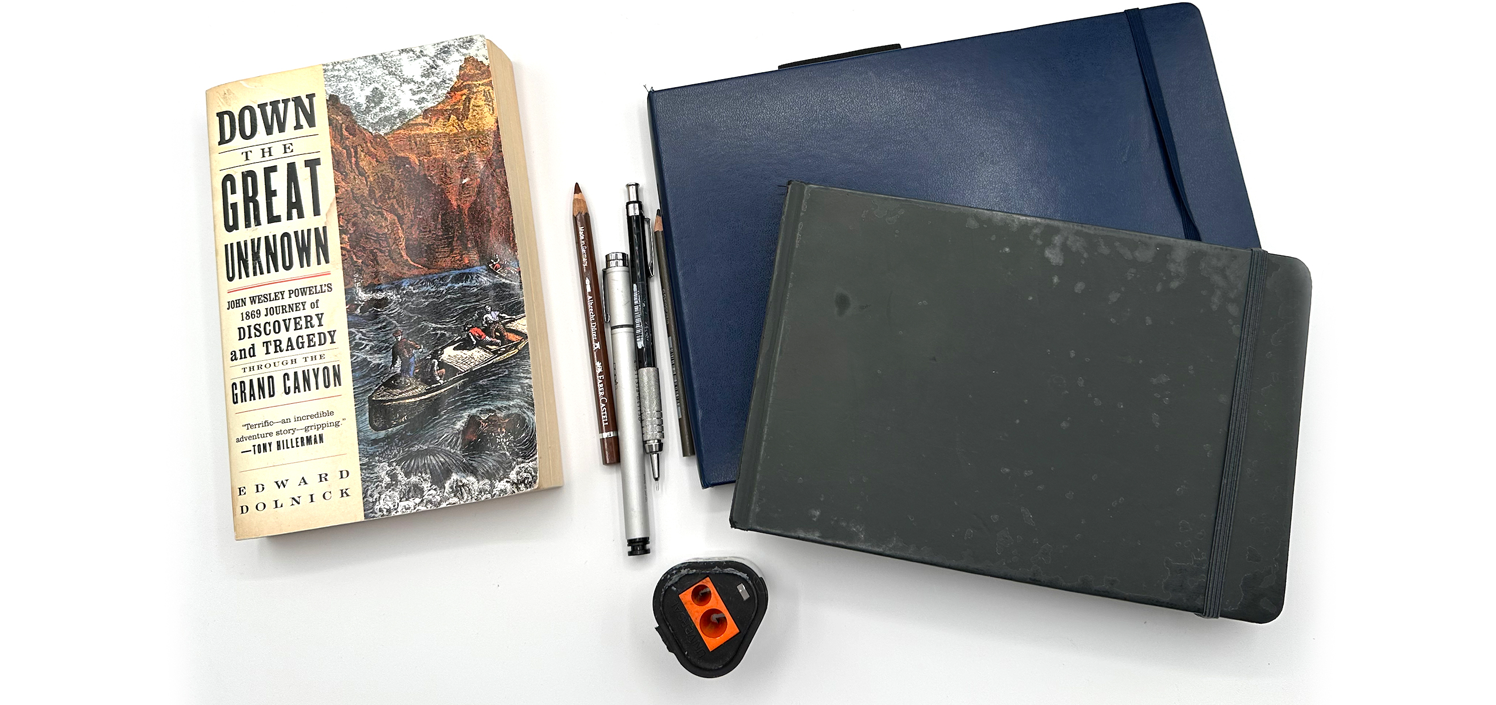
I read this book on John Wesley Powell's wild first adventure rafting the Green and Colorado Rivers just a few years after the Civil War ended. It gave me a spark of adventure for my own upcoming trip.
Type a description of this image