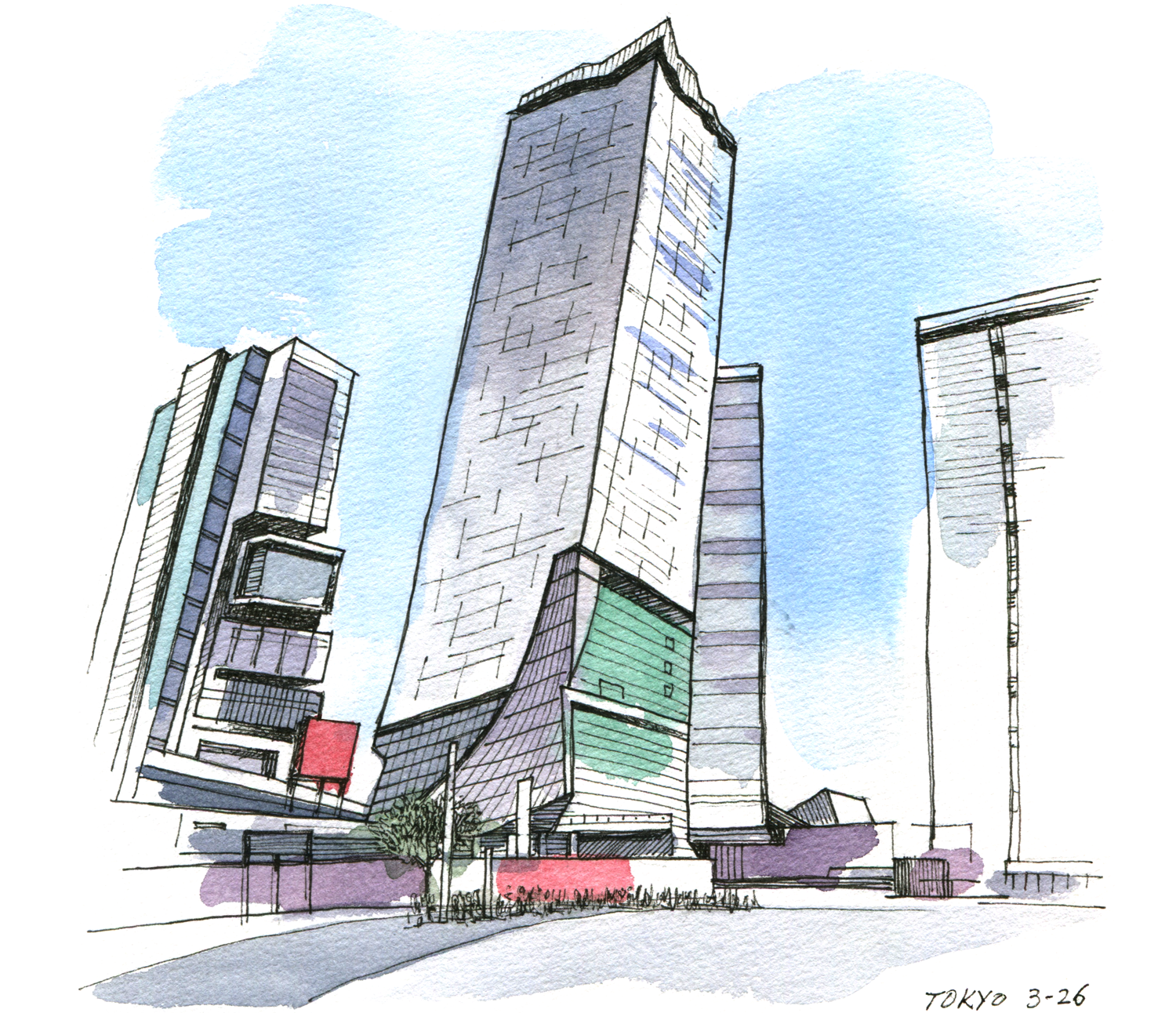
I flew to Tokyo in February and took the Shinkansen to Shizuoka to join my wife, who was recovering from surgery. She was doing well, but as a consequence we chose to be very careful in what we did and how much travel and adventure seemed appropriate.
Sketches from Nippon
February 20, 2026
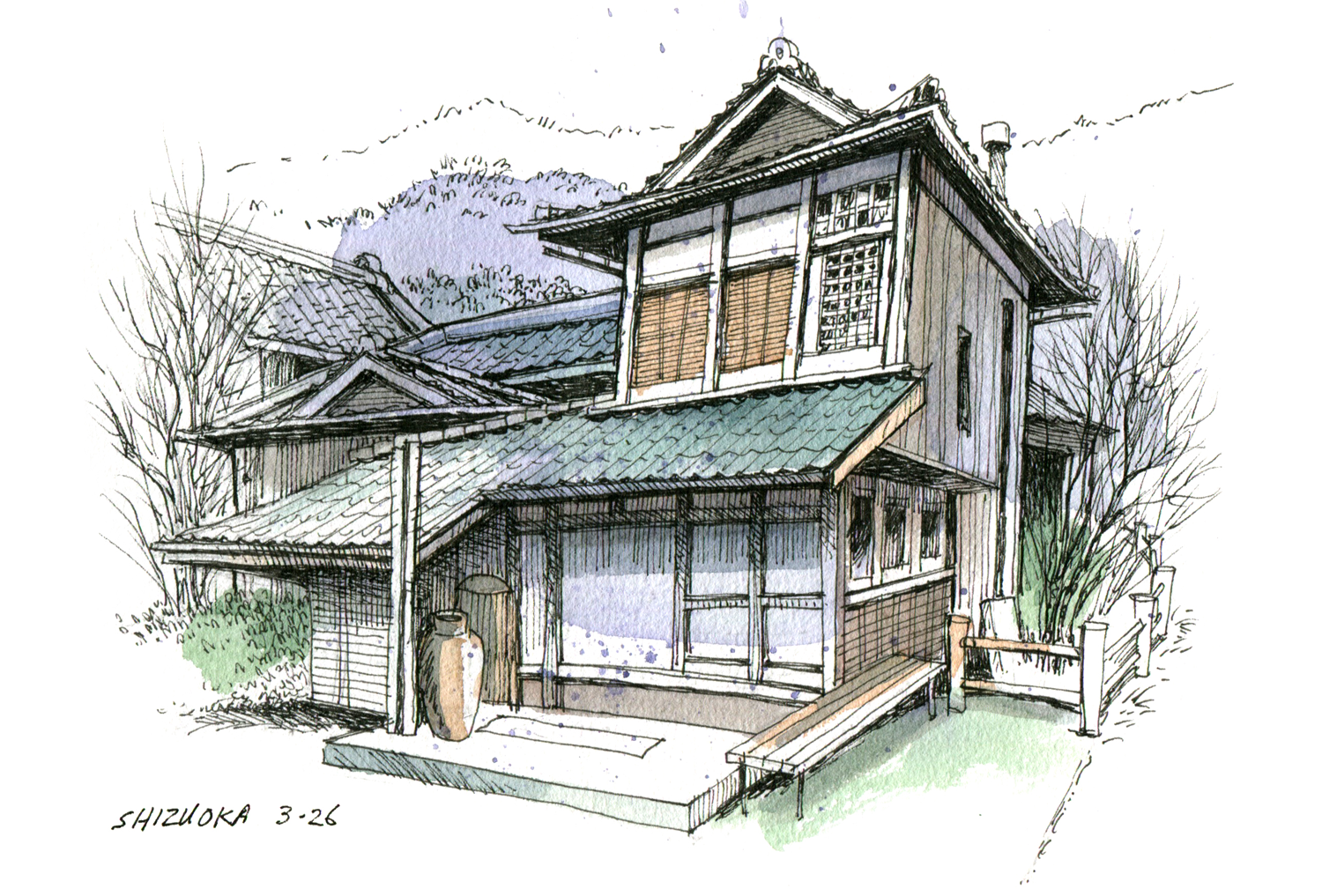
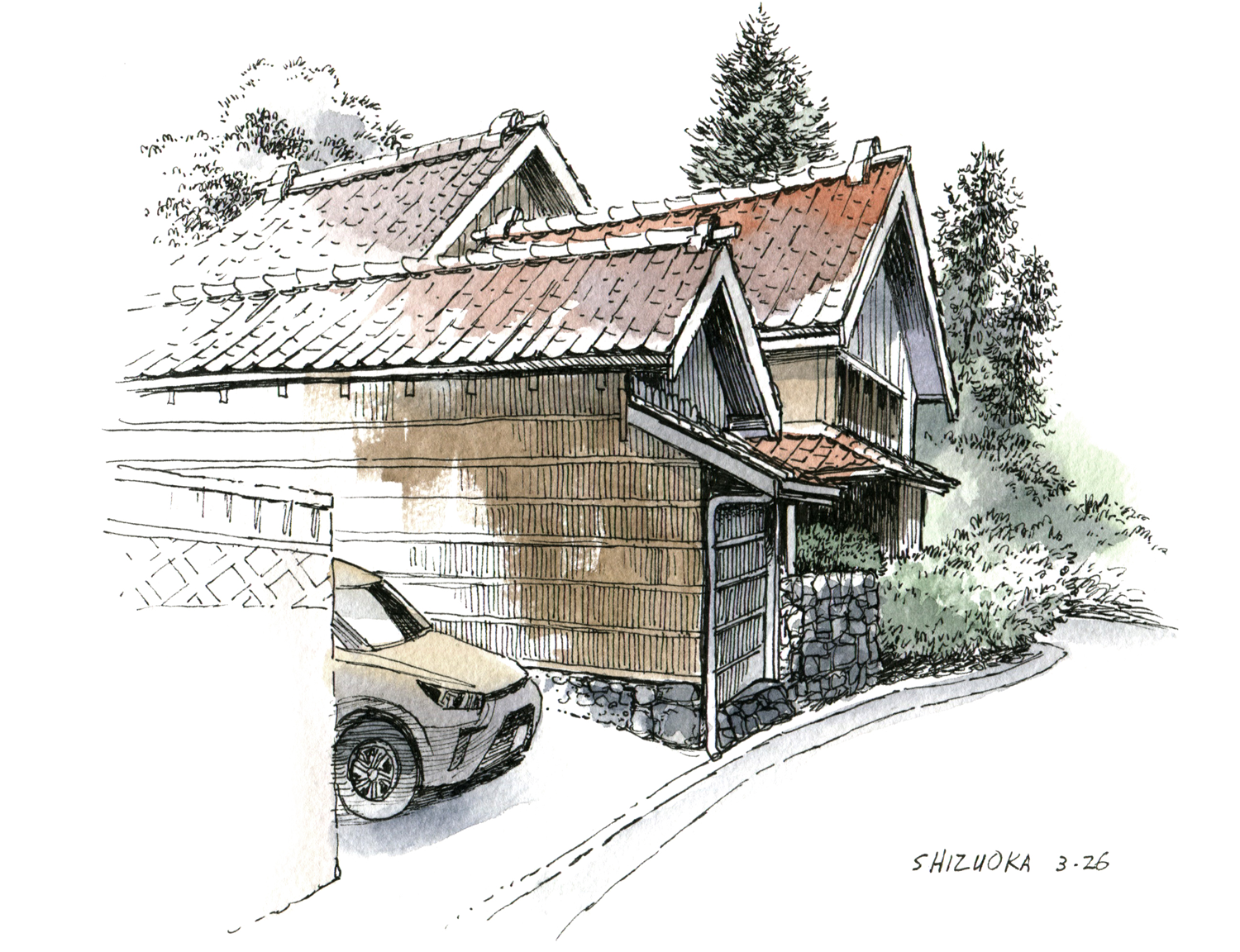
Our hotel was right in the center of the little downtown, just two blocks from the train station. Shizuoka is very walkable, mostly flat and interesting.
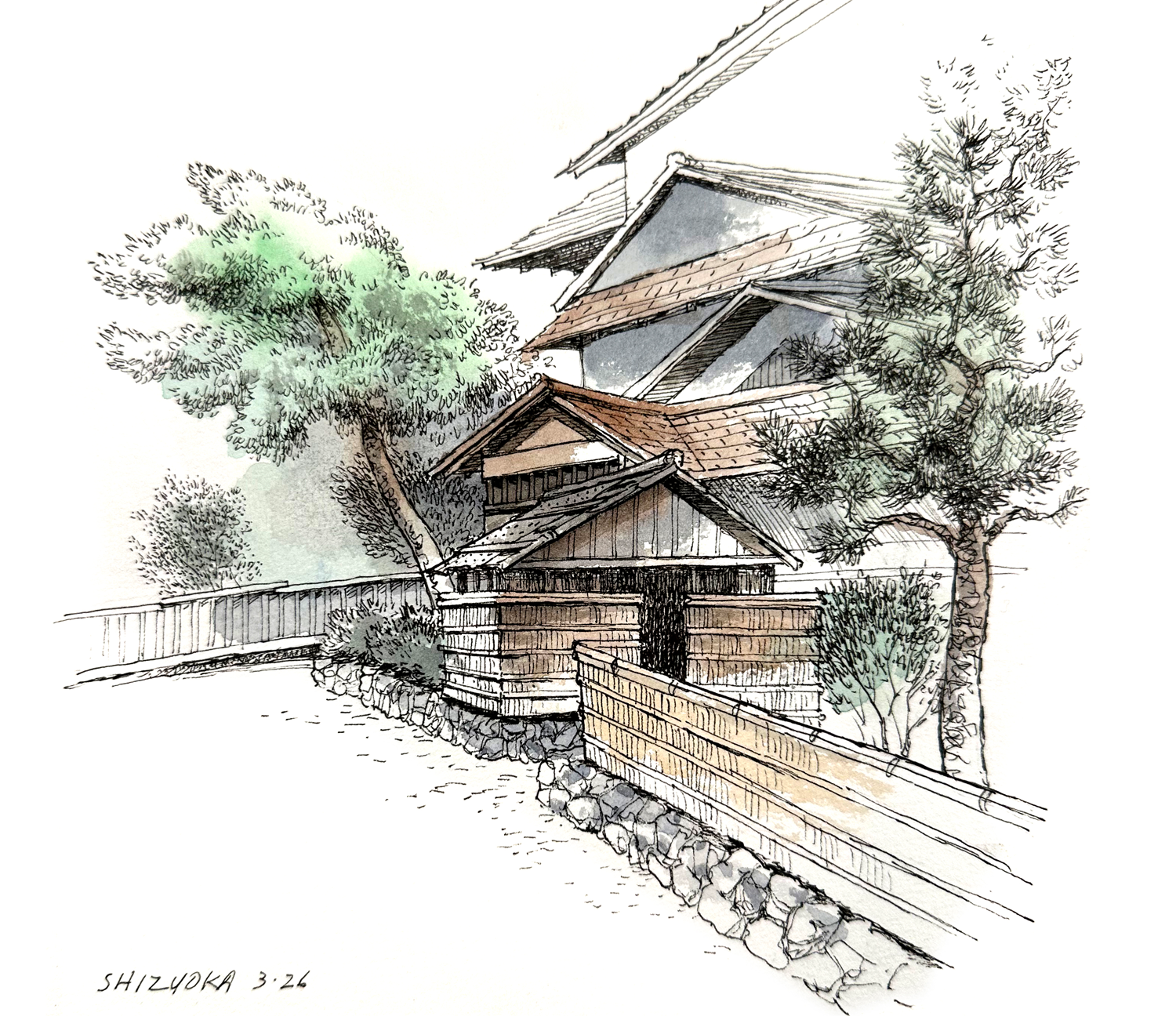
We took a bus out to the neighborhood of Mariko, where we once again visited the craft center of Sumpu Takumishuku. This area follows a meandering stream past temples, a few restaurants and gardens, very quaint and inviting.
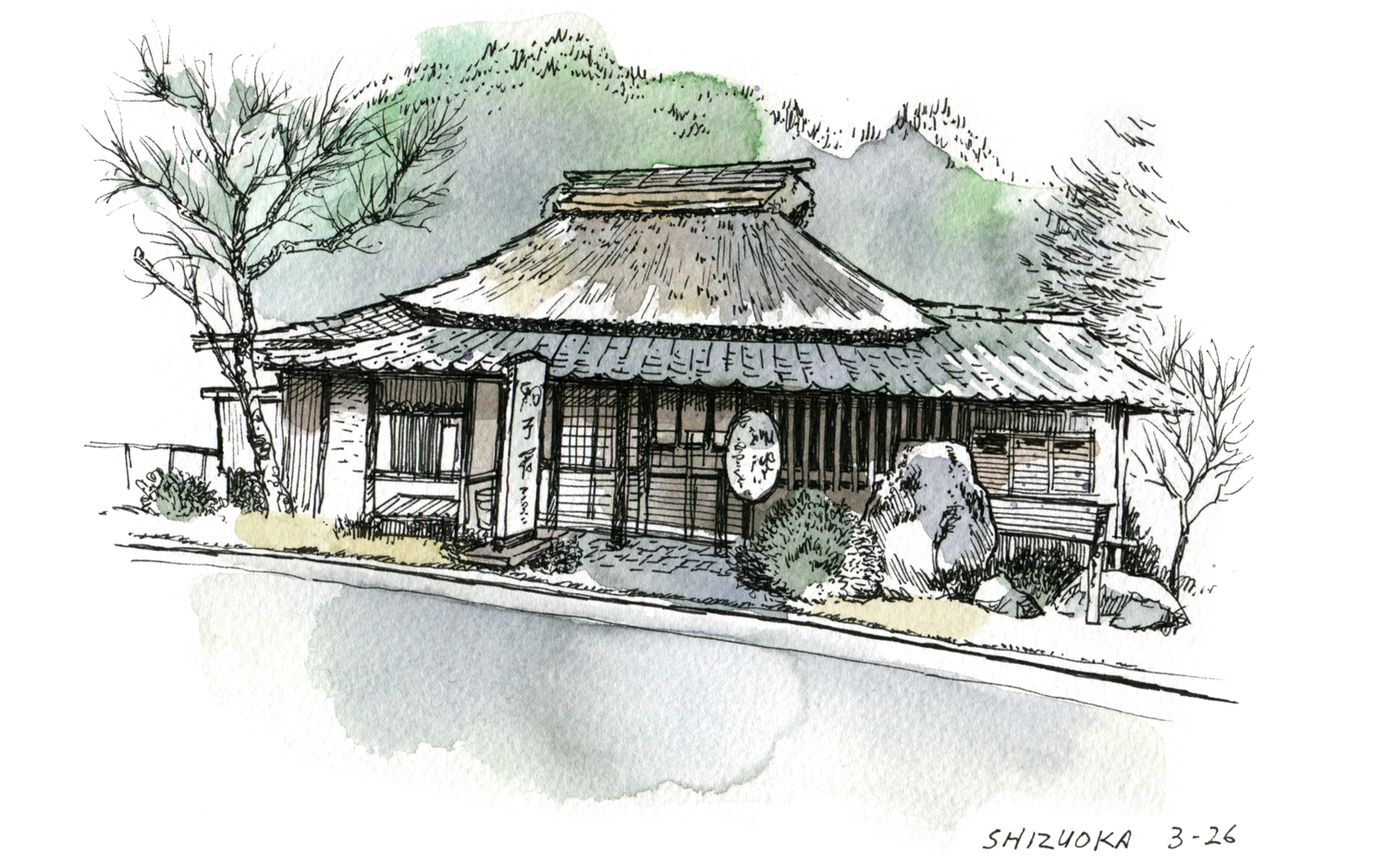
We stopped for lunch at Chojiya restaurant nearby. On the old road to Tokyo, it is famous for its visits from haiku poet Basho, and for their "slimy potato" dish made from local wild yams. Fermented foods are ok, but the slimy potatoes, like the natto, are not appealing to me.
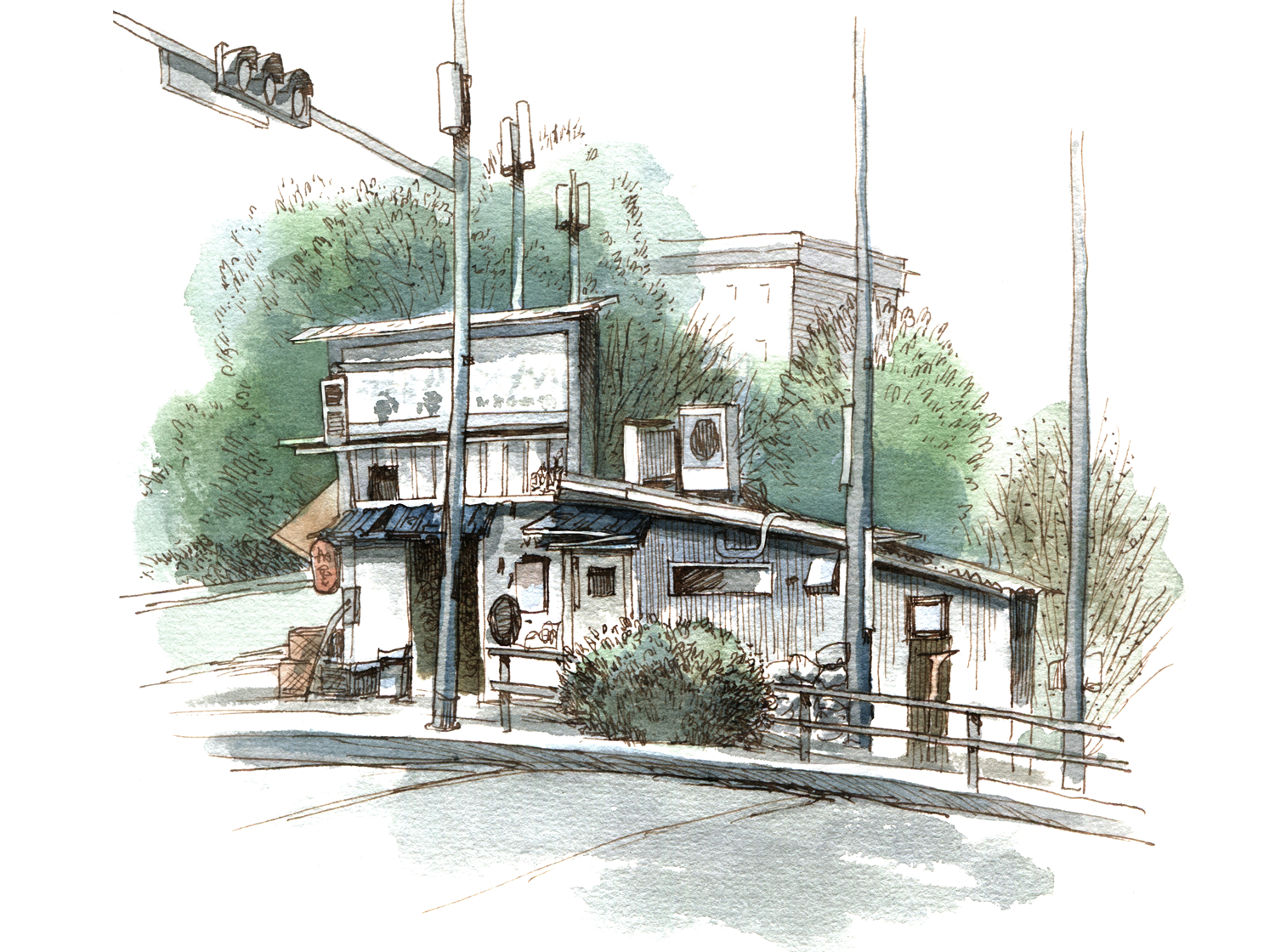
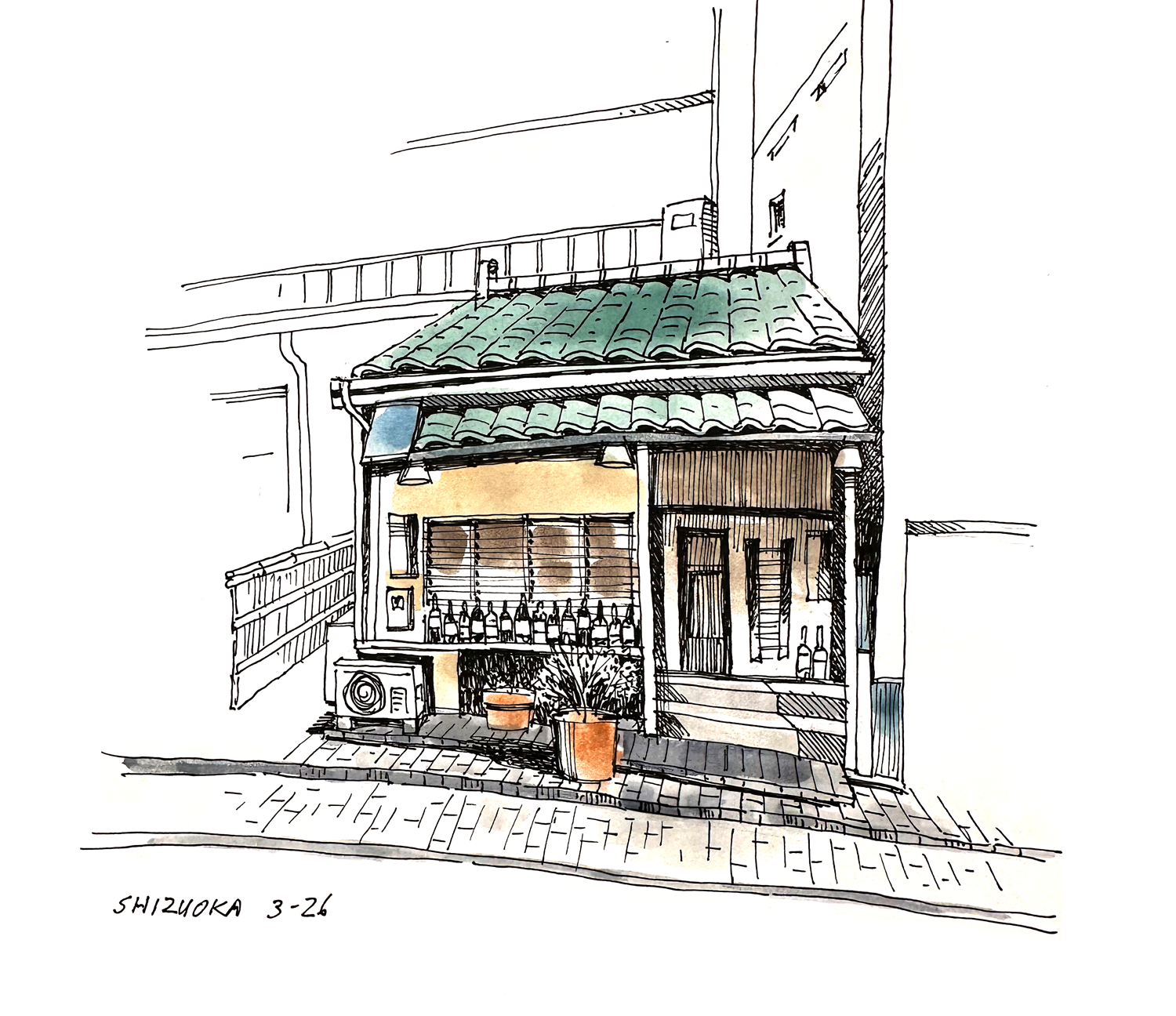
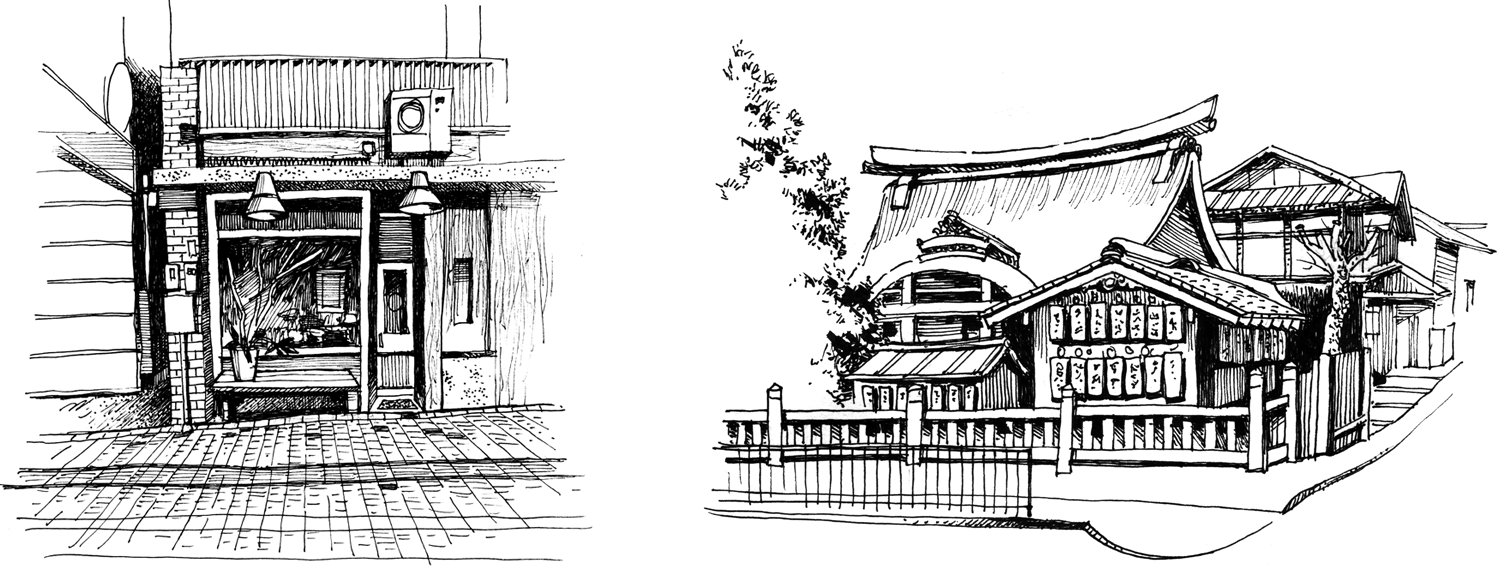
After a few days in our first hotel, we moved to another one north of the bus terminal in a quiet (at times) neighborhood. On my walking excursions I counted 12 tiny obscure restaurants within a couple blocks, as well as a convenience store, book store, and this wine shop that never seemed to be open.
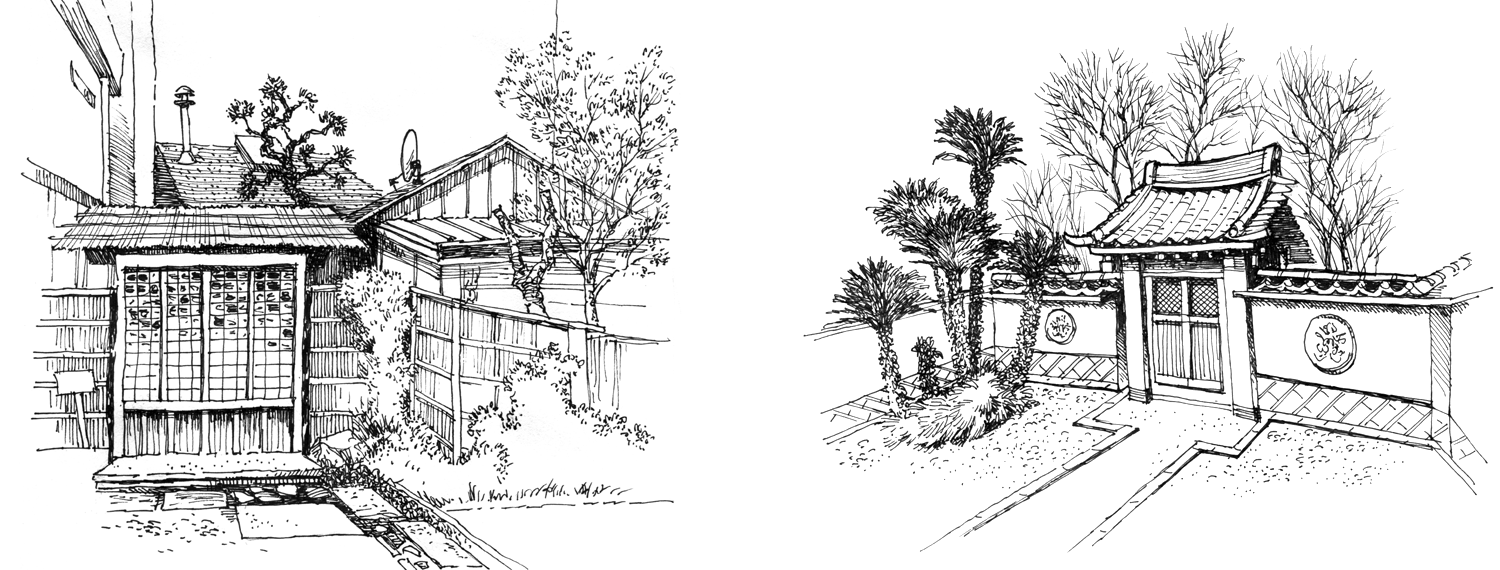
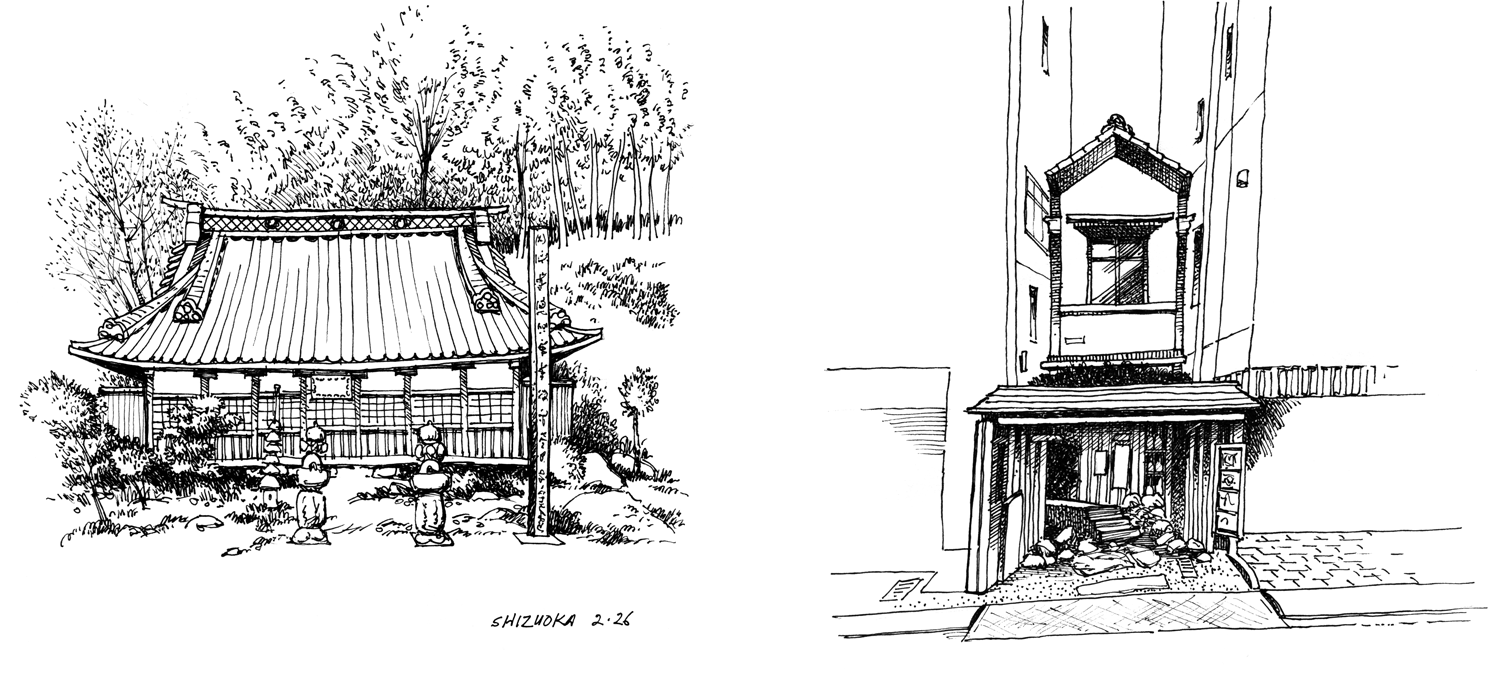
I brought two sketchbooks on this trip. My smaller book has a lighter grade of paper, great for pen and pencil but terrible for adding color. I tend to use it for smaller, "lesser" scenes that capture my attention.
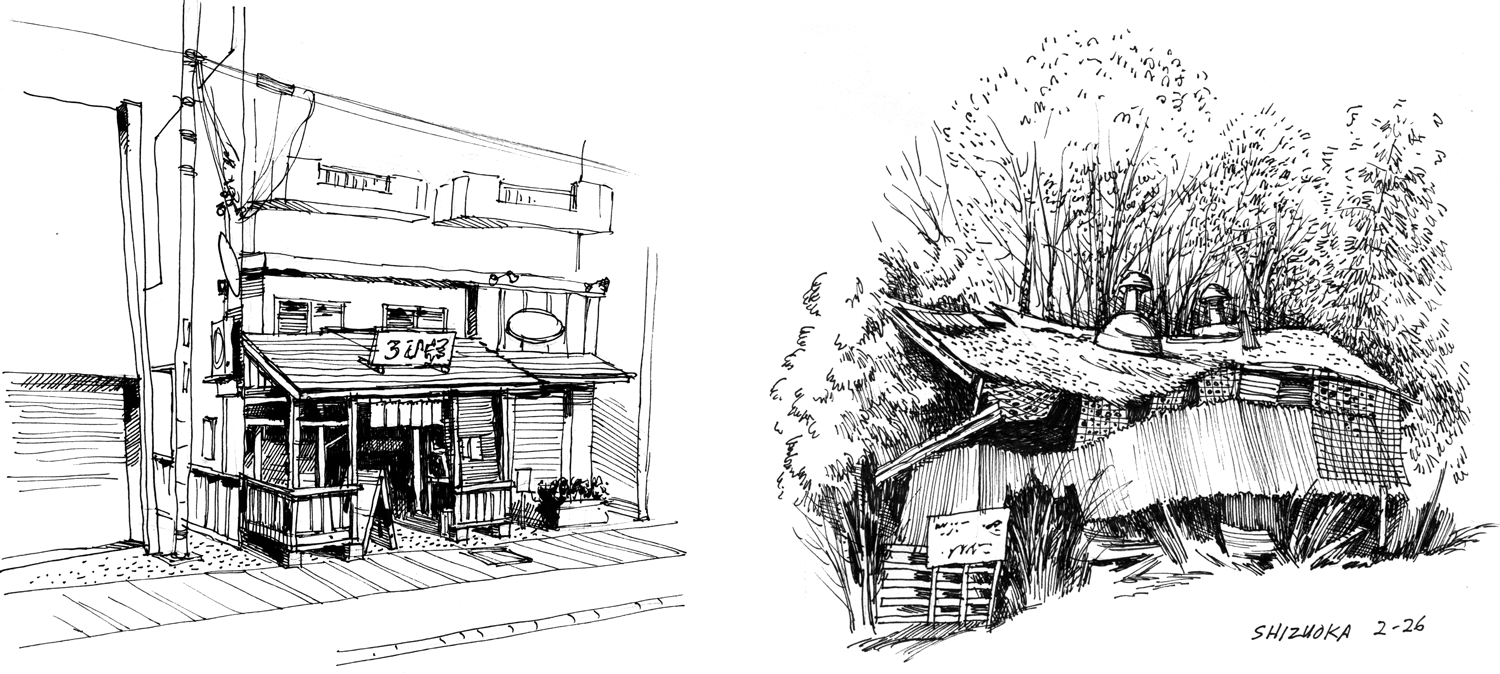
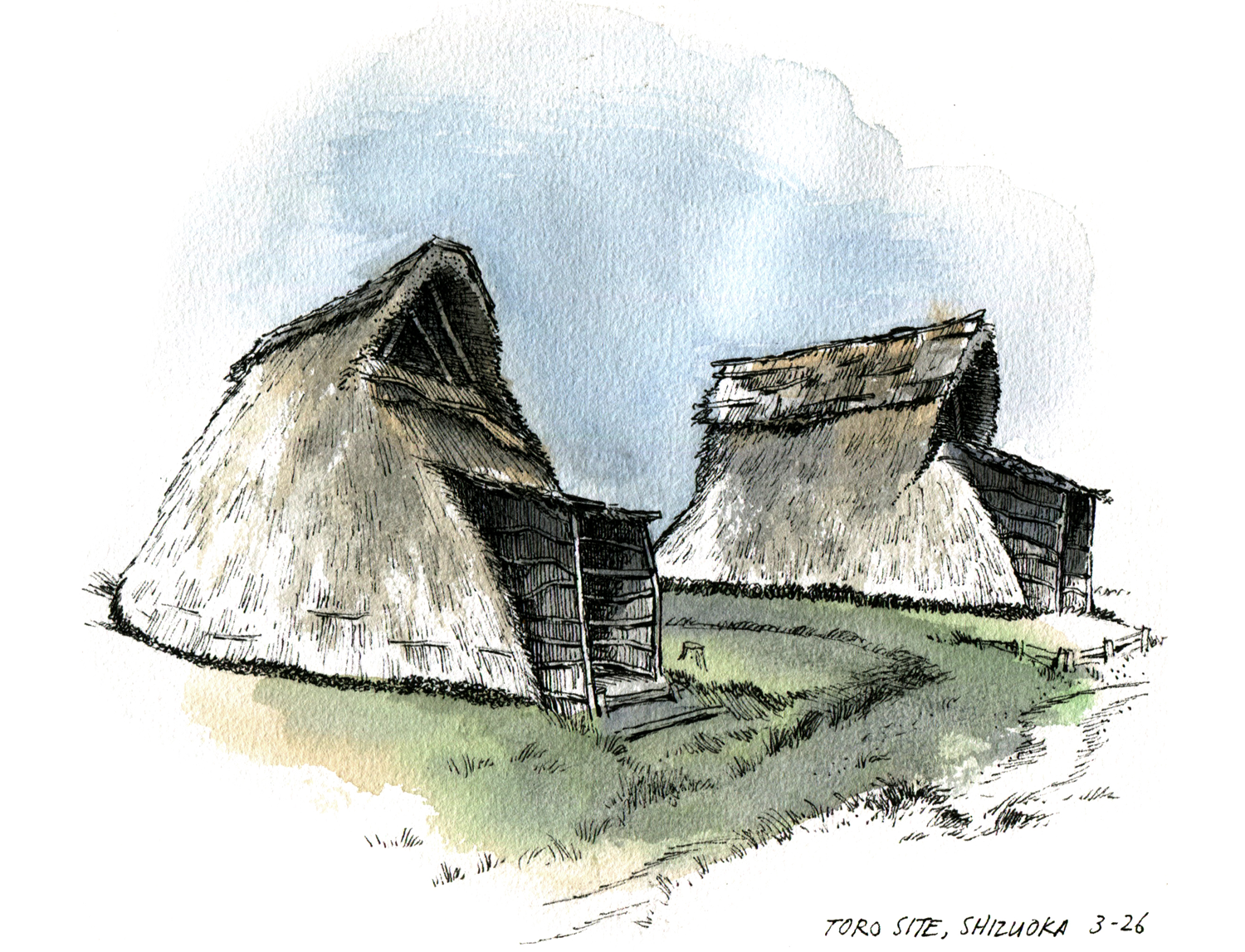
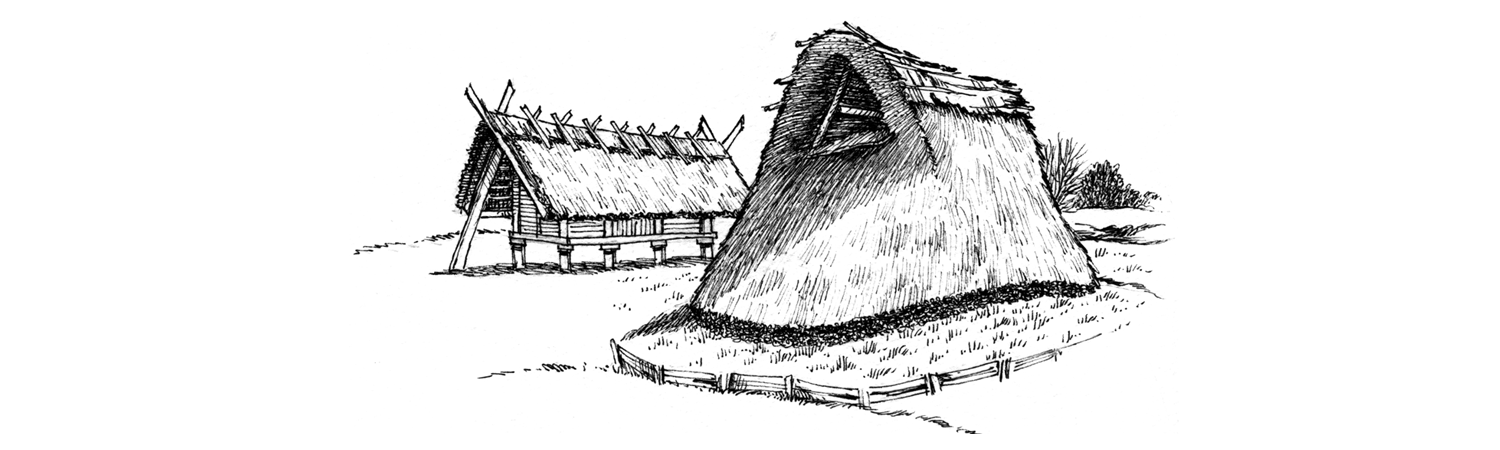
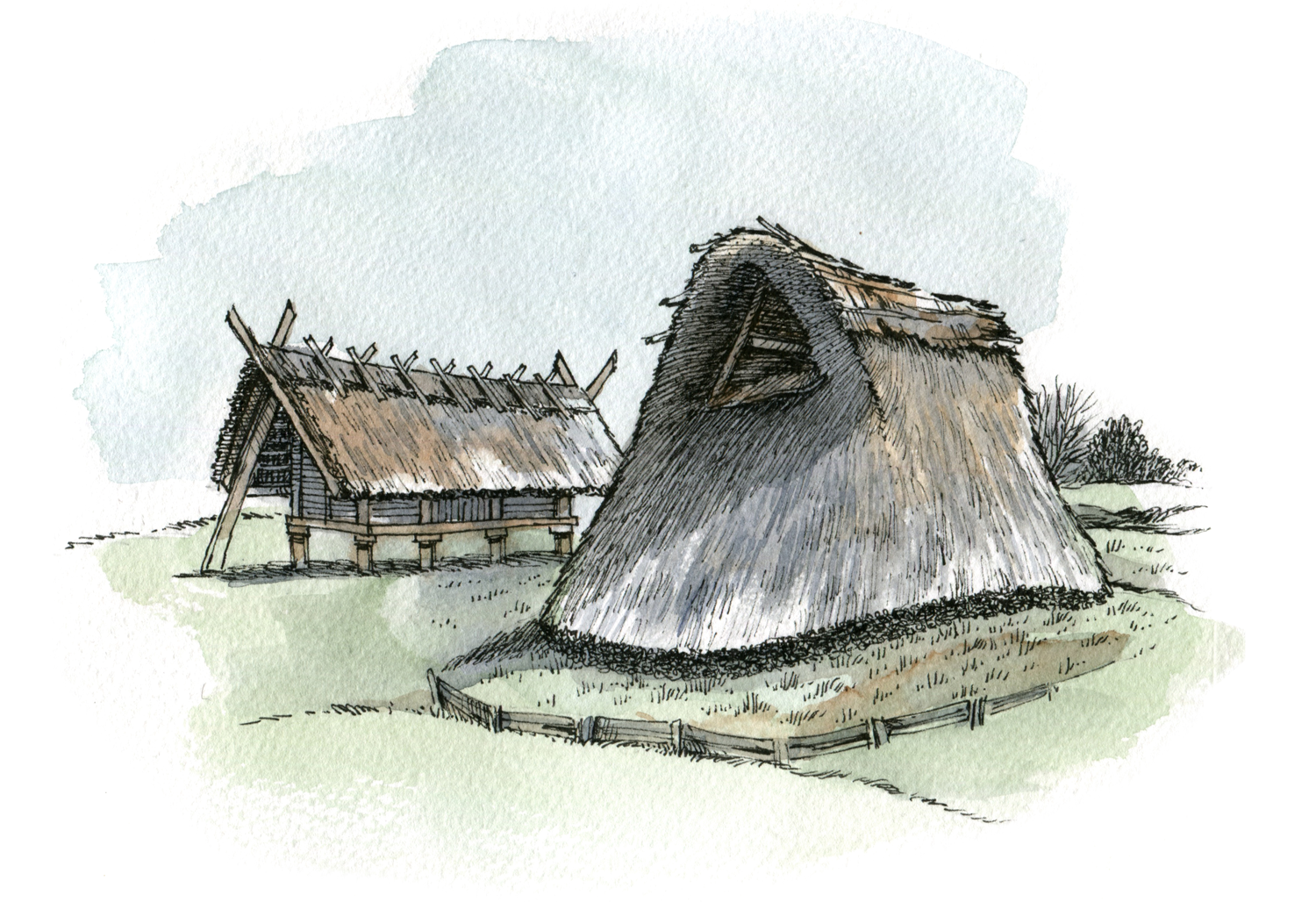
As my wife was attending to various things while we stayed in Shizuoka (meeting old friends, checkups with her doctor), I took the opportunity to take the bus out to the Toro Archaelogical Site and wander around. I did these two sketches there on a beautiful day. While trying to get closer to see the shadow details, I attempted to sit on a stump nearby and immediately rolled over it into the dirt. No harm done and I gave the thumbs up to onlookers, but I did need an adjustment when I visited the chirporactor after returning home. A small price to pay to be among these stunning dwellings.
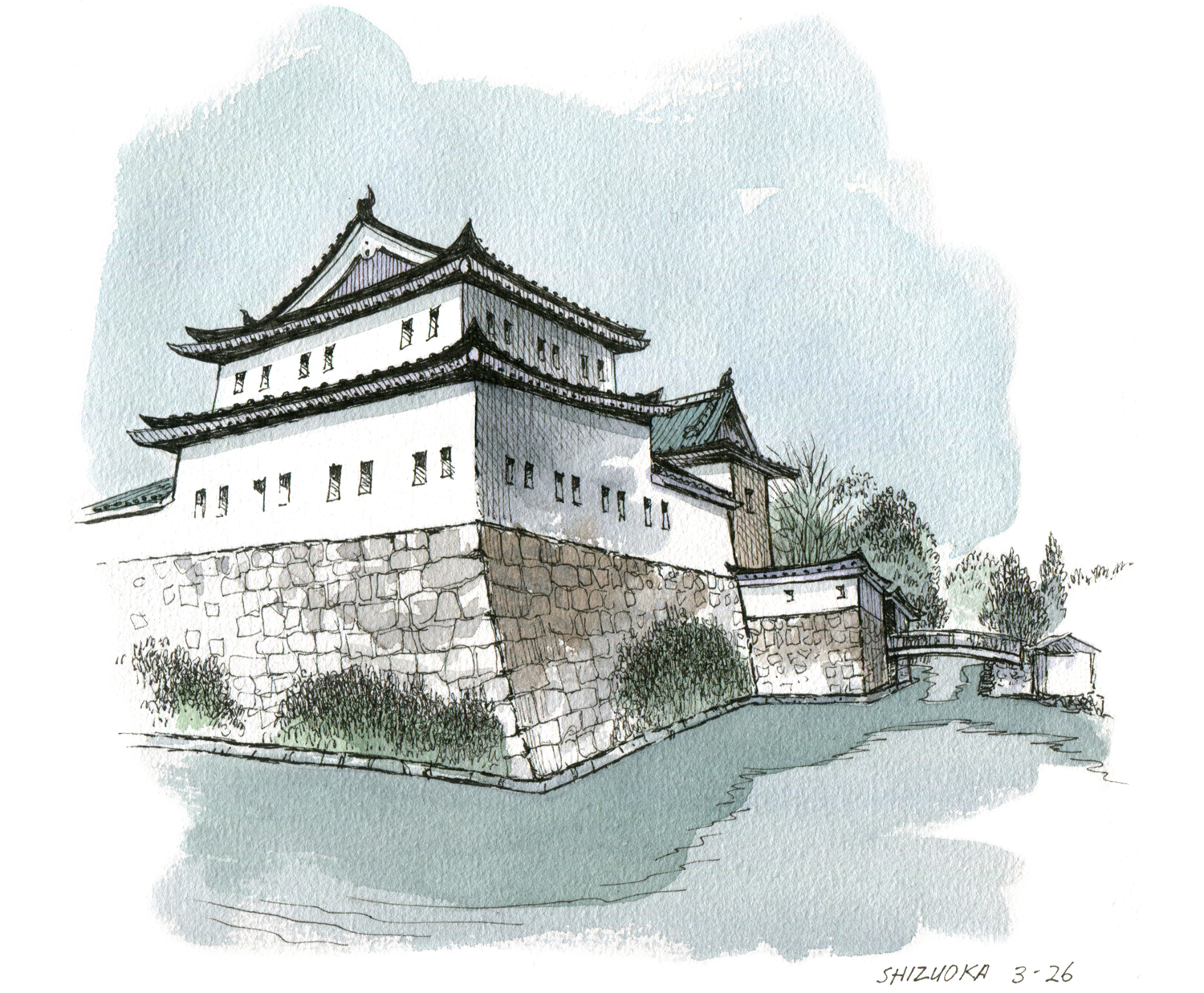
Shizuoka has extensive castle walls and wide water-filled moats. Most of the original buildings were destroyed by fire. There are reconstructed gates and watchtowers however.
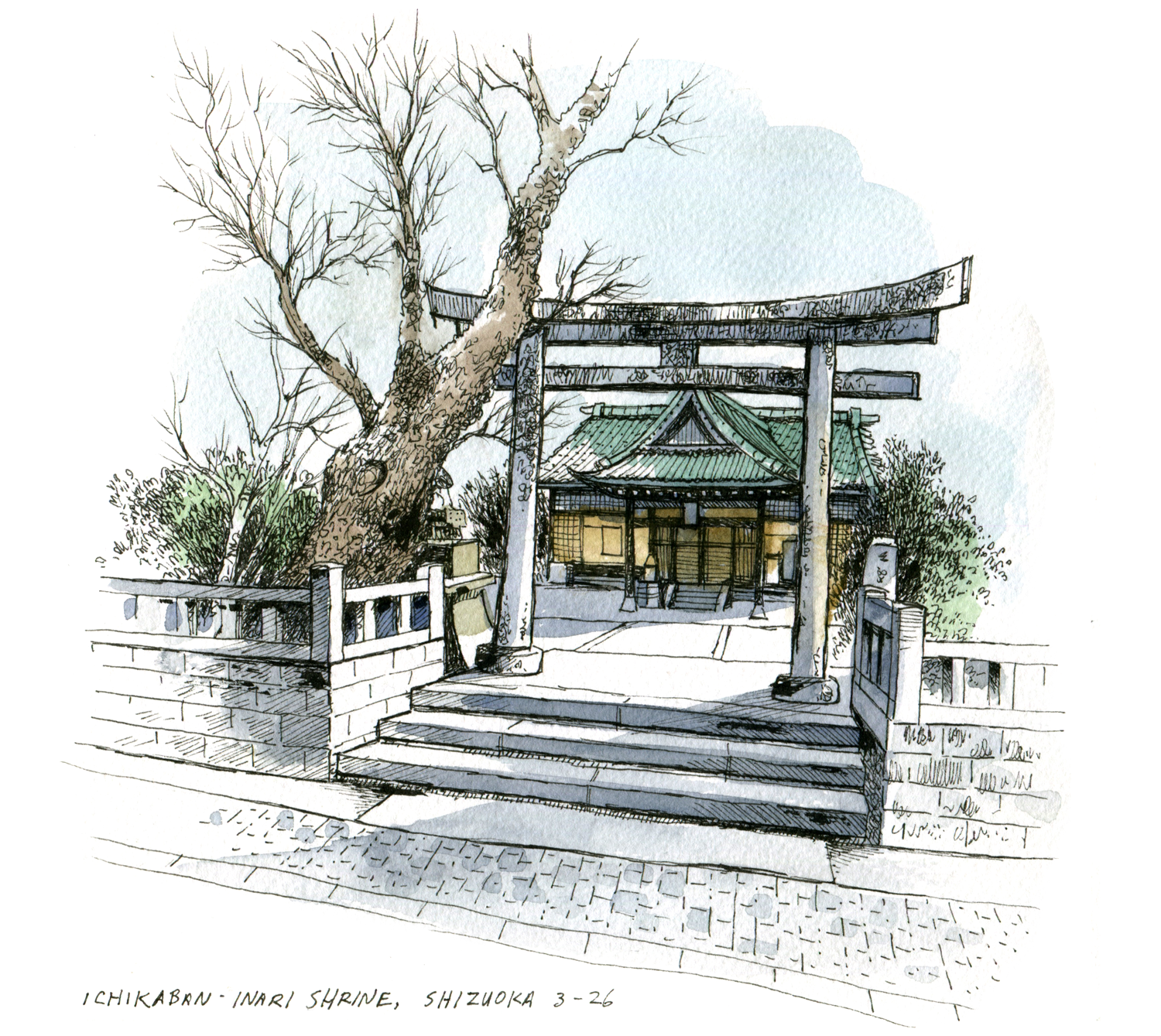
A typical neighborhood shrine, found throughout Japan.
During my walks around town I am always on the lookout for a cup of coffee or tea, preferable in the small nondescript local venues as opposed to the big Starbucks in downtown. But I find that Japan is just not the coffee culture we are accustomed to in coffee-snob Seattle. Most places open at 11am or 12 noon, more for break time than a morning jolt. I even saw a donut maker who opens as noon. Who goes out to have donuts at noon? Fortunately I can get a pretty good coffee at any of the convenience stores around, and at very affordable prices.
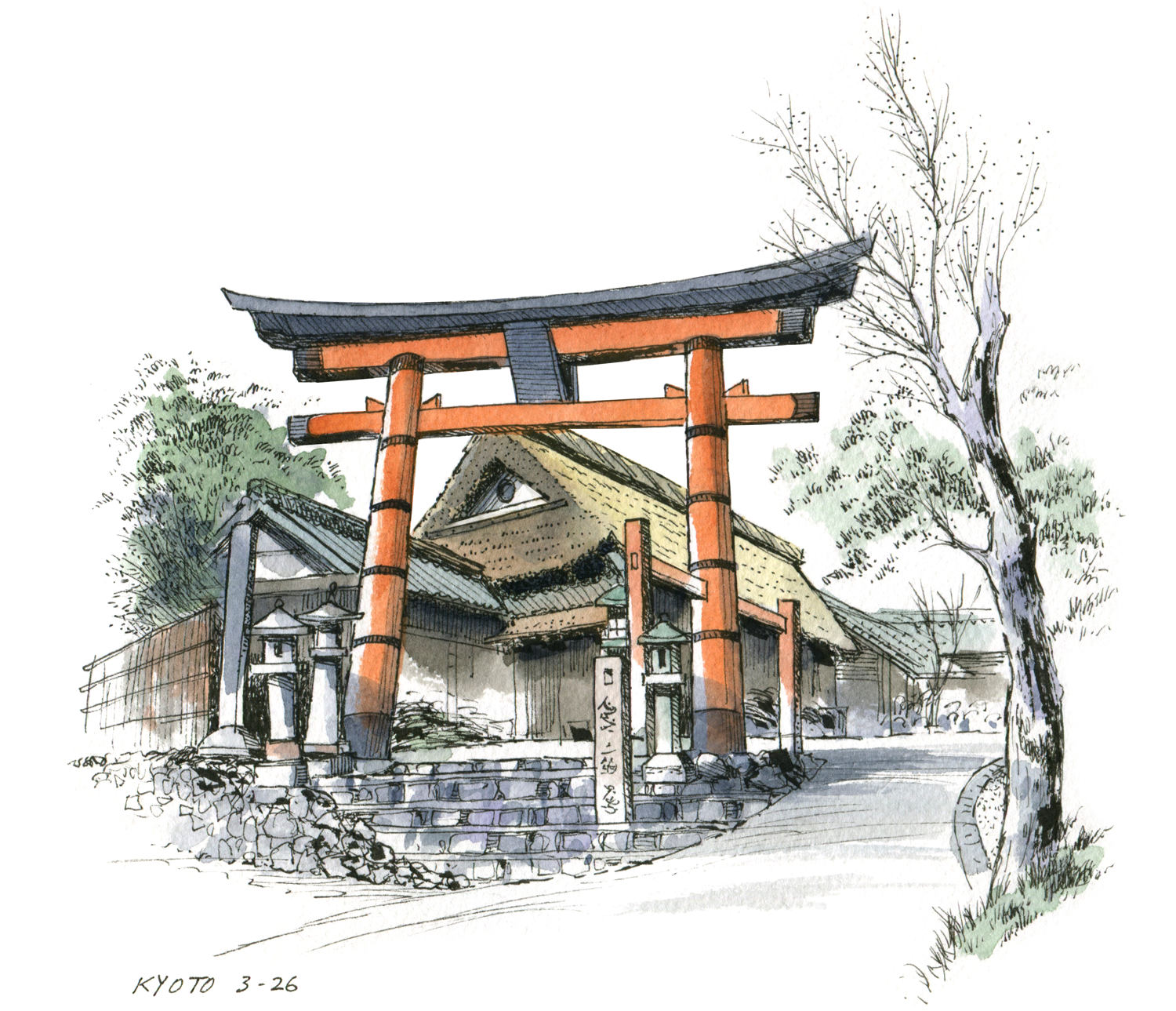
This Torii is in the preserved area of Sagatoriimoto. A fascinating winding road up the hill full of traditional architecture, shops, restaurants, and shrines.
We spent a good amount of time visiting all we could on foot - temples, the old Pontocho alley, teamLab Biovortex Kyoto.
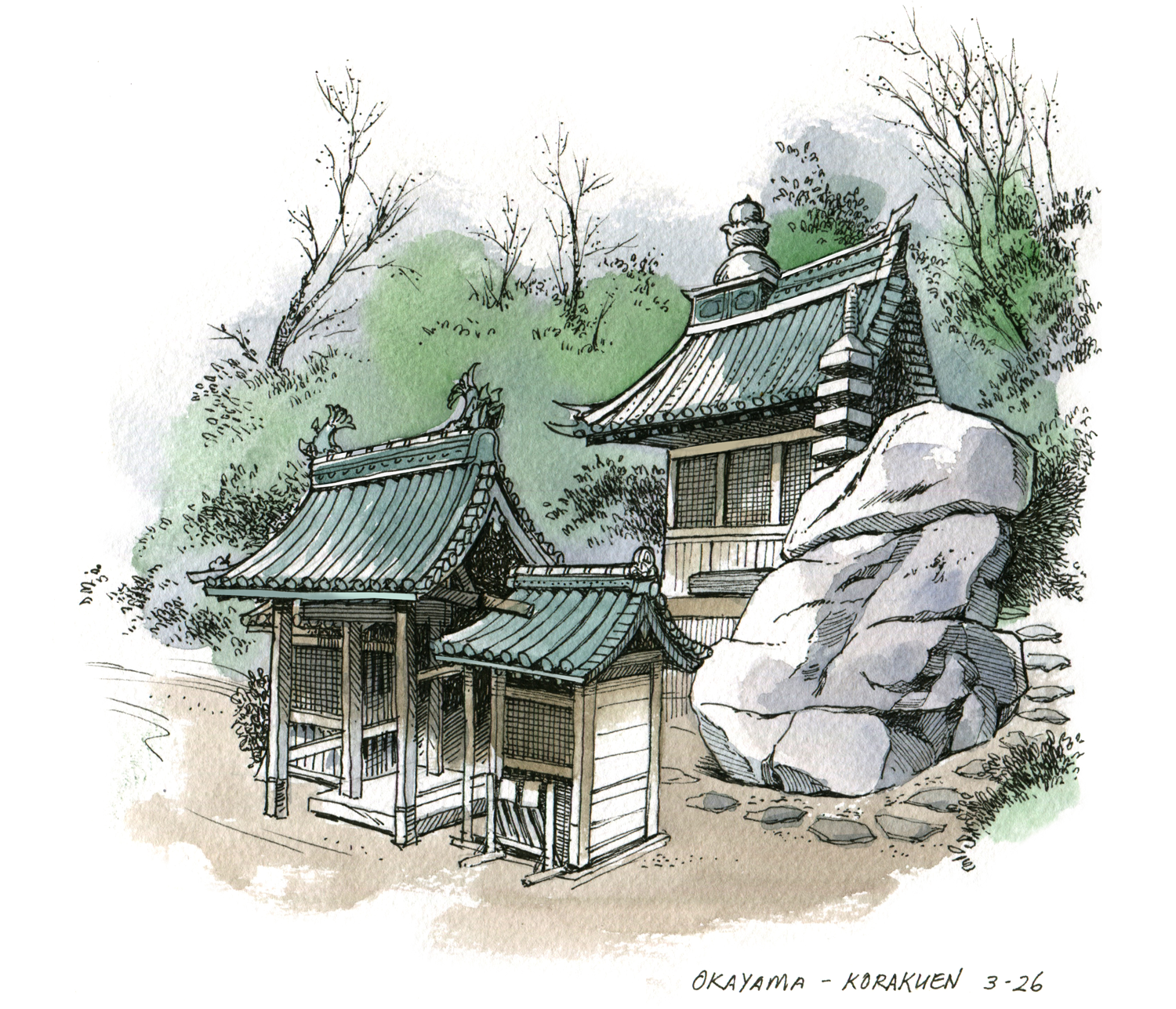
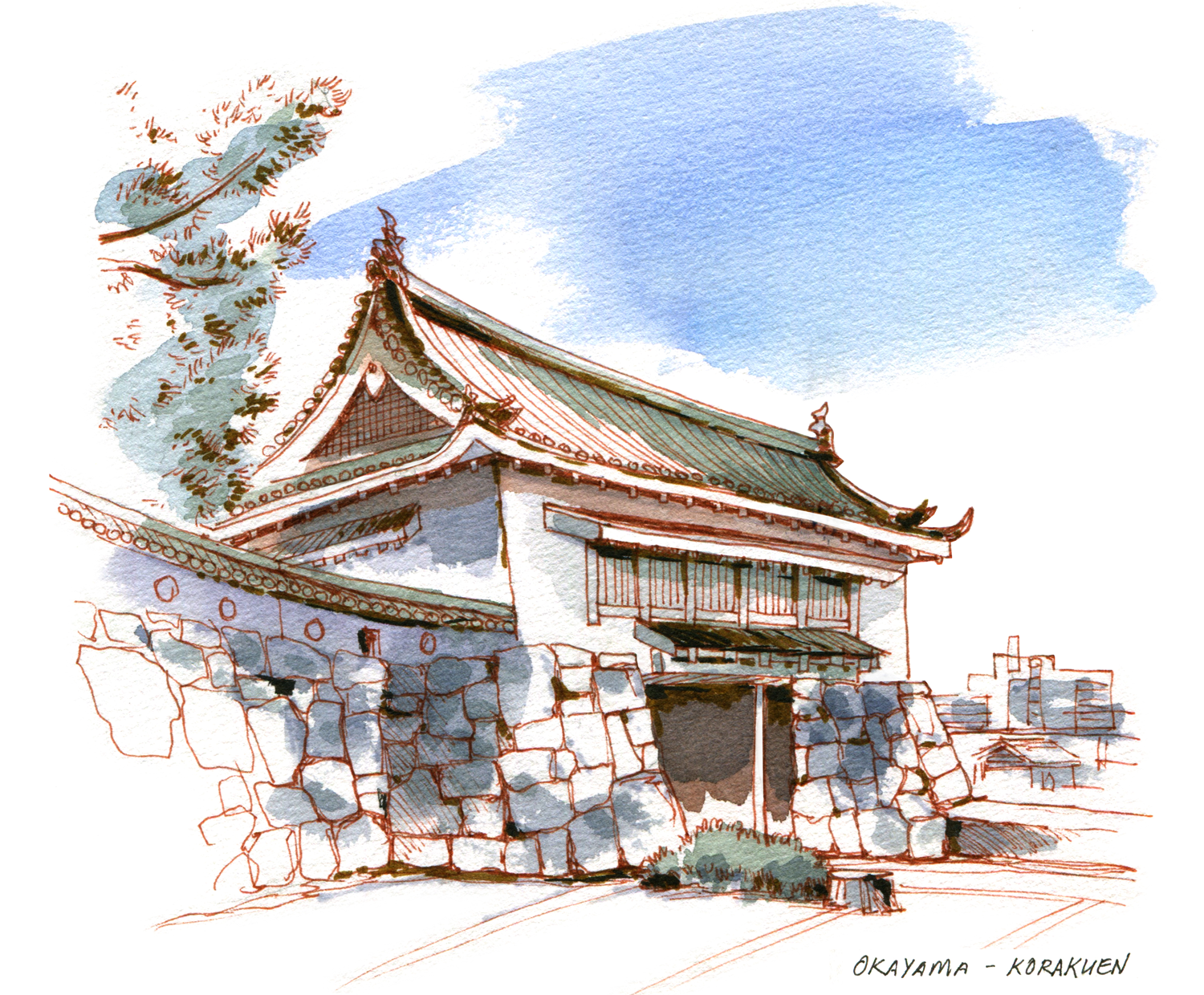
From Kyoto we traveled west to Okayama, where we visited Korakuen Garden, considered one of Japan's three top gardens. It covers a vast area, with lawns, ponds, paths, and Okayama Castle on the hilltop.
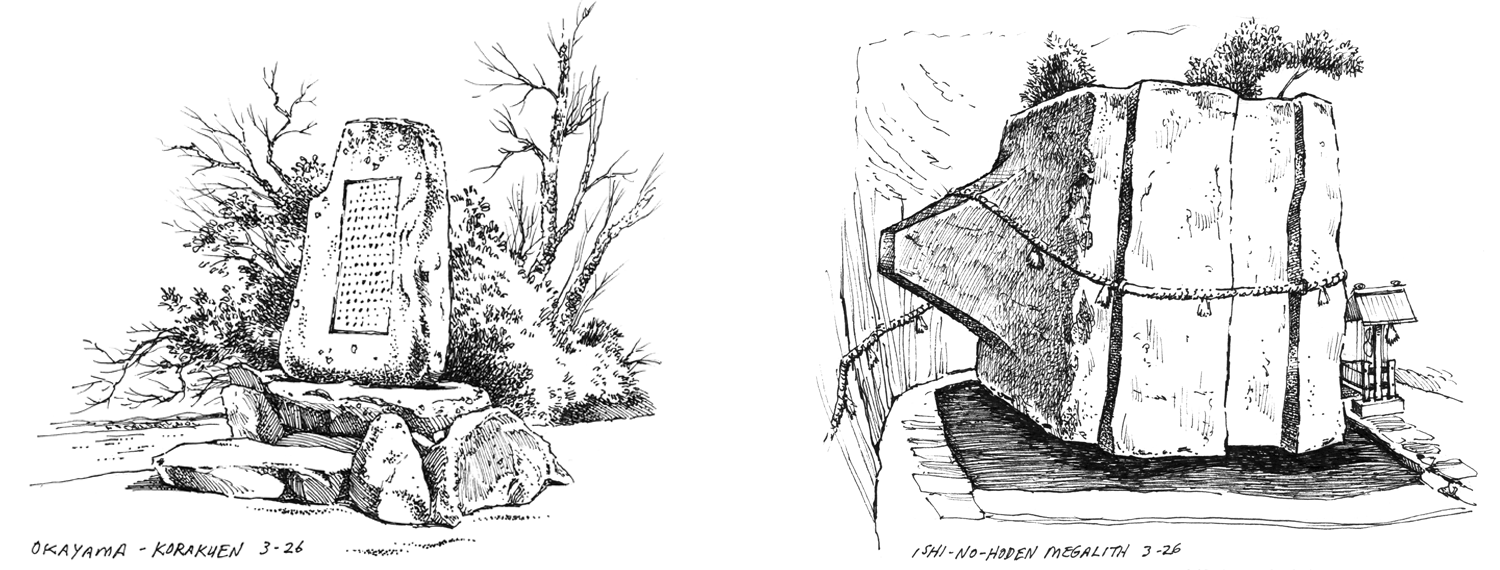
Ishi-no-Hoden is a megalithic stone monument at a Shinto Shrine in the town of Takasago. It was a bit out of the way but worth the effort. It remains a mystery as no one knows its purpose or who carved it. What you see is the remains of stone where the surrounding area was completely carved out of the solid rock, leaving it still attached at the bottom. It was carved at the bottom in such a way that the water makes it appear to float.
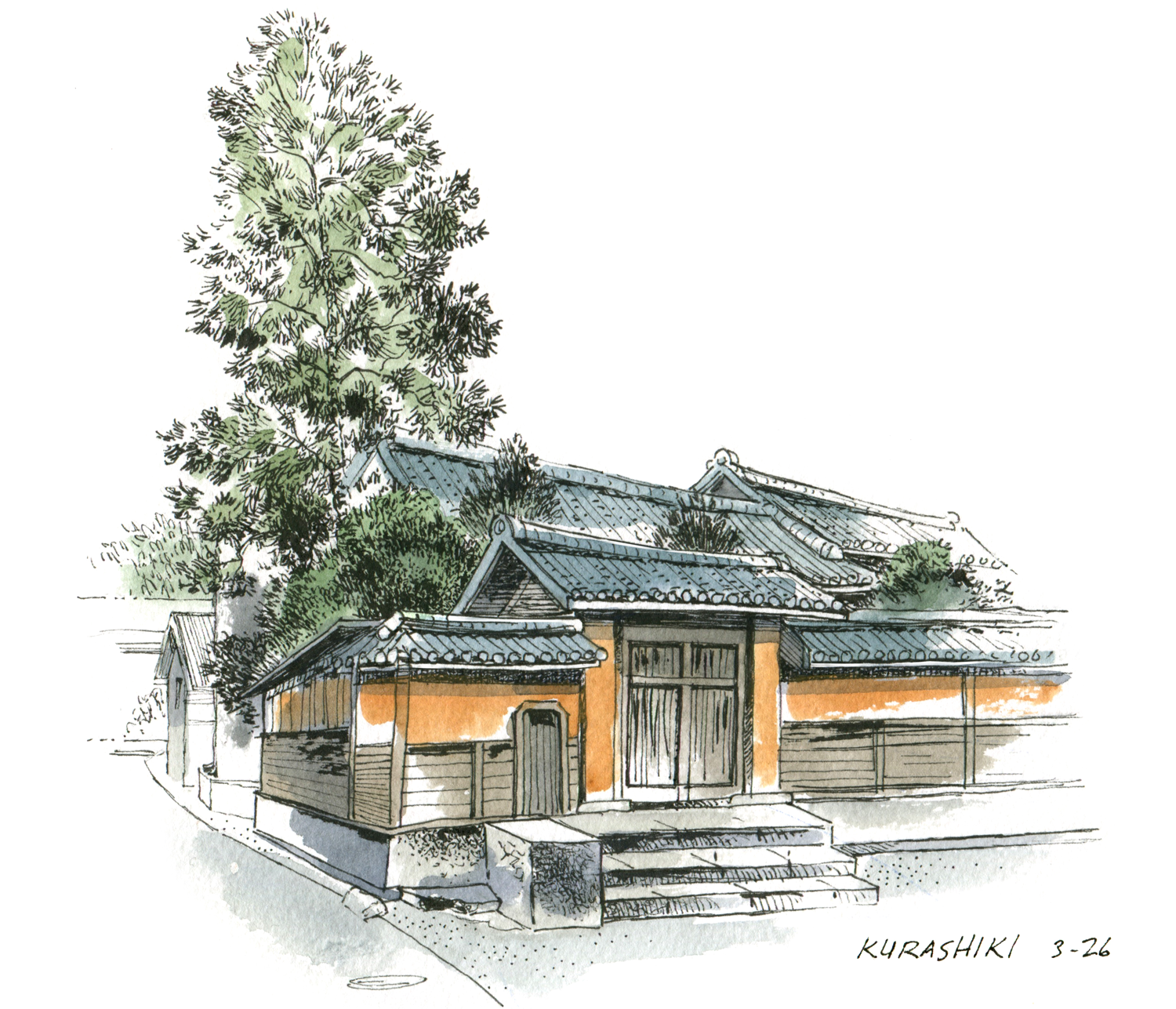
Kurashiki is further west on the Seto Inland Sea. It was originally a marsh land that was drained for cotton cultivation. As a result it has a canal through it that once served shipping but now has leisurely boat rides along the cherry blossoms. The Archaelogical Museum was amazing and quite informative, showing how the main merchants built entire communities for their workers and families to live in.
From Kurashiki we continued west past Hiroshima and down to the island of Miyajima. Taking the ferry across, we had a short walk to our hotel with room views over the water and right near the terminal. This island is for walking, and it is quite easy to see all the temples and town by foot. It is full of deer who seem tame due to the tourists feeding them, but people are warned to only feed them the crackers one can purchase there.
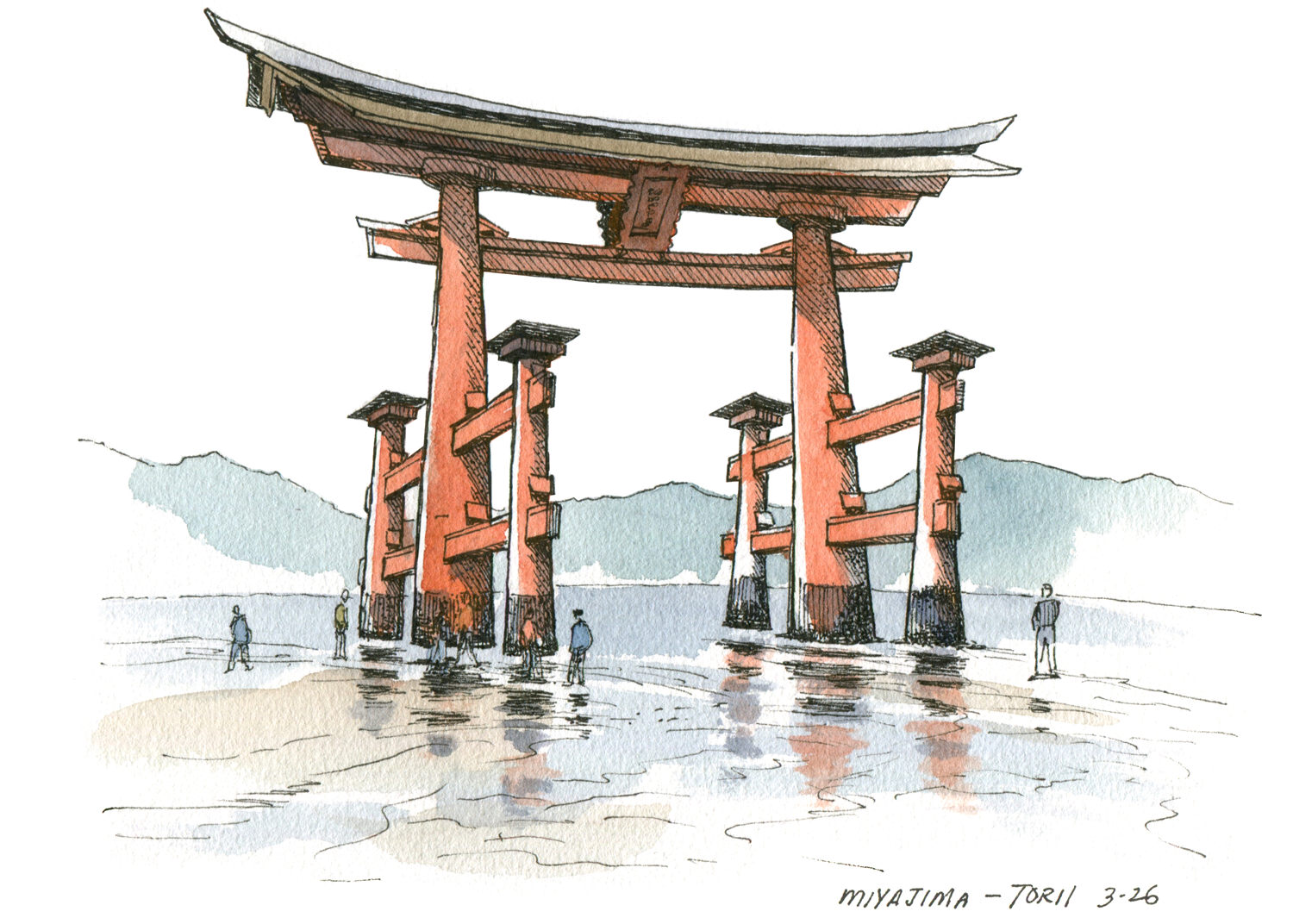
The Great Torii Gate, which is offshore, is the main attraction. It is stunning to see and to walk out to during low tide. High tide makes it appear to be floating. We got to see it during the daytime, and watched the sunset as well. After dark it is lit up by lights. Staying overnight allowed us to take it in fully. The town was crowded with tourists at the Torii, shrines and the many small food shops and oyster stalls. As the sun went down it became quiet as all the day travelers had taken the ferry back.
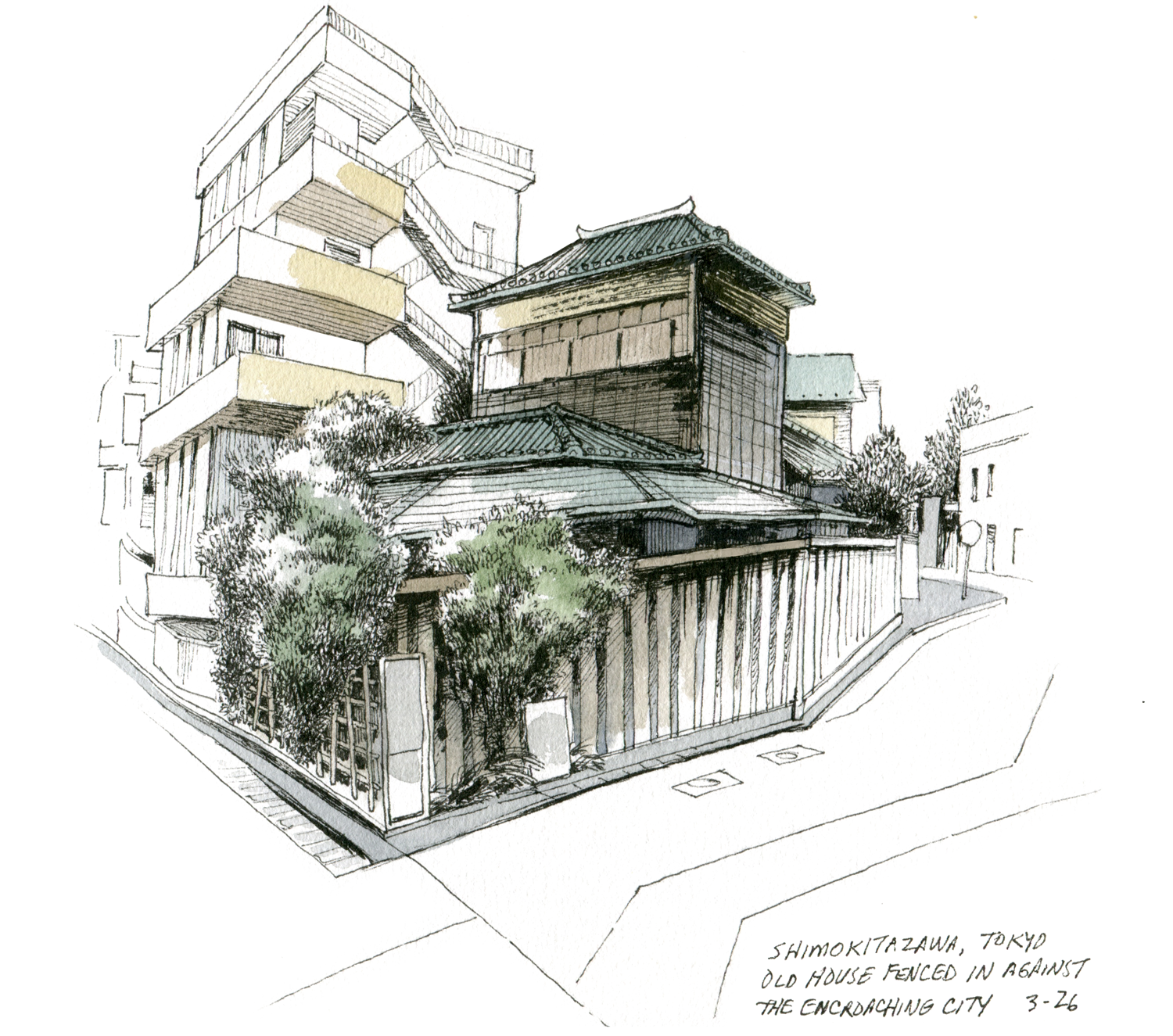
We spent the last four days of our trip back in Tokyo, visiting parks and new upscale shopping areas. This neighborhood of Shimokitazawa was very lively, full of tightly packed eateries, drinking establishments and shopping of course.
An old ramen shop in Tokyo