Type a description of this image

Southern Italy

May 1, 2025

The goal of this trip was to explore the southern parts of Italy, in particular the old town of Alberobello with its ancient unique cone-shaped stone dwellings.
Since southern Italy was once part of Greece, there are ruins like Paestum and Syracuse. Medieval and baroque towns like Matera and Lecce display layers of history. I prefer this countryside to the denser tourist favorites like Positano.
Type a description of this image
Arriving in Rome, we took the train into the city and stayed a couple blocks away from the train station, leaving us a few hours to explore the city once again. Next morning we rode the train south to Salerno, where we picked up our rental car. Having a couple excellent mozzerella and tomato sandwiches made from the small deli next door, we drove east across the boot of Italy toward the Adriatic.
Type a description of this image
Parking just a block from the old town of Alberobello, we met the landlord at a renovated trullo for a two day stay there.
After checking in we walked into the town, visiting the church and continued to the edge of the hill, giving us an overview of all the trulli (plural for trullo) dwellings making up the community. This is quite a unique place, where these structures are not found anywhere else outside of this community and the surrounding countryside.
Type a description of this image
The Trulo Sovrano museum was across the street and well worth visiting. It described how these people came from the Middle East some five thousand years ago to settle here. They originally built funeral mounds using flat overlapping stones, and then expanded the technique to build dwellings. A cistern for water capture was built first, and then the house was built with troughs at the base of the roof to catch the rainfall.
Type a description of this image
Our day trips took us to the old town of Ostuni (white city), Lecce, and the old town of Gallipoli on an island connected to the mainland by a 17th century bridge. We had calamari and wild tuna at a sidewalk restaurant, and later walked the outer wall with views out over the Adriatic, and enjoyed the stroll along its harbor.

Type a description of this image
Next stay was in the World Heritage site of Matera, one of the oldest continuously inhabited cities in the world. It is an absolutely stunning old town spread out densely over hills and canyons. We walked up and down the stepped walks and alleyways that crisscrossed the town.
There are ancient cave dwellings there in some of the limestone cliffs, nearby and walkable. While Matera is a thousand years old, some of the cave dwellings are thought to be much older.
Our room was right in the heart of things, not far from where this first sketch was done. We were able to drive down to the bottom of the town, drop off our luggage and then park back up in the newer part of town.


Type a description of this image
Mesagne is an old town rich in history, filled with narrow alleyways, wrought-iron balconies, and a castle – Castello Normanno-Svevo, built in the 11th century. We stayed just outside of the old town wall, making it easy to walk and explore this area. I loved the museum with all its displays of archaeology and history.
Type a description of this image
Crossing west to the Tyrrhenian coast side of Italy, we walked the grounds of the spectacular site of Paestum, where three ancient Greek buildings stand.
It was founded 2,600 years ago by Greek colonists, and later taken over by the Romans who renamed it Paestum. They are hauntingly beautiful, especially near sunset when they seem to glow in a golden aura.
This area is also famous for mozzarella cheese. We had the best mozzerella and ricotta pizza there.
Type a description of this image
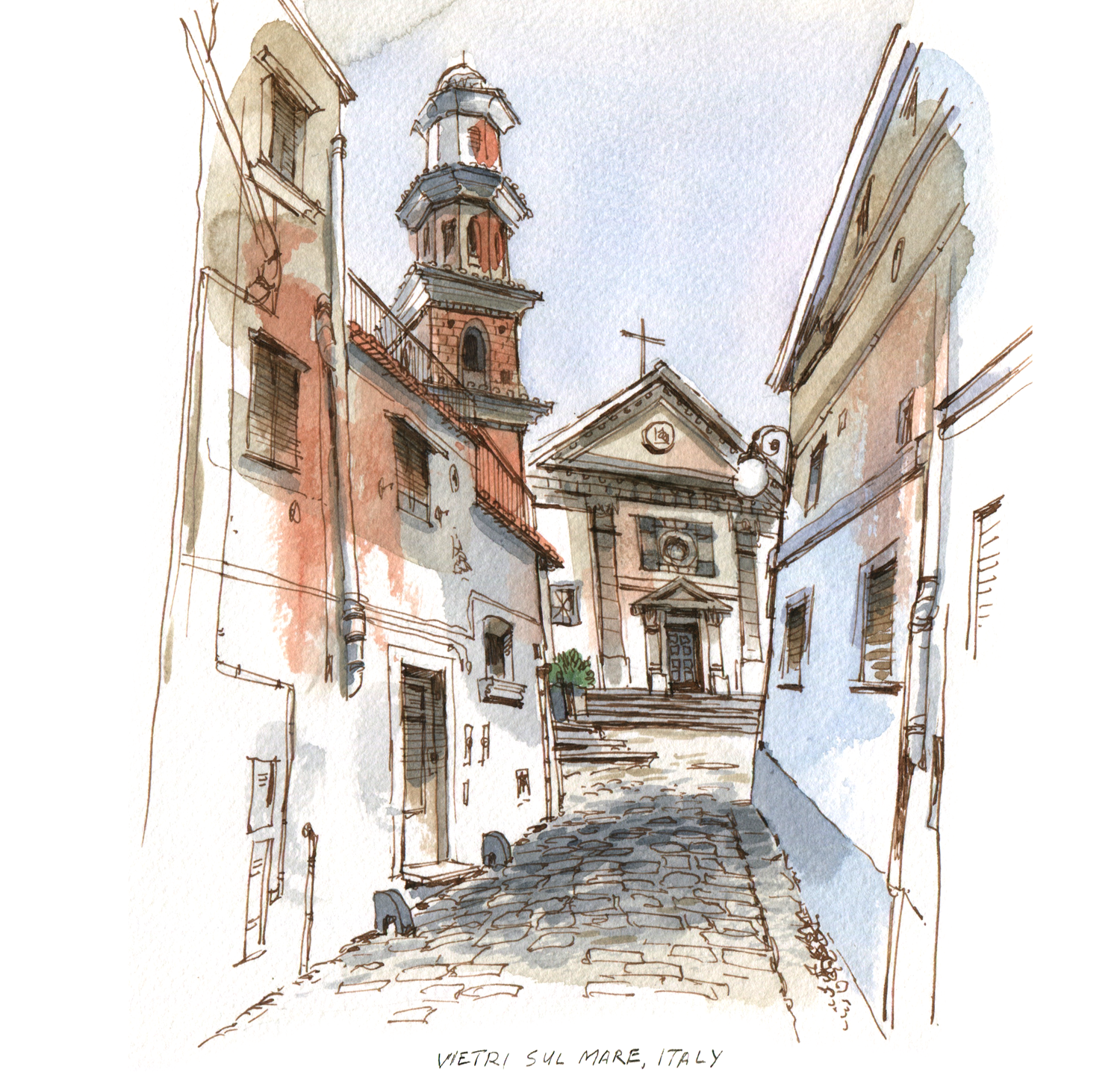
Returning the car in Salerno, we continued by train and bus to visit Amalfi, Sorrento, and the island of Capri. Ravello is a hilltop old town a short trip by bus from Amalfi.
Type a description of this image
We took the bus to Pompeii for a visit, seeing both amphitheaters, the forum and the residential villas. It is such an extraordinary archaelogical site - a city frozen time by the eruption of Mt Vesuvius in 79 AD.
Type a description of this image
Finally it was back by train to Rome, where we spent the last two days walking the city again to see some of the historical places – Trevi fountain, the Pantheon, Spanish Steppes, Piazza Navona, Campo de' Fiori with its statue of Giordano Bruno. We stayed on a hilltop in Trastevere in a neighborhood of elegant houses and embassies, easily walkable through that cool neighborhood and across the Tiber River to central Rome.
I was on a hunt to find the family style restaurant in Trastevere where we had an unforgettable pasta dinner years earlier. We weren't able to find it until Michi looked up the photo she had taken of the meal. From the photo info she mapped the place and we visited it once again. Still the same place and great food. Lucky for us!
My son told me the best pizza to be found in Rome is from Roscioli Cafe. It has no seating and usually a very long line, but we persevered and did enjoy a lunch of their pizza. We just pointed out which of their rectangular pizzas looked good, and a woman wielding a large butcher knife chopped off chunks and piled them up on a scale to weigh them.
I brought just one sketchbook on this trip. It has fairly heavy watercolor paper. I found it in the book store at LenbachHaus Museum in Munich last fall. The ink lines can get a little broken due to the tooth of the paper, but it takes watercolor nicely. The heavy paper allows me to use both sides of it. All watercolor was added after returning home.
Type a description of this image