Type a description of this image

Temple Studies

October 21, 2025

Why do we travel? Why do we visit areas time and again? Is there something that keeps calling us back?
Of course in my case my wife is from Japan, making it a natural. Yet in addition, the feeling of being drawn to these ancient temples, shrines and pagodas is certainly there. Honoring a connection to nature and the deep spiritual aspect of human existence certainly feels alive in Japan. Add to that the very modern aspects of life such as their bullet trains and service-oriented culture, and you may see why we return here.
Although this trip was interrupted by unforeseen circumstances, we ultimately spent time in Kyoto and Takayama along with Shizuoka and a visit to the mountain hot spring town of Shuzenji.
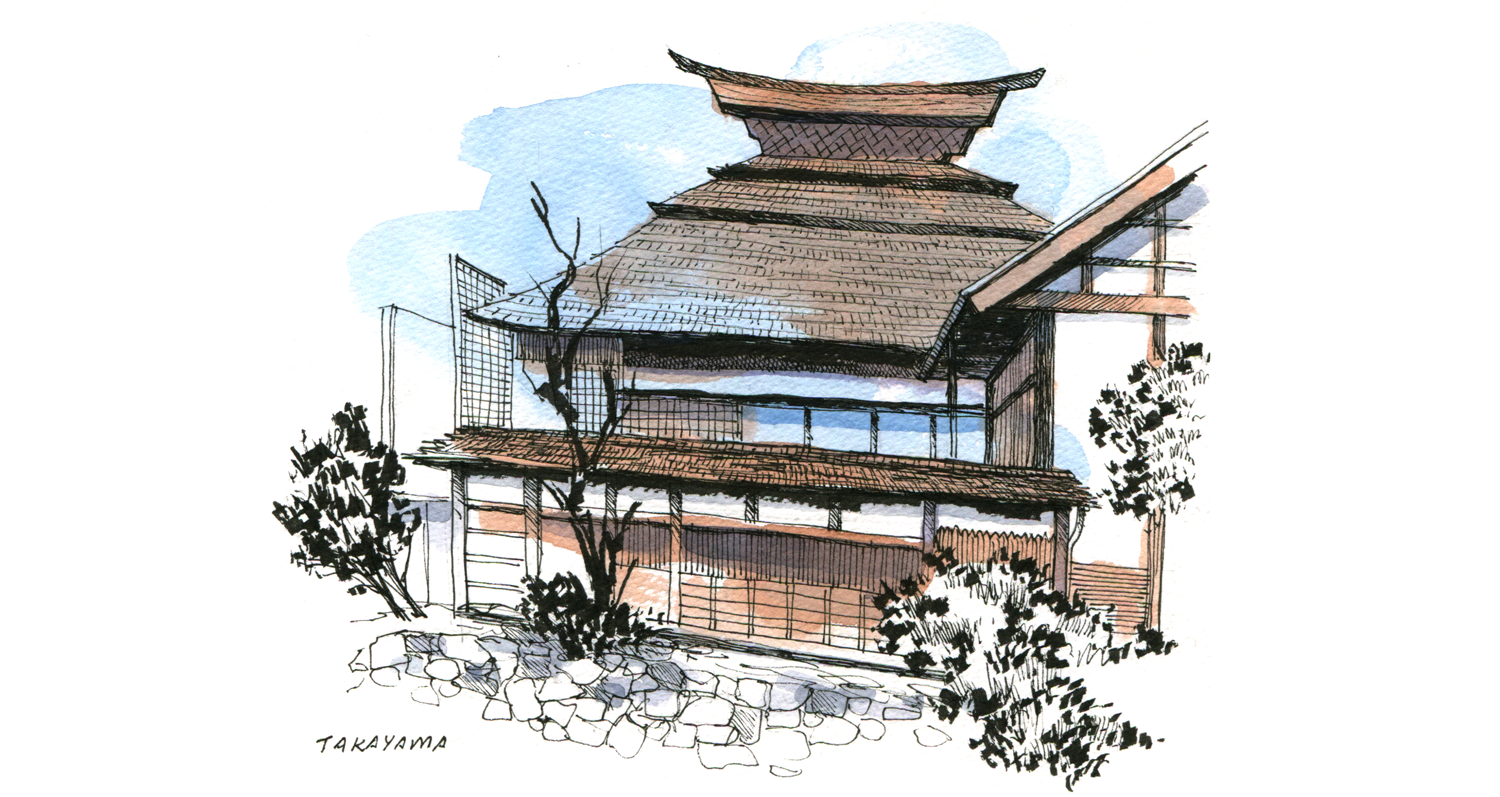
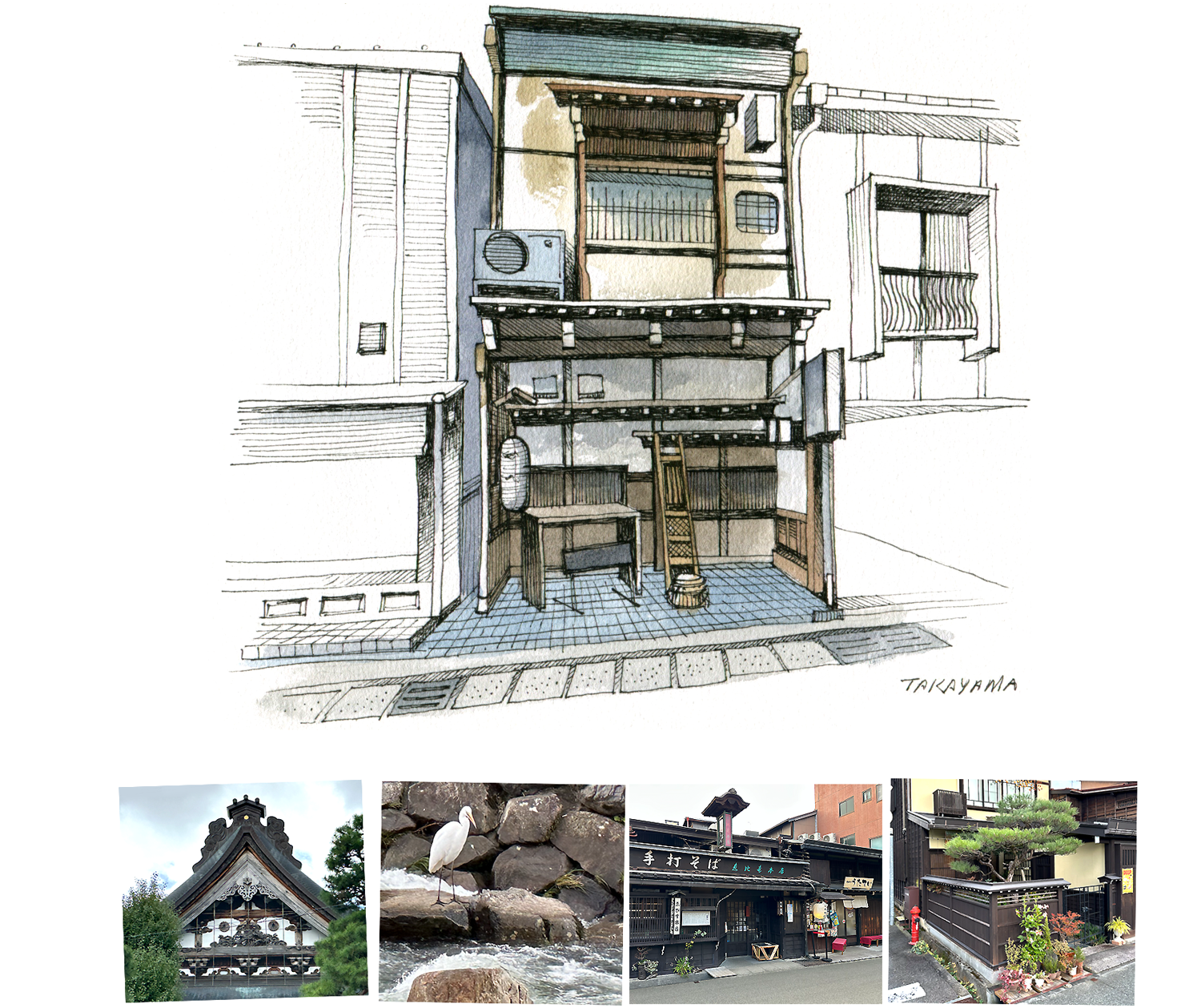
A house and shop in Takayama, with its interesting roof.

Type a description of this image
A typical house in Takayama, just off the Sanmachi Suji (old town) district. Like most, it has been turned into a shop. This style, called machiya, is usually built with local cypress and cedar. The wood is treated with charcoal oils to protect it from snow and rain. The designs usually use latticework in wooden slatted screens, creating privacy while allowing air to circulate. The entrance has a sliding door, while upper windows have wooden grilles. Deep overhanging eaves protect the facade from snow in this mountain climate.
Type a description of this image
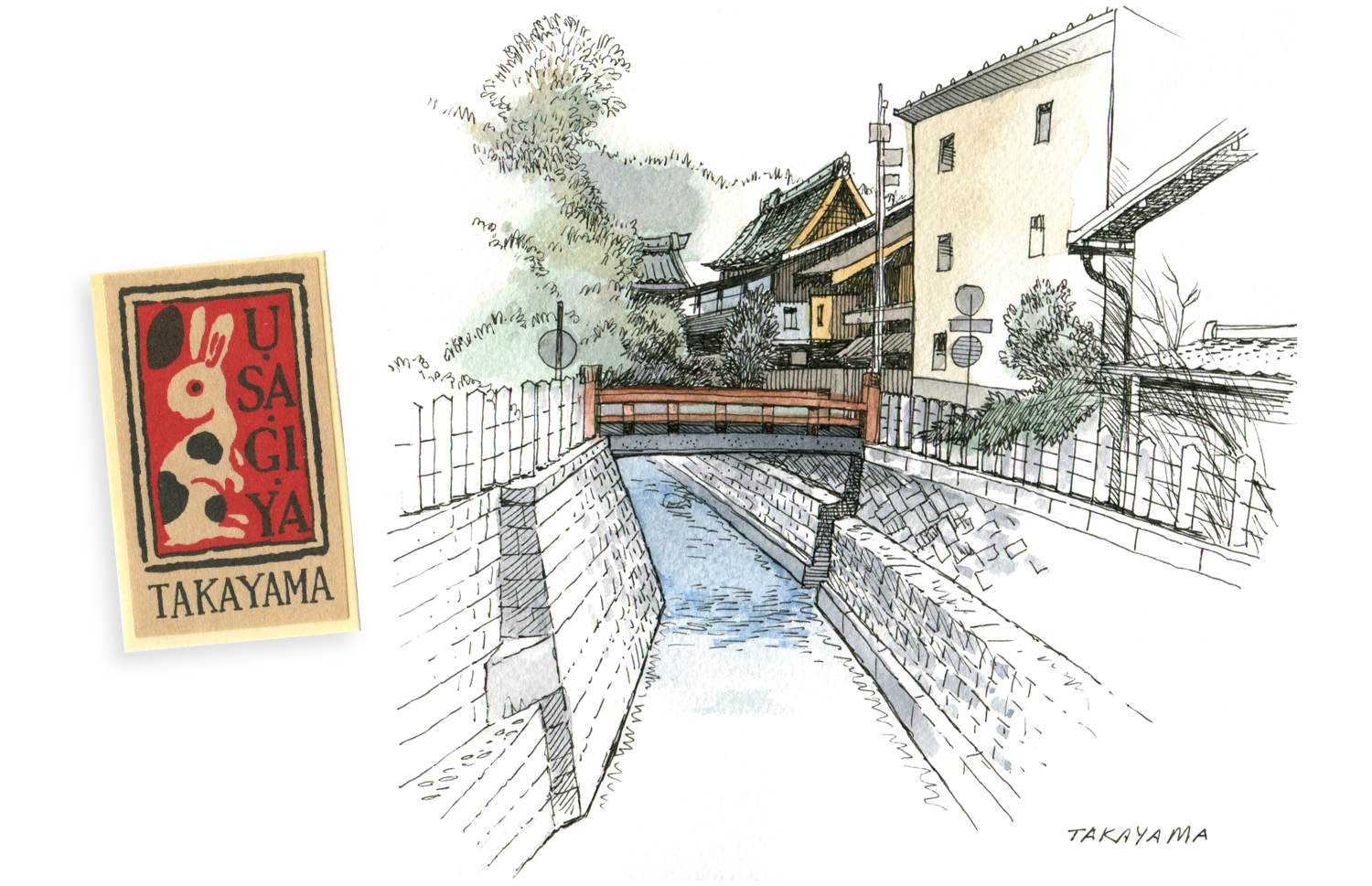
The small walled-in rivers in town were made with carefully fitting stones and run along the edges of streets and behind rows of machiya. With the bridges and landscaping, they make a very picturesque setting.
Type a description of this image
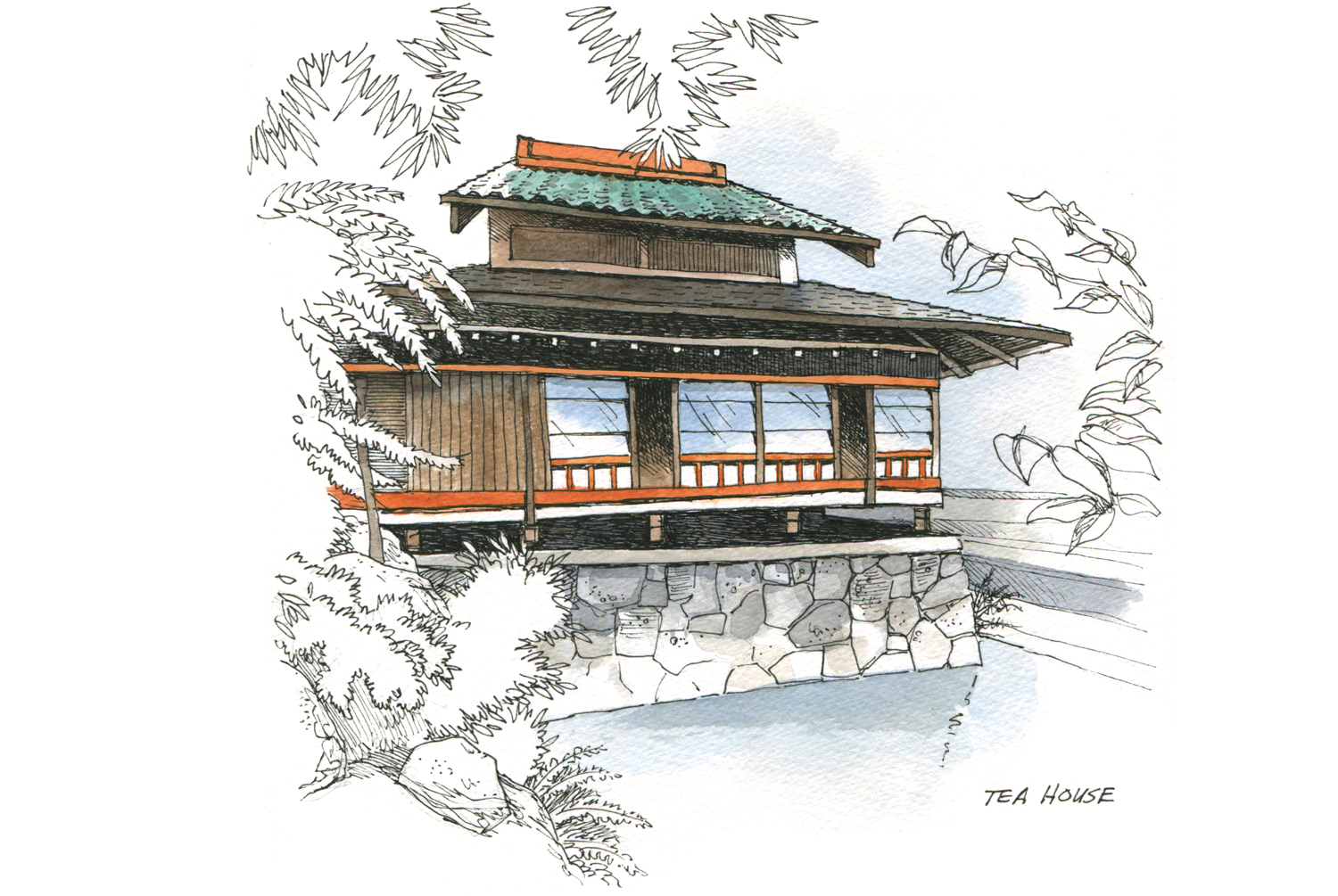
A tea house near a museum displaying the Japanese woodblock color print process.
Type a description of this image
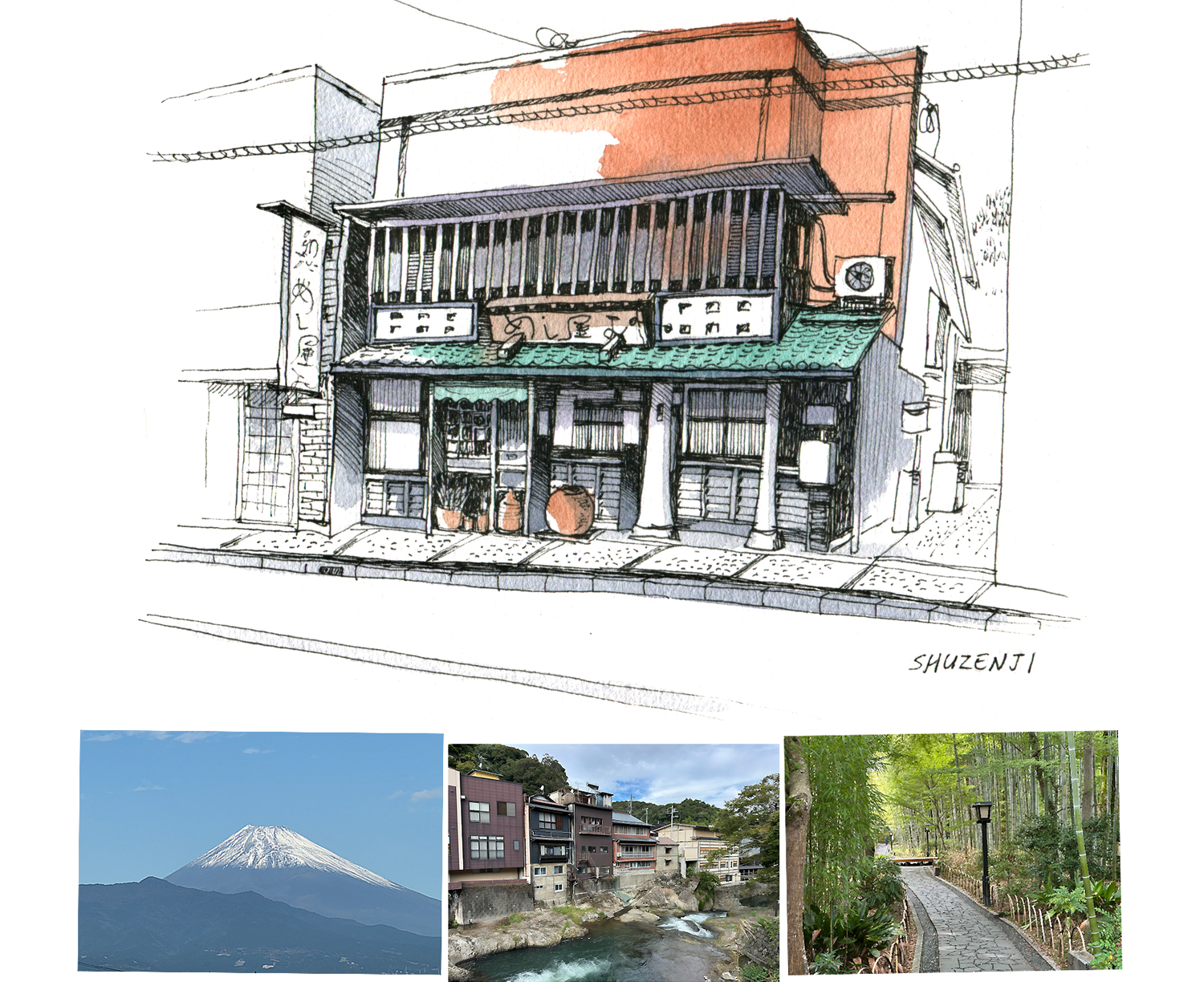
A storefront in the hot spring mountain town of Shuzenji. It is located on the Izu Peninsula and is one of the oldest hot spring towns in Japan.
Type a description of this image
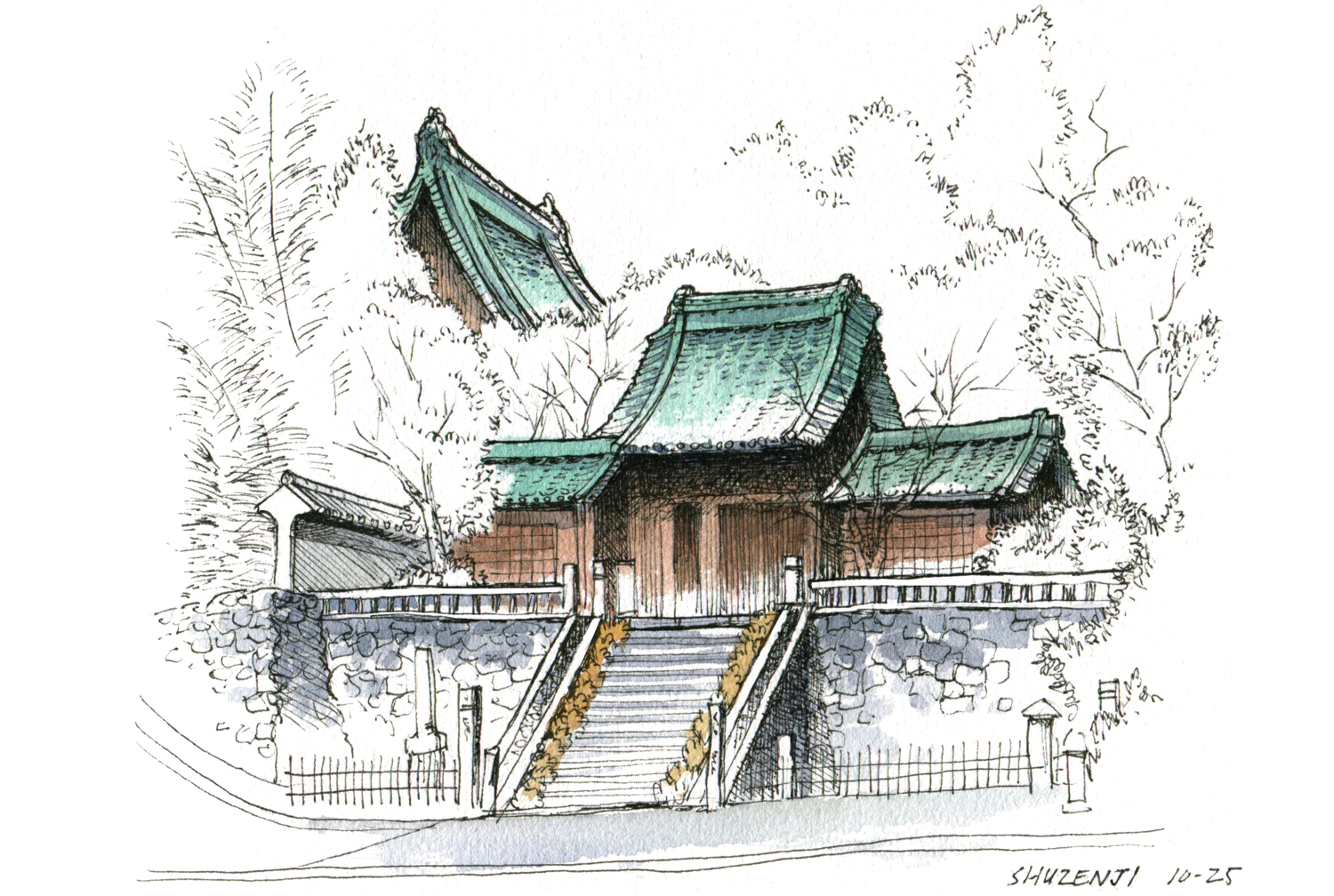
Shuzen-ji Temple was founded along with the town over 1,200 years ago.
Type a description of this image
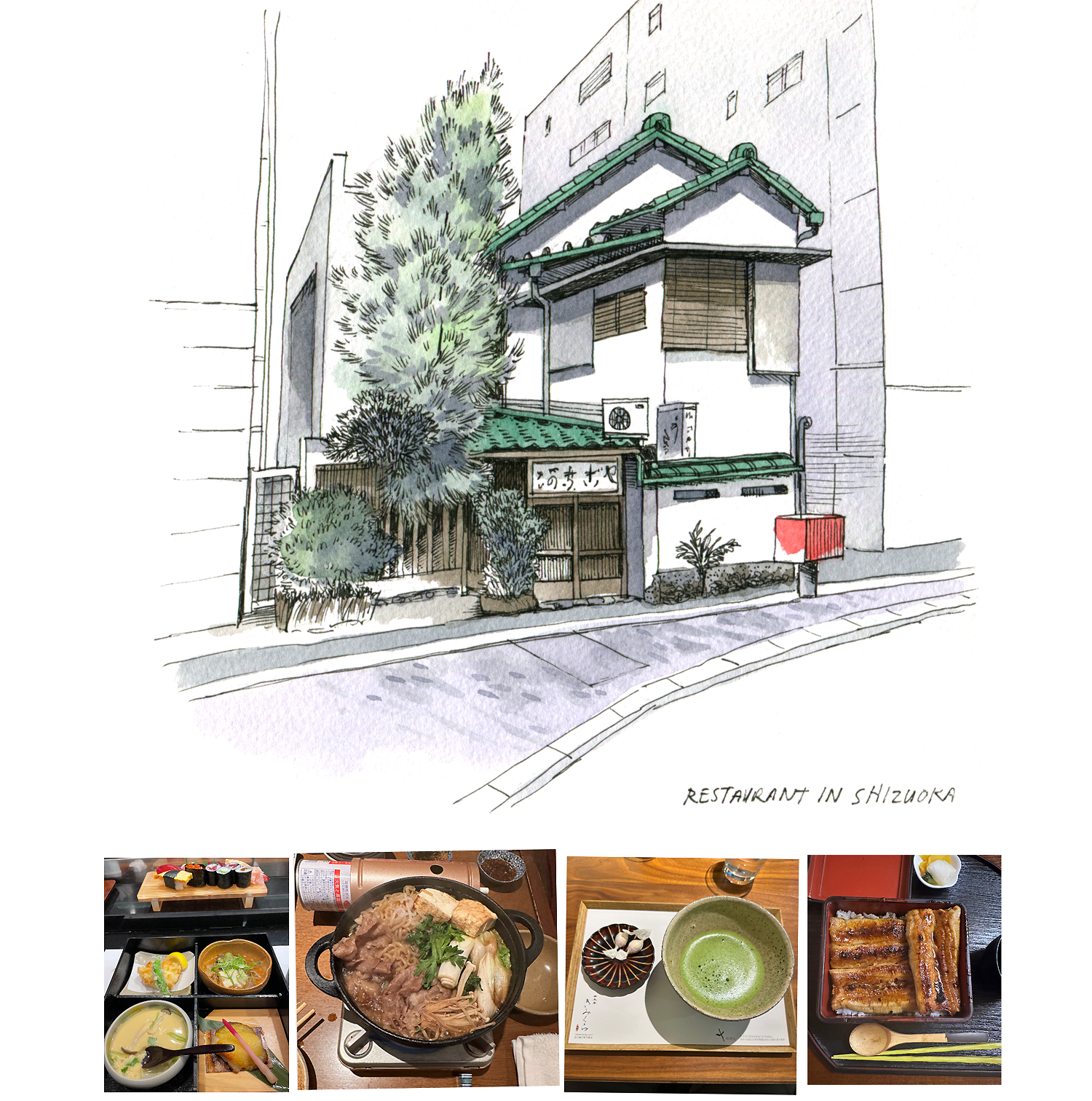
I like seeing these old houses right in the heart of downtown. The city has grown up around this house, but it remains as a restaurant specializing in eel.
Type a description of this image
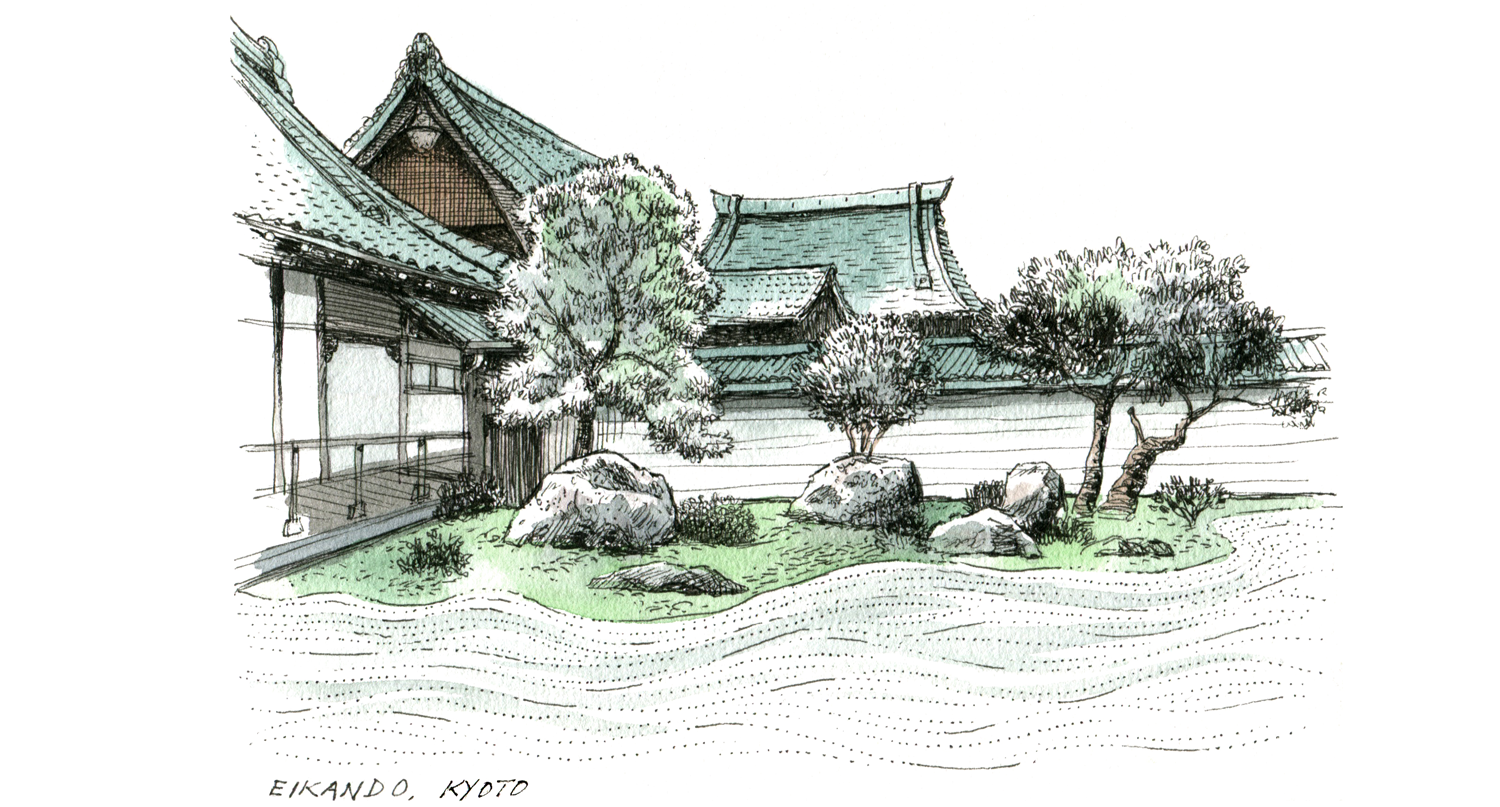
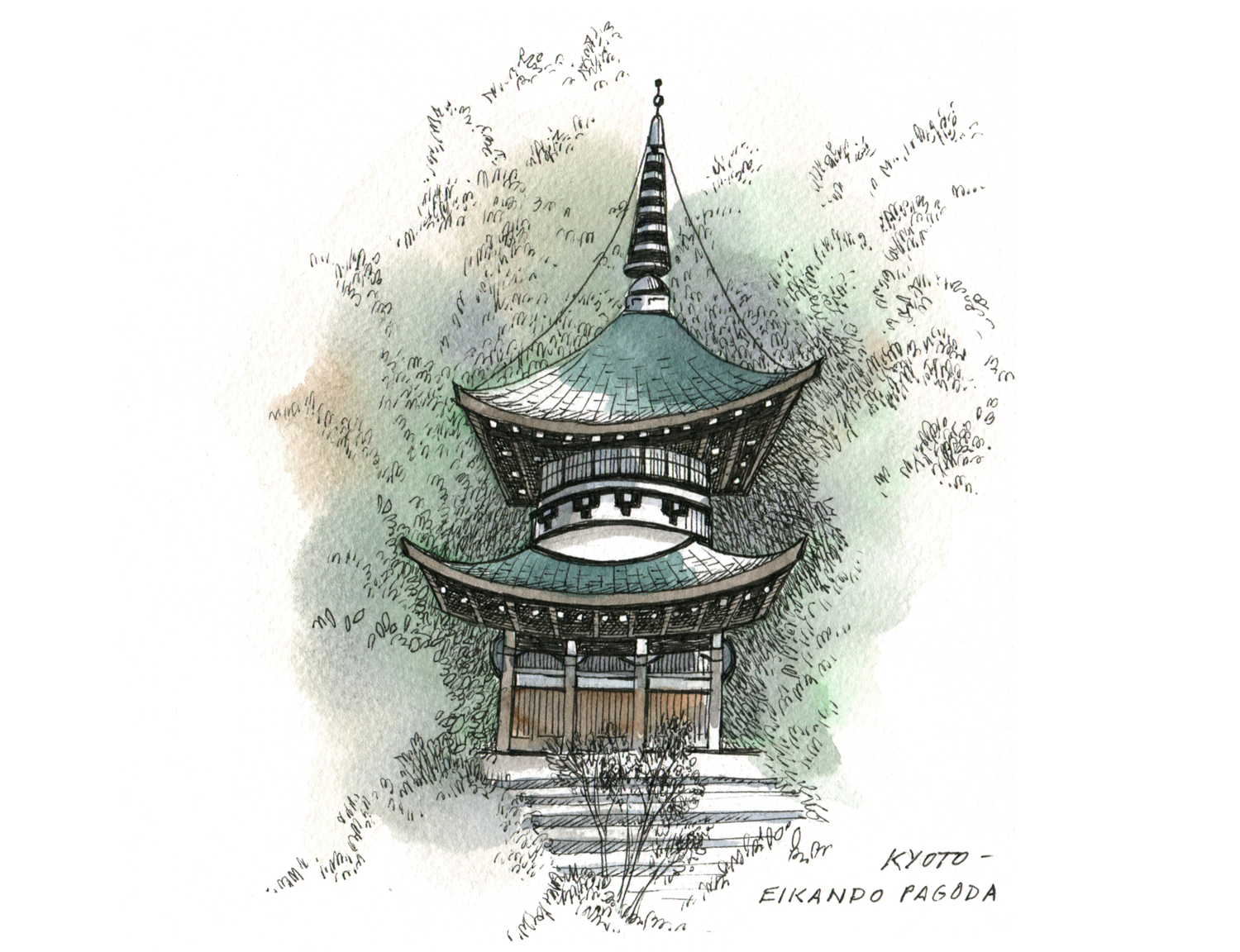
Back to Kyoto. There are so many places to visit around Kyoto, we always encounter beautiful settings and places well worth the visit. Eikando is a wonderful place in the edge of the wooded mountains to the east, visible from our hotel room.
Type a description of this image
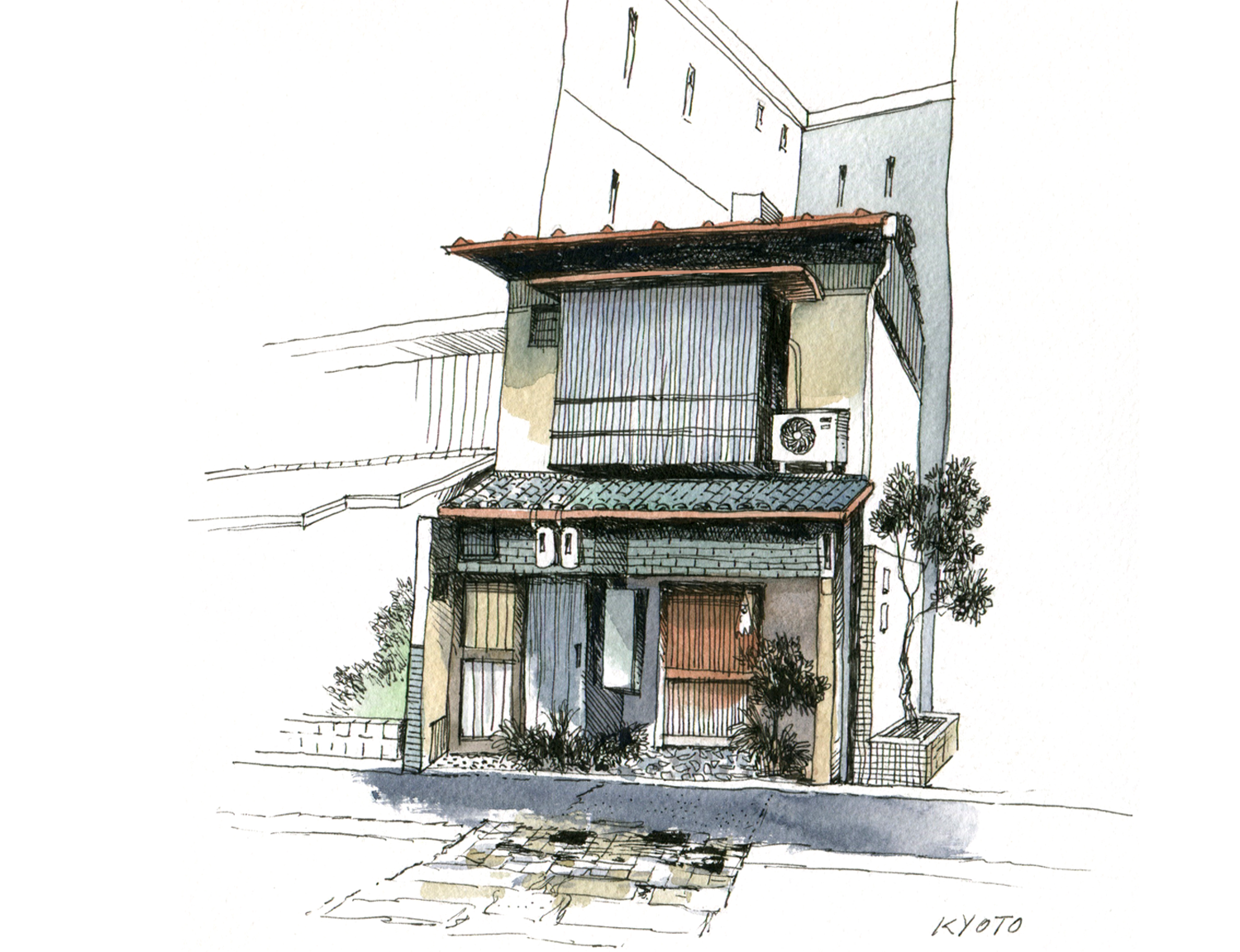
A favorite thing of mine to do is to set out on foot from the hotel to get “lost” in neighborhoods stretching out from the city core. Exploring narrow streets, parks and neighborhoods is fascinating to me. Seeing how people live who are removed from the tourist areas, tending their tiny gardens, repairing something, visiting with neighbors, going about their lives. Sometimes I am lucky enough to find a neighborhood tea or coffee house.
Type a description of this image
While the sketches may feel quickly done and the color applied loosely, my intent is to honor these places by capturing a sense of them, without belaboring the details or technique.
Type a description of this image
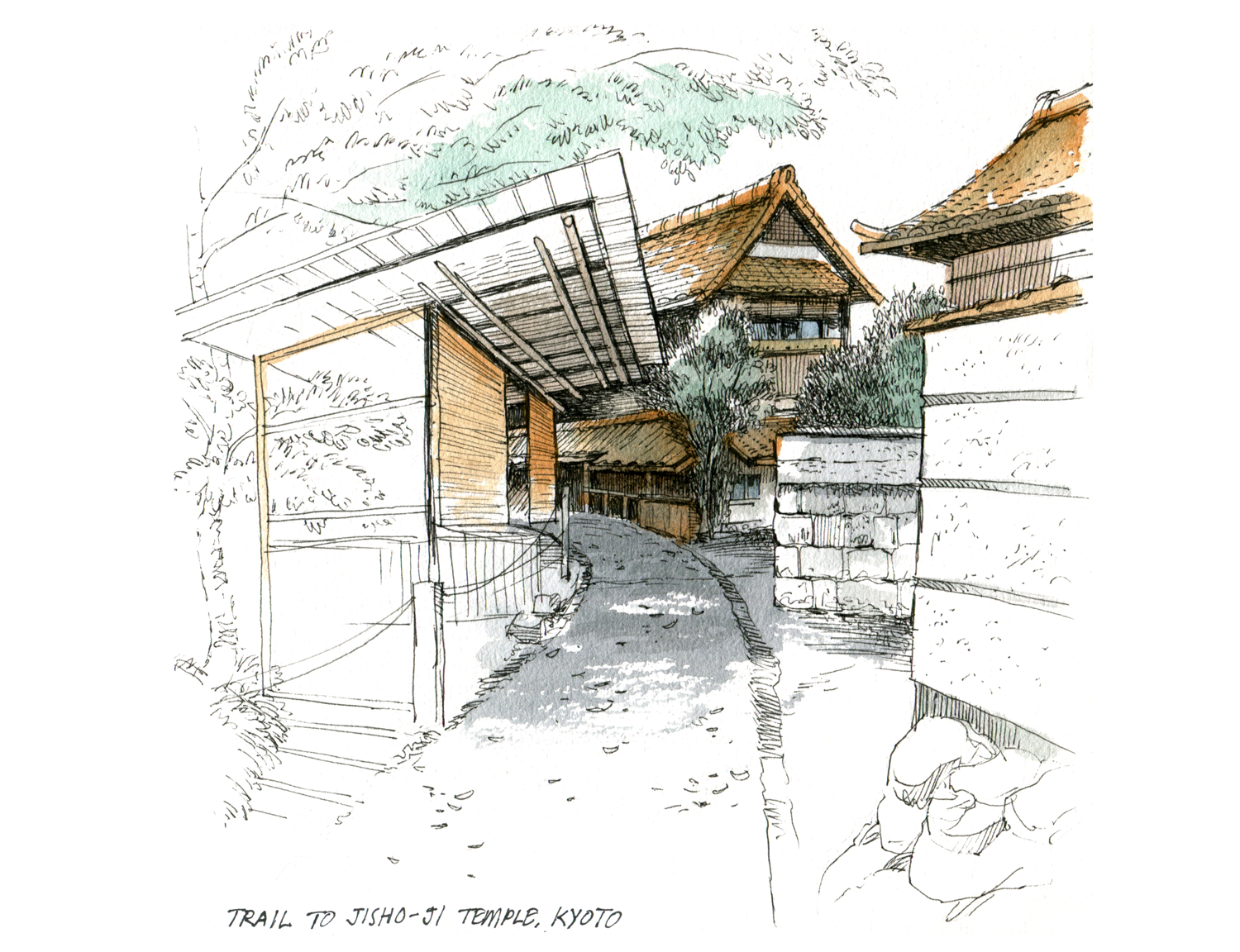
I loved the trail that we walked from the bus stop up to Sanzen-in temple grounds. Stunning grounds with gardens, ponds, a tea house. On our walk back we stopped for a lunch of soba noodles, and then for a Viennese coffee at a coffee house further down the trail.
Type a description of this image
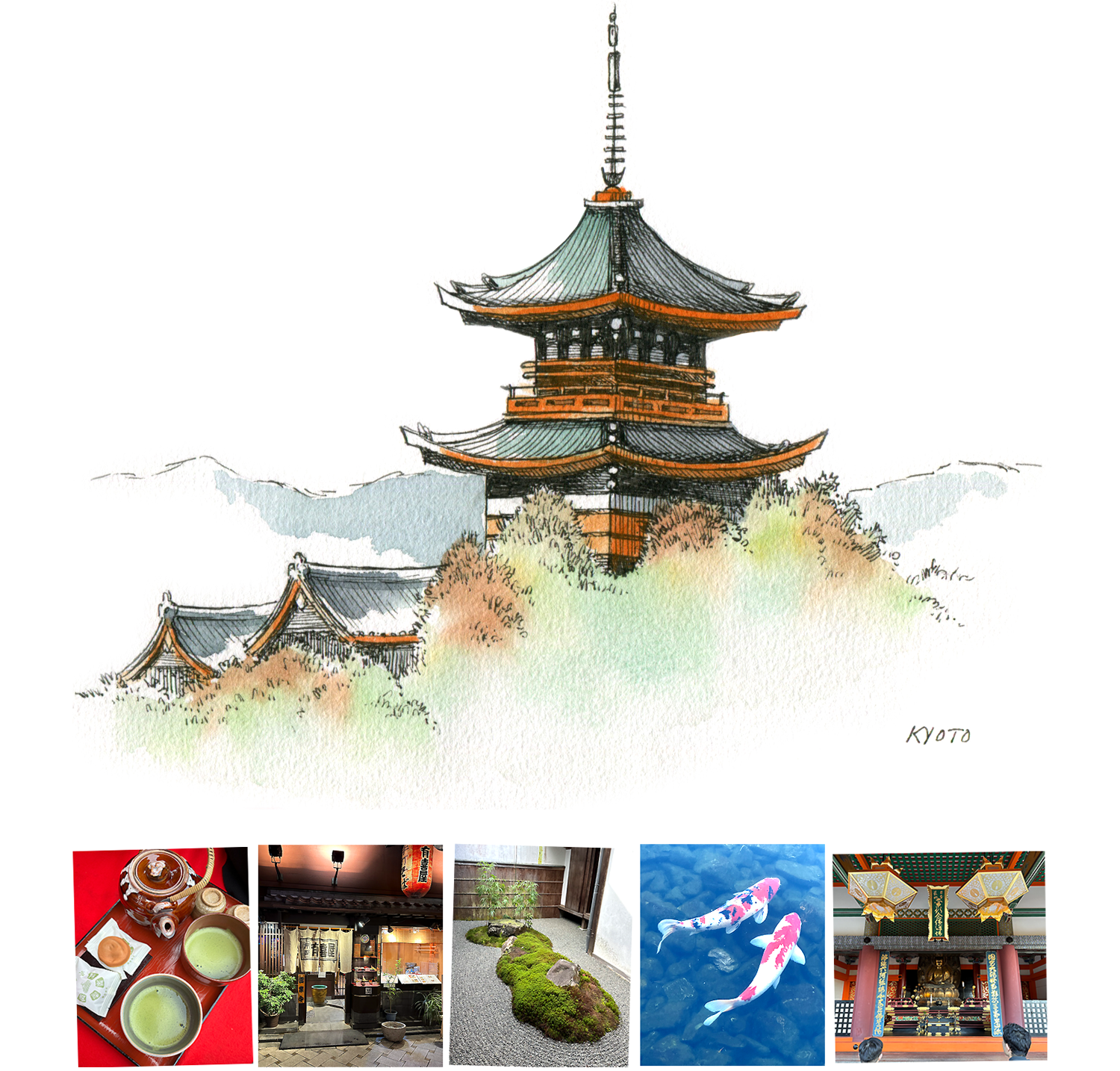
The leaves had just begun to turn colors, as seen in this view of a pagoda at Kiyomizu-dera in Kyoto.
Type a description of this image
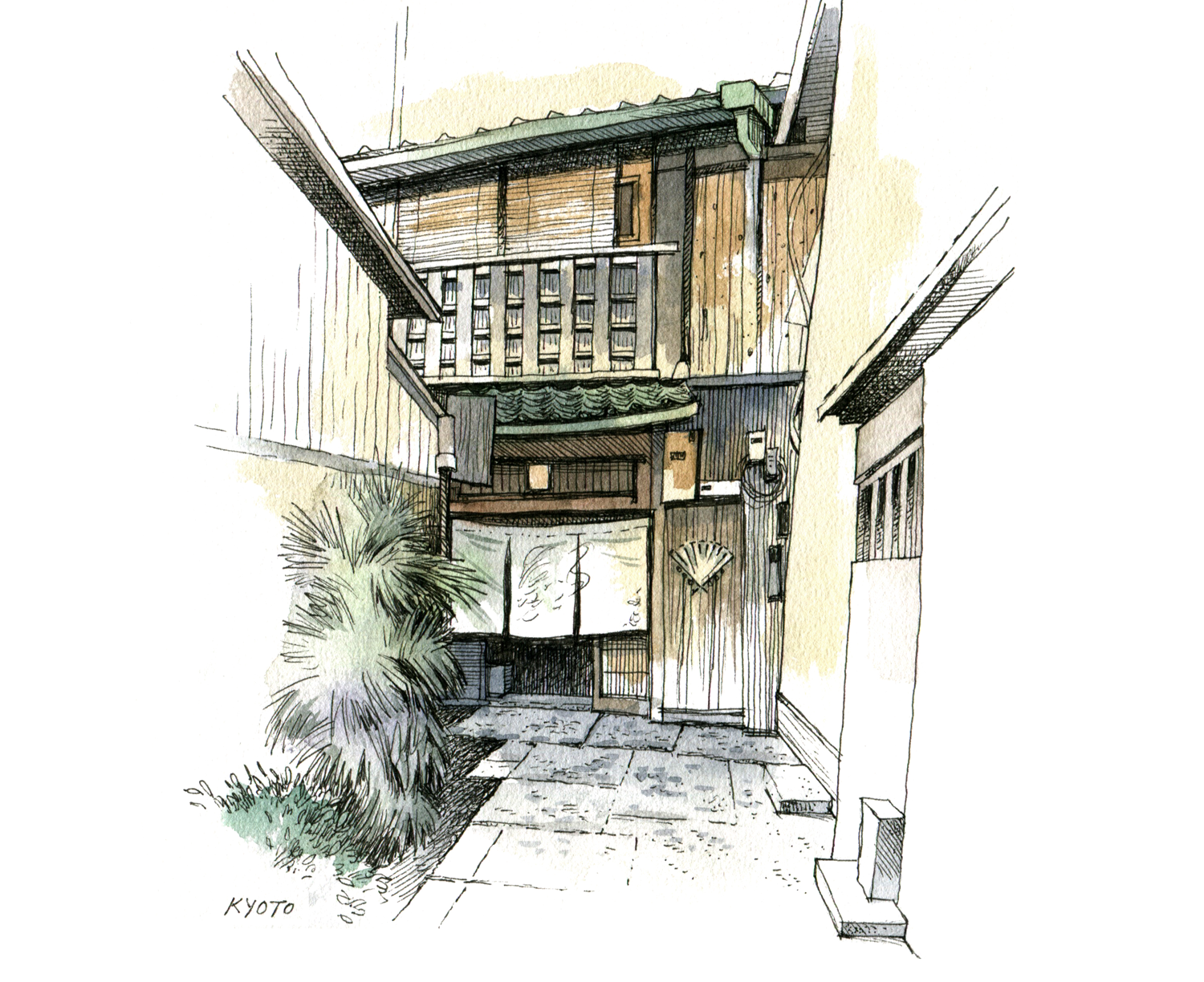
The Japanese are masters of design. I see so many little scenes like this one, irresistible places to me. The combination of intricate detail, woodworking, privacy, understated elegance, and a kind of zen presence. How can one resist?
Type a description of this image
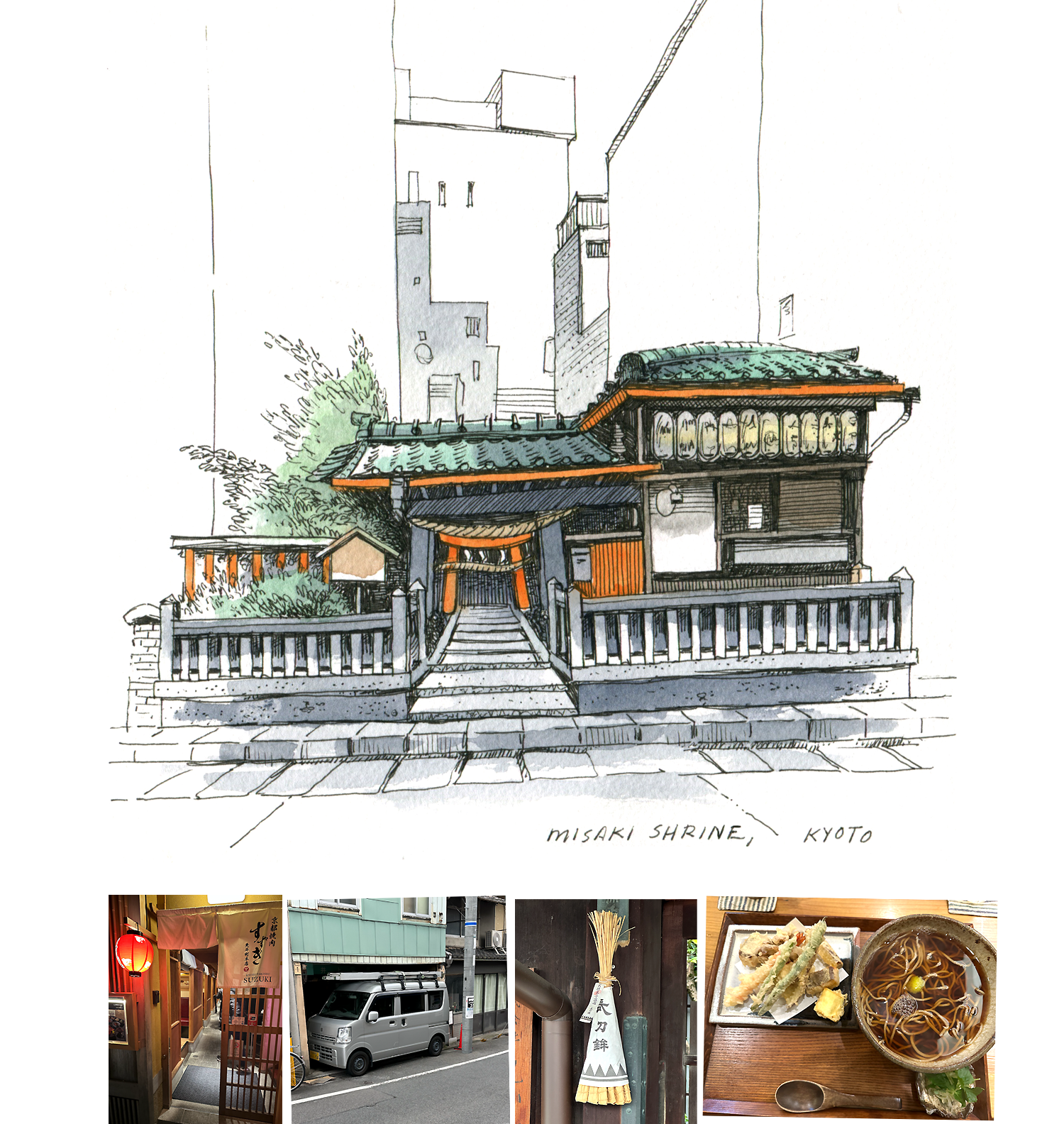
This small Misaki shrine was across the little side street from our hotel. It looked especially alluring at night with all the lit lanterns.
Type a description of this image
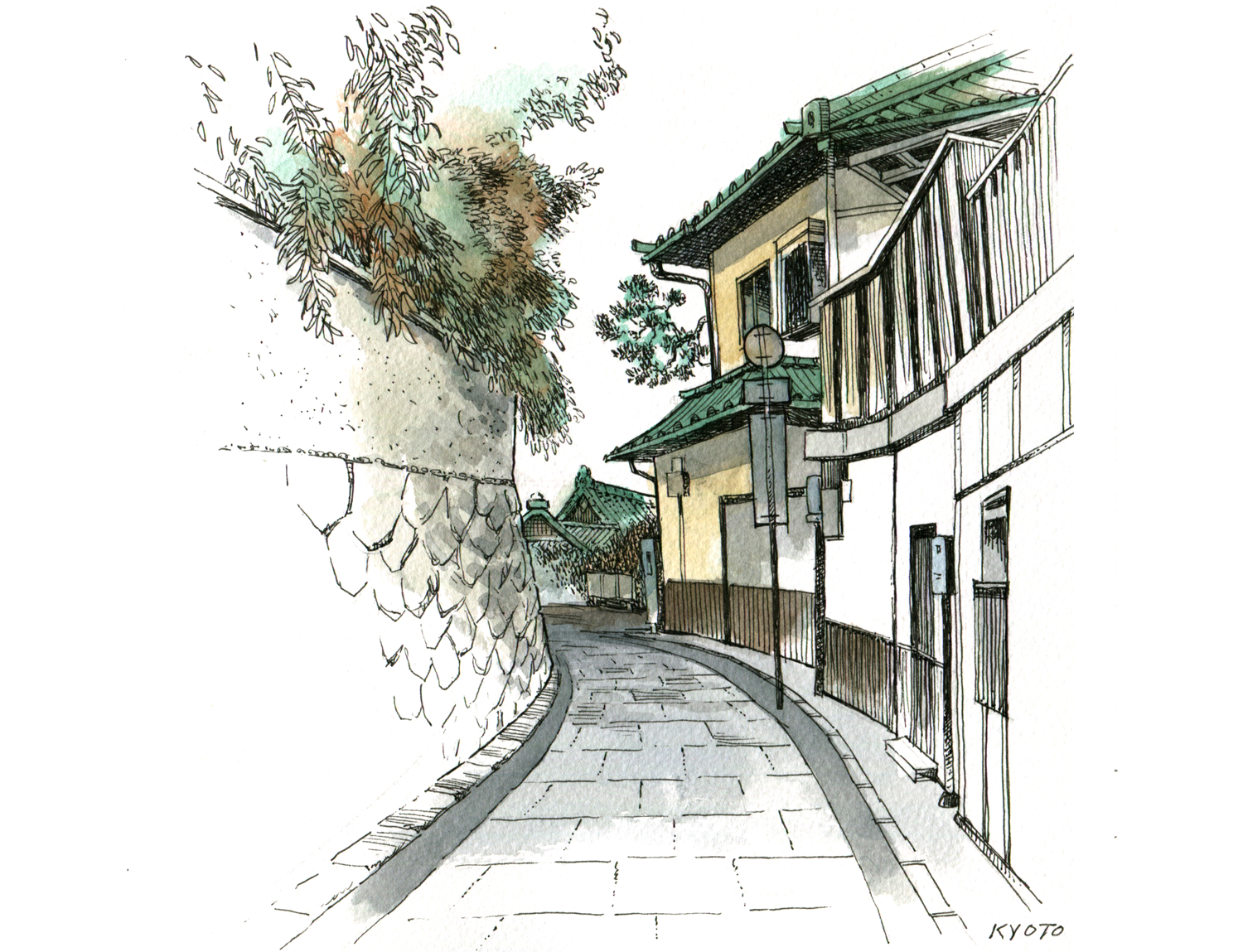
A narrow curving street in Kyoto that leads up to the wooded foothills with their majestic temples.
Type a description of this image
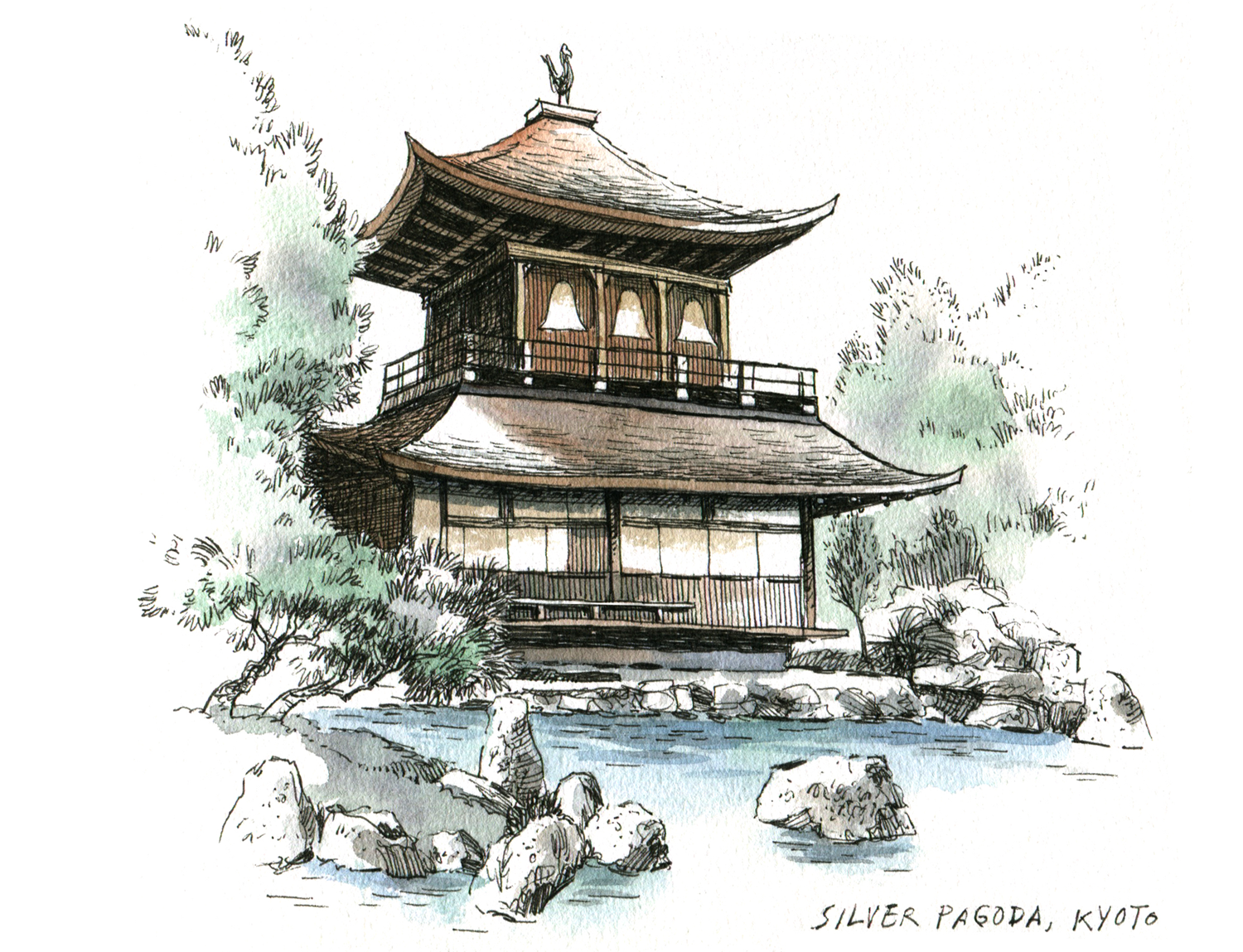
In addition to the popular Golden Pavilion, Kyoto has a Silver Pavilion, named Ginkakuji. While not actually silver in color, its weathered wood sits in harmony among quiet gardens and ponds. It was modeled on the Golden Pavilion, but intentionally more introspective and understated.
Type a description of this image
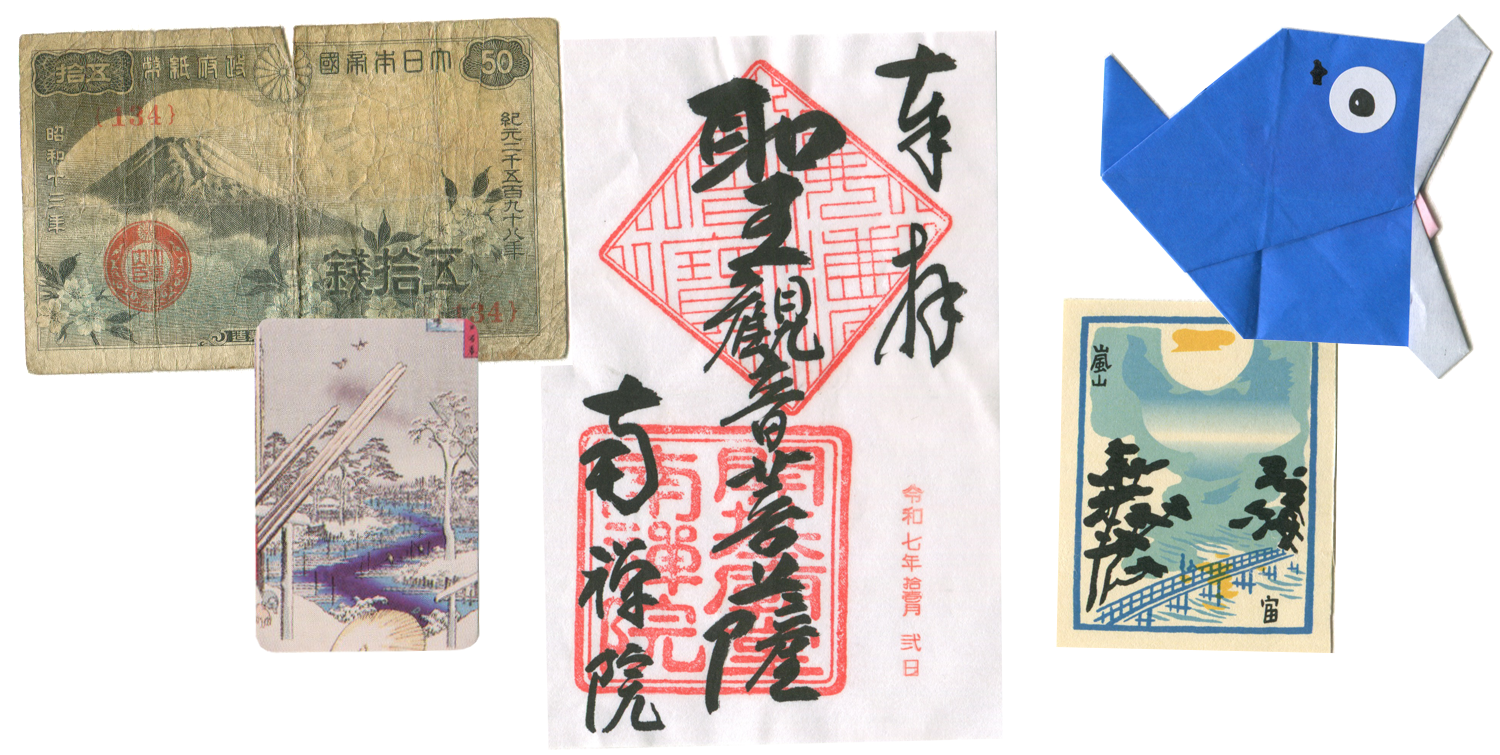
Odds and ends from the travels – old paper money, stickers, an origami fish given to me at a neighborhood restaurant, a Goshuin from a temple with its beautiful calligraphy. They are available at certain temples and shrines during special days or holidays. Many visitors collect them in a special notebook called a Goshuinchō.
Type a description of this image